Veraval, also known as Somnath, is a coastal city and the headquarters of Gir Somnath district in the Indianstate of Gujarat. Somnath temple, a place of pilgrimage due to its importance as one of the 12 Jyotirlinga sites dedicated to the Hindu deity Shiva, is located here. It is also known for the hub of fishing industries in India.
The present name Veraval is generally traced to the Prakrit word vel or vela, a term associated with coastal settlements, enclosures, or landing places, reflecting the town’s historical role as a port and fishing centre along the Arabian Sea.[2]
In historical sources, Veraval has also been referred to as Somnathpura. The town has also been referred to as Somnath Bandar, a name that highlights its geographical and functional association with the Somnath Temple and its role as the principal port serving the temple town.[3]
Medieval Arabic and Persian accounts of the western Indian coastline mention the harbour at Veraval in connection with maritime trade routes linking western India with West Asia and eastern Africa, indicating its importance as a regional port during the medieval period.[4]
Over time, as administrative usage became standardised under regional and later colonial governance, the name Veraval came into common and official use, while Somnath became obsolete.[5]
History
Veraval was founded in the 13th or 14th century by Rao Veravalji Vadher, a Rajput. Its present name is believed to be derived from its old name "Velakul" meaning Port City. Veraval was once a fortified port town of the royal family of Junagadh. It was a part of the Kingdom of Junagadh till 1947 when Junagadh was merged with India. The city still bears some remnants of the old Nawabi heritage, the Nawabi summer palace being among them.[citation needed] There are ruins of the old Nawabi fort and Nawabi gates in and around the place. The old walls of the port are now ruined, but the impressive Junagadh gate and the Patan gate are still seen, although in a very bad state.
The Nawabi Palace with Gothic features is one of the main attractions.[for whom?] It is popularly known as Somnath College (the palace was converted into a college after it was abandoned by the Nawab). At present it is the building of a Sanskrit university. The town is often known as the gateway to the magnificent Somnath Temple and the pilgrimage centres of Prabhas Patan and Bhalkha. Veraval is also the nearest town to the Gir National Park (42km away). Veraval's importance now is as a fishing port, one of the largest in India. Seafaring dhows and wooden fishing boats are still built by the fishermen without the use of any modern technology. Traditional skills are passed down from father to son.[citation needed]
On 30 March 2021, Veraval Municipality unanimously passed a resolution to officially change the name of the city from Veraval to Somnath. Along with this, they also decided to rename the municipal body as Somnath Municipality. The final decision will be taken by Home Ministry of India.[6][7][8]
Geography
Veraval Somnath Environ map 1911
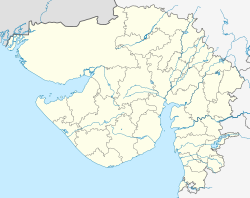
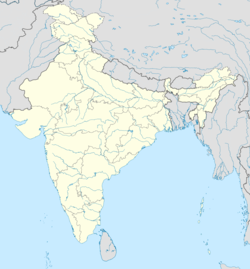
Veraval is located at 20°54′N70°22′E / 20.9°N 70.37°E / 20.9; 70.37.[9] It has an average elevation of 0metres (0feet). It is a coastal urban area situated along the Arabian Sea on the southern coast of the Saurashtra peninsula.
The terrain of the city area is predominantly flat and low-lying, characteristic of the western coastal plains of Gujarat. The coastline includes sandy beaches interspersed with rocky stretches, while the land gradually rises further inland. The natural harbour at Veraval has historically supported fishing and maritime activity, while the coastal setting has equally influenced the spatial development as part of the same urban geography.[10][11]
The region experiences a tropical climate, with hot summers, a southwest monsoon season, and mild winters. Most annual rainfall occurs between June and September due to the monsoon. Proximity to the Arabian Sea moderates temperature extremes compared to inland areas of the Saurashtra region.[12]
The surrounding area includes coastal ecosystems, fishing zones, and agricultural land, while the Gir forest region lies further inland to the east.
As of the 2011 India census,[14] Veraval had a population of 153,696. Males constitute 51% of the population and females 49%. Veraval has an average literacy rate of 62%, higher than the national average of 59.5%: male literacy is 71%, and female literacy is 53%. In Veraval, 14% of the population is under 6 years of age.
Climate
Veraval has a tropical savanna climate (KöppenAw) borderline on a hot semi-arid climate (BSh) with very warm to hot temperatures throughout the year. Almost all rainfall occurs during the summer monsoon season from June to September, typically falling in extremely short-lived but intense storms: on average rain falls for a total of fewer than eighty hours each year.[15] Rainfall is also exceptionally variable from year to year:[16] only 69.7 millimetres or 2.74 inches fell in 1901, but as much as 1,888.3 millimetres or 74.34 inches fell in 2009, of which 1,531.7 millimetres or 60.30 inches fell in July of that year and a record daily total of 503.8 millimetres or 19.83 inches on Veraval's wettest day of 16 July 2009.
Climate data for Veraval (1991–2020, extremes 1901–present)
Source 2: Tokyo Climate Center (mean temperatures 1991–2020)[20]
Civic administration
Veraval is the administrative headquarters of Gir Somnath district and is administered by Somnath Municipal Council. The Council was established in January 1950. The Council Chief Officer is a Gujarat Administrative Service (GAS) appointed by the state government who reserves the administrative executive powers, whereas the Municipality is headed by the President. The city is structured into 11 wards with a total of 44 elected councillor seats. The administrative responsibilities of municipality are water and sewerage services, primary education, health services, fire services, public transport and the city's infrastructure. The Urban planning and development of suburban area are done by Somnath Urban Development Authority.
People
Veraval has a predominant Gujarati population. Amongst Gujaratis, Karadiya Rajput, Kumbhar Samaj (Prajapati), Jains (Oswal), the Soni (Jewellers, mainly from the clans of Dhakan, Patt, Sagar, etc.), Kharwa, DHUNDHA FAMILY Ahir (Yadav), brahma samaj and the KolisPatni Jamat, Rajwadi bhois, Hadi, Lohanas, Maleks, Memons, and Raykas. There is also a sizable population Sindhis. Gujarati and Hindi are the most common languages in the town. Migratory people from other parts of the country also hold a good amount of population in the city.
Education
University gate
The city is home to Shree Somnath Sanskrit University. Some of the other institutions which provide higher education are College of Fisheries Science and Government Science College.
Economy
Veraval Fishery Harbour
Fisheries have always been the main industries in the town and are dominated by the Kharwas (fisherfolk). The fishing is done mostly on traditional boats and trawlers. Veraval also has a large boat making industry. Veraval is home to a large number of fish processing factories in Gujarat Industrial Development Corporation (GIDC) which export prime quality seafood to USA, Japan, SE Asian, Gulf and EU Countries. The seafood-industry which was started through government initiative now is in its prime and many importers are attracted towards Veraval from around the globe. Regional research centers of CIFT and CMFRI situated at Veraval have done Yeoman service in development of fisheries sector in Gujarat.
Veraval also is home to Grasim Industries limited (Unit - Indian Rayon) which is one of India's largest rayon manufacturing companies.
There are various chemical, thread and cement companies around Veraval which provide employment to the local youth. The major ones being Indian Rayon Unit of Grasim industries limited, Gujarat Ambuja Cement Ltd, Gujarat Siddhee Cement Ltd and Gujarat Heavy Chemicals Ltd.
Kharwa and Patni Jamat, a local inhabitants have flourished as main seafood exporter after the 1990s. They have a very good hold on the fishing business.
Culture
Veraval’s culture reflects its long maritime history, coastal geography, and religious diversity. Located on the Arabian Sea in the Saurashtra region of Gujarat, the city has historically been influenced by seafaring communities, regional trade, and the Somnath temple complex, one of the most important pilgrimage centres in India.[21]
Religious and social life
The cultural life of Veraval is characterised by the coexistence of multiple religious communities, primarily Hindus and Muslims, along with Jain minorities. This pluralistic social structure has been documented in district gazetteers and official records. Temples, mosques, and Jain derasars serve as important religious and social institutions within the city.[21]
Somnath Temple
The Somnath Temple has played a central role in shaping the city’s cultural identity. Pilgrimage activity associated with the temple has historically influenced local traditions, festivals, and occupations, and form a cultural and economic zone.[22]
Veraval is also closely associated with Bhalka Tirtha, a Hindu pilgrimage site traditionally believed to be the place where Lord Krishna was struck by an arrow at the end of his earthly life. The site forms an integral part of the Krishna pilgrimage circuit and attracts devotees throughout the year.
The Triveni Sangam, located near Somnath temple, is a sacred confluence traditionally identified with the meeting of the Hiran, Kapila, and the now-extinct Saraswati rivers. The site holds religious significance in Hindu tradition and is closely associated with pilgrimage rituals connected to Somnath.[23]
The Chandrabhaga Shakti Peeth, locally called Mahakali Temple, located near the Arabian Sea, is regarded in Hindu tradition as one of the sacred Shakta pithas. It is believed that Goddess Sati's stomach fell here. The site holds religious significance and is associated with goddess worship, contributing to the broader religious landscape.[24]
Festivals
Major Hindu festivals such as Navratri, Diwali, Janmashtami, and Makar Sankranti (Uttarayan) are widely celebrated in Veraval. Navratri is marked by traditional garba and dandiya raas dances. Muslim festivals including Eid al-Fitr and Eid al-Adha are also observed, reflecting the city’s religious diversity and communal traditions.[25]
Religious fairs and events connected with Somnath temple attract pilgrims and visitors throughout the year and contribute to Veraval’s cultural calendar and local economy.[26]
Language and customs
Gujarati is the principal language spoken in Veraval, mainly in the Saurashtra dialect. Hindi is also commonly used, particularly in trade, fishing-related activities, and everyday communication among different communities. Traditional customs related to dress, marriage ceremonies, and religious observances continue to be practiced, especially in older parts of the city.[27]
Maritime and fishing heritage
Veraval Beach
Sunset at Veraval Beach
Camel on the beach
Veraval is one of Gujarat’s major fishing ports, and its coastal culture is closely linked to marine occupations. Fishing communities maintain distinct social traditions, seasonal rituals, and occupational practices connected with the sea. The fishing harbour, markets, and fish-processing activities form an integral part of daily life and cultural identity in the city.[28]
Cuisine
The cuisine of Veraval reflects its coastal environment and multicultural population. Seafood dishes are prominent alongside traditional Gujarati vegetarian food. Spiced fish preparations, dried fish products, and street foods influenced by both Gujarati and Muslim culinary traditions are commonly associated with the city and surrounding coastal region.[29]
Arts and daily life
Cultural expression in Veraval is largely community-based and includes folk traditions, devotional music, and religious performances. While the city is not a major centre for classical arts, everyday life reflects a blend of religious practice, port-based commerce, and tourism linked to the Somnath temple and the Arabian Sea coastline.[21]
Transport
Thiruvananthapuram Veraval Express
The city has two railway stations namely Veraval Junction and Somnath Terminus. Veraval Junction is a fairly busy railway junction station for Western Railways and is served by more than 14 pairs of regional and long-distance trains.
This page is based on this Wikipedia article Text is available under the CC BY-SA 4.0 license; additional terms may apply. Images, videos and audio are available under their respective licenses.

 India
India  Gujarat


