10th Regiment Kentucky Volunteer Cavalry

Last updated
10th Regiment Kentucky Volunteer Cavalry
ActiveSeptember 8, 1862, to September 17, 1863
Country United States
Allegiance Union
Branch Cavalry
Engagements Defense of Cincinnati

The 10th Kentucky Volunteer Cavalry Regiment was a cavalry regiment that served in the Union Army during the American Civil War.

Cavalry soldiers or warriors fighting from horseback

Cavalry or horsemen are soldiers or warriors who fight mounted on horseback. Cavalry were historically the most mobile of the combat arms. An individual soldier in the cavalry is known by a number of designations such as cavalryman, horseman, dragoon, or trooper. The designation of cavalry was not usually given to any military forces that used other animals, such as camels, mules or elephants. Infantry who moved on horseback, but dismounted to fight on foot, were known in the 17th and early 18th centuries as dragoons, a class of mounted infantry which later evolved into cavalry proper while retaining their historic title.

Regiment Military unit

A regiment is a military unit. Their role and size varies markedly, depending on the country and the arm of service.

Union Army Land force that fought for the Union during the American Civil War

During the American Civil War, the Union Army referred to the United States Army, the land force that fought to preserve the Union of the collective states. Also known as the Federal Army, it proved essential to the preservation of the United States as a working, viable republic.

Contents

Service

The 10th Kentucky Cavalry was organized at Covington, Lexington, and Crab Orchard, Kentucky, from September 8 through November 11, 1862. It mustered in for one year under the command of Colonel Joshua Tevis.

Covington, Kentucky City in Kentucky, United States

Covington is a city in Kenton County, Kentucky, United States, located at the confluence of the Ohio and Licking Rivers. Cincinnati, Ohio, lies to its north across the Ohio and Newport, Kentucky, to its east across the Licking. Covington had a population of 40,640 at the time of the 2010 U.S. census, making it the largest city of Northern Kentucky and the fifth-most populous city in Kentucky. It is one of its county's two seats, along with Independence.

Lexington, Kentucky Consolidated city-county in Kentucky, United States

Lexington, consolidated with Fayette County and often denoted as Lexington-Fayette, is the second-largest city in Kentucky and the 60th-largest city in the United States. By land area, Lexington is the 28th largest city in the United States. Known as the "Horse Capital of the World," it is the heart of the state's Bluegrass region. It has a nonpartisan mayor-council form of government, with 12 council districts and three members elected at large, with the highest vote-getter designated vice mayor. In the 2018 U.S. Census Estimate, the city's population was 323,780 anchoring a metropolitan area of 516,697 people and a combined statistical area of 760,528 people.

Crab Orchard, Kentucky City in Kentucky, United States

Crab Orchard is a home rule-class city in Lincoln County, Kentucky, United States. The population was 842 at the 2000 census. It is part of the Danville Micropolitan Statistical Area.

Attached toDates
Cavalry, 1st Division, Army of Kentucky, Department of the Ohio to November 1862
Unattached, Army of KentuckyNovember 1862
District of Central Kentucky, Department of the Ohioto April 1863
2nd Brigade, District Central Kentucky, Department of the Ohioto June 1863
2nd Brigade, 4th Division, XXIII Corps, Department of the Ohioto July 1863
2nd Brigade, 1st Division, XXIII Corpsto August 1863
Mt. Sterling, Kentucky, 1st Division, XXIII Corpsto September 1863
2nd Battalion Only
District of Eastern Kentuckyto June 1863
1st Brigade, 4th Division, XXIII Corpsto August 1863

The 10th Kentucky Cavalry mustered out of service on September 17, 1863.

Detailed service

DatesActions or events
1862
until SeptemberDuty about Mt. Sterling, Ky., and in the District of Central Kentucky, scouting and operating against guerrillas and protecting that part of the State
September 8Skirmish near Florence, Ky.
December 24 to January 1, 1863Expedition to eastern Tennessee
December 28Parker's Mills, on Elk Fork
1863
February 18-March 5Operations against Cluke's forces
February 22Coomb's Ferry
February 24Slate Creek, near Mt. Sterling, and Stoner's Bridge
March 2Slate Creek, near Mt. Sterling
March 22-April 1Operations against Pegram
March 22Mt. Sterling
June 13–23Operations against Everett's Raid in eastern Kentucky
June 16Triplett's Bridge, Flemming County
July 25-August 6Operations against Scott's forces
July 28Richmond
July 31-August 1Lancaster and Paint Creek Bridge
August 1Smith's Shoals, Cumberland River
until SeptemberDuty at Mt. Sterling (2nd Battalion served detached in District of Eastern Kentucky)
July 3–11Expedition from Beaver Creek into Southwest Virginia
July 7Gladesville, Va.

Casualties

The regiment lost a total of 75 men during service; 13 enlisted men killed or mortally wounded, 1 officer and 61 enlisted men died of disease.

Commanders

Notable members

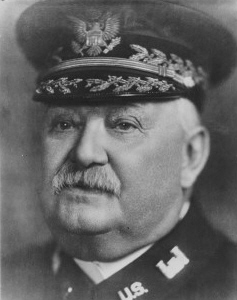
William Louis Marshall United States Army Chief of Engineers

William Louis Marshall was born June 11, 1846, in Washington, Kentucky, a scion of the family of Chief Justice John Marshall. At age 16 he enlisted in the 10th Kentucky Cavalry, Union Army. He graduated from the United States Military Academy in 1868 and was commissioned in the Corps of Engineers. Accompanying Lieutenant George Wheeler's Wheeler Survey expedition (1872–76), Marshall covered thousands of miles on foot and horseback and discovered Marshall Pass in central Colorado. He oversaw improvements on the Lower Mississippi River near Vicksburg and on the Fox-Wisconsin Waterway canal system in Wisconsin. As Chicago District Engineer from 1888 to 1899, he planned and began to build the Illinois and Mississippi Canal. Marshall made innovative use of concrete masonry and developed original and cost-saving methods of canal lock construction. Stationed at New York (1900–08), his genius further expressed itself on the Ambrose Channel project and in standardizing fortification construction methods. He retired June 11, 1910—the final Chief of Engineers to have served in the Civil War—but his engineering reputation earned a special appointment from President William Howard Taft as consulting engineer to the Secretary of the Interior on hydroelectric power projects. General Marshall died July 2, 1920, in Washington, D.C.

See also

Related Research Articles

The 53rd Kentucky Volunteer Mounted Infantry Regiment was a mounted infantry regiment that served in the Union Army during the American Civil War.

The 55th Kentucky Volunteer Mounted Infantry Regiment was a mounted infantry regiment that served in the Union Army during the American Civil War.

The 9th Kentucky Volunteer Cavalry Regiment was a cavalry regiment that served in the Union Army during the American Civil War.

The 30th Kentucky Volunteer Mounted Infantry Regiment was a mounted infantry regiment that served in the Union Army during the American Civil War.

The 40th Kentucky Volunteer Infantry Regiment was an infantry regiment that served in the Union Army during the American Civil War.

The 47th Kentucky Volunteer Mounted Infantry Regiment was a mounted infantry regiment that served in the Union Army during the American Civil War.

The 49th Kentucky Volunteer Mounted Infantry Regiment was a mounted infantry regiment that served in the Union Army during the American Civil War.

The 52nd Kentucky Volunteer Mounted Infantry Regiment was a mounted infantry regiment that served in the Union Army during the American Civil War.

The 54th Kentucky Volunteer Mounted Infantry Regiment was a mounted infantry regiment that served in the Union Army during the American Civil War.

The 8th Kentucky Volunteer Cavalry Regiment was a cavalry regiment that served in the Union Army during the American Civil War.

The 13th Kentucky Volunteer Cavalry Regiment was a cavalry regiment that served in the Union Army during the American Civil War.

The 14th Kentucky Volunteer Cavalry Regiment was a cavalry regiment that served in the Union Army during the American Civil War.

The 15th Kentucky Volunteer Cavalry Regiment was a cavalry regiment that served in the Union Army during the American Civil War.

The 16th Kentucky Volunteer Cavalry Regiment was a cavalry regiment that served in the Union Army during the American Civil War.

The 17th Kentucky Volunteer Cavalry Regiment was a cavalry regiment that served in the Union Army during the American Civil War.

13th Indiana Battery Light Artillery was an artillery battery that served in the Union Army during the American Civil War.

The 11th Tennessee Volunteer Cavalry Regiment was a cavalry regiment that served in the Union Army during the American Civil War. The regiment was also known as 1st East Tennessee Cavalry Battalion and 11th East Tennessee Cavalry Regiment.

The 2nd Tennessee Volunteer Cavalry Regiment was a cavalry regiment that served in the Union Army during the American Civil War. It was also known as 2nd East Tennessee Cavalry.
1st Regiment Tennessee Volunteer Cavalry

The 1st Tennessee Volunteer Cavalry Regiment was a cavalry regiment that served in the Union Army during the American Civil War. It was also known as 1st East Tennessee Cavalry.

The 78th Regiment Indiana Infantry was an infantry regiment that served in the Union Army during the American Civil War.

References

Attribution

The public domain consists of all the creative work to which no exclusive intellectual property rights apply. Those rights may have expired, been forfeited, expressly waived, or may be inapplicable.

Frederick H. Dyer Soldier, writer

Frederick Henry Dyer served as a drummer boy in the Union Army during the American Civil War. After the war, he wrote A Compendium of the War of the Rebellion – a complete record of every regiment formed under the Union Army, their histories, and the battles they fought in – taking forty years to compile.