
The Legislative Council of the Hong Kong Special Administration Region (LegCo) is the unicameral legislature of the Hong Kong Special Administrative Region of the People's Republic of China.
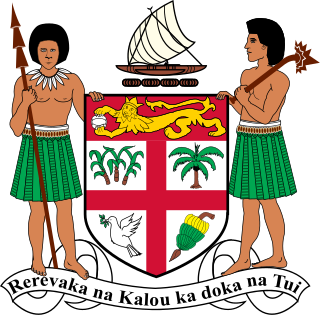
Fiji has held 12 general elections, 10 for the House of Representatives since becoming independent of the United Kingdom in 1970; there had been numerous elections under colonial rule, but only one with universal suffrage and 2 for the Parliament of Fiji since the establishment of the 2013 constitution. In this period, Fiji has had four constitutions, and the voting system has changed accordingly.

There are two types of elections in Andorra: parliamentary elections and local elections. The 28 members of the General Council of the Valleys are elected in parliamentary elections for a maximum term of four years. In the local elections, the council members of the seven parishes of Andorra are elected for a four-year term.
Elections in Thailand refers to the democratic process in which some parts of the Government of Thailand is selected. These include the House of Representatives of Thailand,, local Administrations, Governorship of Bangkok and national referendums. Thailand has so far had 28 general elections since 1933; the last election was in 2019. Voting in elections in Thailand is compulsory. All elections in Thailand are regulated by the Election Commission of Thailand.
Elections in Luxembourg are held to determine the political composition of the representative institutions of the Grand Duchy of Luxembourg. Luxembourg is a liberal representative democracy, with universal suffrage guaranteed under the constitution. Elections are held regularly, and are considered to be fair and free.

Elections in San Marino gives information on election and election results in San Marino.

The Grand and General Council is the parliament of San Marino. The council has 60 members elected for a five-year term.
The Arengo was the name of the assembly that ruled San Marino from the fifth century C.E. to 1243. It was made up of the heads of San Marino's Great families and had no leader or fixed meeting place. This made San Marino almost unique in the period as a state that had no Head of State. However this form of rule was cumbersome and the Arengo was crippled by feuds between the Great Families. By the early 13th century the Arengo had become so dysfunctional that the citizens of San Marino decided to elect their own assembly, which they called the Grand and General Council. This assembly became very powerful, and by 1243 the Pope, who was the nominal ruler of San Marino, made the Grand and General Council the supreme body of San Marino.
General elections were held in San Marino on 10 June 1906.
A general elections was held in San Marino on 23 June 1912 to elect the third term of the Grand and General Council.
A general election was held in San Marino on 13 June 1915 to elect the fourth term of the Grand and General Council.
A general election was held in San Marino on 9 June 1918 to elect the fifth term of the Grand and General Council.
General elections were held in San Marino on 14 November 1920 to elect the sixth term of the Grand and General Council. It was the country's first snap election, and the first election to use a form of proportional representation. The result was a victory for the Sammarinese People's Party, which won 29 of the 60 seats.
General elections were held in San Marino on 4 March 1923 to elect the seventh term of the Grand and General Council. It was a snap election that marked the beginning of the Fascist rule of the republic. Left-wing parties were prevented from participating, while all centre-right forces ran as a single "Patriotic Bloc". Of the 60 seats, 29 were taken by the Sammarinese Fascist Party, 20 by the Sammarinese People's Party, 9 by the Sammarinese Democratic Union and two by the Fascist-puppets Volunteers of War. Later the country was taken over by the Fascist Party.
General elections were held in San Marino on 12 December 1926 to elect the eighth term of the Grand and General Council. It was a sham election, all opposition being prevented to participate by internal and Italian threats. After it had taken over the country in April 1923, the Sammarinese Fascist Party was the only party to contest the elections, winning all 60 seats, while the official report spoke of a sole dissident ballot. A new electoral law guaranteed safe undisputed seats to the two incumbent Captains Regents.
The Sammarinese Citizenry Meeting of 1906 was a session of the Arengo in San Marino. It was the first such meeting in three centuries. It ended oligarchic rule and resulted in the first modern democratic elections in the country.
General elections were held in San Marino on 11 November 2012. The 60 seats in the Grand and General Council were up for grabs. The elections were held using the majority bonus system. The previous election, held in 2008, provided the Sammarinese Christian Democratic Party with the largest single parliamentary group. The Party of Socialists and Democrats, although winning more votes than the former, became the main opposition party.
The December 1909 Barcelona City Council election was held on Sunday, 12 December 1909, to elect half of the Barcelona City Council. 25 out of 50 seats were up for election. These were the first elections after the Tragic Week.
The May 1909 Barcelona City Council election was held on Sunday, 2 May 1909, to elect half of the Barcelona City Council. 28 out of 50 seats were up for election.
The 2020 Sammarinese local elections were held on 29 November, to elect the mayors and the councils of the 9 municipalities of San Marino. These elections were initially scheduled to take place on 15 December 2019, but were postponed to 21 June 2020 due to a snap general election called for 8 December. Due to the COVID-19 pandemic, elections were postponed once again to 29 November 2020.


