Related Research Articles

Sir Frederick Grant Banting was a Canadian medical scientist, physician, painter, and Nobel laureate noted as the co-discoverer of insulin and its therapeutic potential.

Sir William Osler, 1st Baronet, was a Canadian physician and one of the four founding professors of Johns Hopkins Hospital. Osler created the first residency program for specialty training of physicians, and he was the first to bring medical students out of the lecture hall for bedside clinical training. He has frequently been described as the Father of Modern Medicine and one of the "greatest diagnosticians ever to wield a stethoscope". Osler was a person of many interests, who in addition to being a physician, was a bibliophile, historian, author, and renowned practical joker. Outside of medicine, he was passionate about medical libraries and medical history and among his achievements were the founding of the History of Medicine Society, at the Royal Society of Medicine, London. In the field of librarianship he was instrumental in founding the Medical Library Association of Great Britain and Ireland, the Association of Medical Librarians with three others, including Margaret Charlton, the medical librarian of his alma mater, McGill University. He left his large history of medicine library to McGill, where it continues to exist as the Osler Library.

Carolyn Ann Bennett is a Canadian physician and politician who has served as minister of mental health and addictions, and associate minister of health since October 26, 2021. A member of the Liberal Party, she has represented Toronto—St. Paul's in the House of Commons since 1997. She previously served as the minister of state for public health from 2003 to 2006, and the Minister of Crown–Indigenous Relations from 2015 to 2021. Bennett worked as a physician for 20 years before entering politics.
Bette Mildred Stephenson Pengelly was a Canadian medical doctor and politician in Ontario. She served in the Legislative Assembly of Ontario from 1975 to 1987, and was a cabinet minister in the Progressive Conservative governments of Bill Davis and Frank Miller.
Robert Bruce Salter was a Canadian surgeon and a pioneer in the field of pediatric orthopaedic surgery.
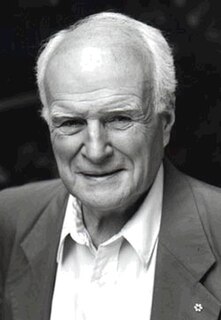
James Fraser Mustard was a Canadian doctor and renowned researcher in early childhood development. Born, raised and educated in Toronto, Ontario, Mustard began his career as a research fellow at the University of Toronto where he studied the effects of blood lipids, their relation to heart disease and how Aspirin could mitigate those effects. He published the first clinical trial showing that aspirin could prevent heart attacks and strokes. In 1966, he was one of the founding faculty members at McMaster University's newly established medical school. He was the Dean of the Faculty of Health Sciences and the medical school at McMaster University from 1972–1982. In 1982, he helped found the Canadian Institute for Advanced Research and served as its founding president, serving until 1996. He wrote several papers and studies on early childhood development, including a report used by the Ontario Government that helped create a province-wide full-day kindergarten program. He won many awards including being made a companion of the Order of Canada – the order's highest level – and was inducted into the Canadian Medical Hall of Fame. He died November 16, 2011.

Platinum Blonde, known briefly as The Blondes, is a Canadian rock band that formed in Toronto, Ontario in 1979. Vocalist Mark Holmes has been the only consistent member of the band since its inception.

Toronto Rehabilitation Institute is the largest rehabilitation hospital in Canada. Owned and operated by the University Health Network (UHN), Toronto Rehab provides patients with rehabilitation care, helping people rebuild their lives and achieve individualized goals following injury and disability. It is composed of five sites across Toronto, which are: Bickle Centre, Lakeside Centre, Lyndhurst Centre, Rumsey Centre, and University Centre.

The University of Toronto is a public research university in Toronto, Ontario, Canada, located on the grounds that surround Queen's Park. It was founded by royal charter in 1827 as King's College, the first institution of higher learning in Upper Canada. Originally controlled by the Church of England, the university assumed its present name in 1850 upon becoming a secular institution. As a collegiate university, it comprises eleven colleges each with substantial autonomy on financial and institutional affairs and significant differences in character and history. The St. George campus is the main campus of the University of Toronto tri-campus system, the other two being satellite campuses located in Scarborough and Mississauga.
Arthur Schafer is a Canadian ethicist specializing in bioethics, philosophy of law, social philosophy and political philosophy. He is Director of the Centre for Professional and Applied Ethics, at the University of Manitoba. He is also a Full Professor in the Department of Philosophy and an Ethics Consultant for the Department of Paediatrics and Child Health at the Health Sciences Centre in Winnipeg. For ten years he was Head of the Section of Bio-Medical Ethics in the Faculty of Medicine of the University of Manitoba. He has also served as Visiting Scholar Green College, Oxford.
Dorothea Palmer (Ferguson), a former employee of the Parents' Information Bureau, was arrested on and charged under section 207(c) of the Criminal Code for advertising information on family planning and birth control by means of a pamphlet. Palmer was acquitted on March 17, 1937 when her actions were deemed to have been carried out in the interest of the public good or pro bono publico. Palmer is honoured for her role in advancing family planning in Canada.
Charles Gordon Roland Charles Gordon "Chuck" Roland was born on January 25, 1933, in Winnipeg, Manitoba to Jack and Leona Roland. After a long and distinguished career as an author, editor, and Hannah Professor of the History of Medicine at McMaster University, Dr. Roland died at the age of 76 on June 9, 2009, in Burlington, Ontario.
Ray Fletcher Farquharson was a Canadian medical doctor, university professor, and medical researcher. Born in Claude, Ontario, he attended and taught at the University of Toronto for most of his life, and was trained and employed at Toronto General Hospital. With co-researcher Arthur Squires, Farquharson was responsible for the discovery of the Farquharson phenomenon, an important principle of endocrinology, which is that administering external hormones suppresses the natural production of that hormone.

Nancy Baxter is a Canadian surgeon and public health researcher. She is the Head of Melbourne University's School of Population and Global Health, while continues to maintain her appointment as Professor of Surgery in the Department of Surgery and the Institute of Health Policy, Management and Evaluation at the University of Toronto. She is a scientist with the Li Ka Shing Knowledge Institute and is a Senior Scientist in the Cancer Theme Group with the Institute for Clinical Evaluative Sciences (ICES). Baxter has achieved board certifications through the American Board of Surgery (2000) and the American Board of Colon and Rectal Surgery (2002). She is a Fellow of both the American College of Surgeons and the Royal College of Physicians and Surgeons of Canada.
The Archives Association of Ontario (AAO) is a professional network of archives and archivists based in Toronto, Ontario.
The Precious Legacy: Judaic Treasures from the Czechoslovak State Collections was one of the names for a travelling exhibition of Czech Jewish art and ritual objects that opened at the Whitworth Art Gallery in Manchester, U.K., in 1980. It subsequently toured the United States and Canada from 1983 to 1986. In 1990, part of the show was brought to Israel for a joint exhibition with the permanent collection of the Israel Museum. The travelling exhibition was relaunched in 1998 for a two-year tour of Sweden, New Zealand, and Australia.
Evelyn Gregory was the Chief Librarian of York Township Public Library from its inception in 1945 to 1969.
Arlington Franklin Dungy was a Canadian dentist who practiced in Ontario, and was a known advocate for a more inclusive medical community. He specialized in paediatric dentistry, and practiced first in Toronto, before accepting the role of Chief of Dentistry at Ottawa's Children’s Hospital of Eastern Ontario. His academic career included the positions of Dean of Alumni and Student Affairs and Associate Dean of Professional Affairs, at the University of Ottawa Faculty of Medicine. During his tenure at the University of Ottawa, he co-founded the Indigenous admissions program, as well as two scholarships, to address a lack of Indigenous representation within the Canadian medical profession.
Rowena Grace Douglas Hume was a Canadian obstetrician and one of the founders of Toronto's Women's College Hospital. She was also the first Chief of Obstetrics at the hospital from 1911 to 1926.
Edward Austin Horton (1907-1980) was the first Mayor of Etobicoke, Ontario (1967-1972). He was previously deputy minister of municipal affairs and public welfare in Ontario (1937-1941) and later a business owner.
References
| Archives at | ||||||
|---|---|---|---|---|---|---|
| ||||||
| How to use archival material |

- 1 2 3 4 5 Linell, Eric A. (1957). "Fifty years of the Toronto Academy of Medicine". Canadian Medical Association Journal . hdl:1807/17624.
- ↑ Gilder, S.S.B. (14 May 1955). "Toronto, the Meeting-Place". British Medical Journal. 1 (4923): 1207–1209. doi:10.1136/bmj.1.4923.1207. PMC 2062095 .
- 1 2 Pengelly, G. A. (8 Feb 1972). "Medical Libraries". The Globe and Mail. ProQuest 1240311226.
- 1 2 James, Lois M. (24 Dec 1981). "Academy of Medicine". The Globe and Mail . ProQuest 386715617.
- 1 2 3 4 5 6 Crawford, David S. (2007). "The Ontario Medical Library Association 1887-1907". Journal of the Canadian Health Libraries Association. 28 (2): 49–53. doi: 10.5596/c07-012 .
- ↑ List, Wilfred (30 Dec 1977). "Labor board orders the Academy of Medicine to compensate its workers for union-busting". The Globe and Mail. ProQuest 1241503978.
- ↑ Hollobon, Joan (22 Sep 1984). "Debts force Academy of Medicine to sell hall". The Globe and Mail. ProQuest 1435663950.
- ↑ "Academy of Medicine Collection | Page 4 | The Discovery and Early Development of Insulin". University of Toronto Libraries. University of Toronto Libraries. Retrieved 7 March 2019.