Related Research Articles

John Crome, once known as Old Crome to distinguish him from his artist son John Berney Crome, was an English landscape painter of the Romantic era, one of the principal artists and founding members of the Norwich School of painters. He lived in the English city of Norwich for all his life. Most of his works are of Norfolk landscapes.

Alexander Theodore Callinicos is a Zimbabwean-born British political theorist and activist. An adherent of Trotskyism, he is a member of the Central Committee of the Socialist Workers Party (SWP) and serves as its International Secretary. He is also editor of International Socialism, the SWP's theoretical journal, and has published a number of books.
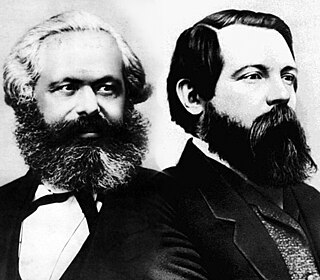
Marxism is a method of socioeconomic analysis that uses a materialist interpretation of historical development, better known as historical materialism, to understand class relations and social conflict as well as a dialectical perspective to view social transformation. It originates from the works of 19th-century German philosophers Karl Marx and Friedrich Engels. As Marxism has developed over time into various branches and schools of thought, there is currently no single definitive Marxist theory.

George Vincent was an English landscape artist who produced watercolours, etchings and oil paintings. He is considered by art historians to be one of the most talented of the Norwich School of painters, a group of artists connected by location and personal and professional relationships, who were mainly inspired by the Norfolk countryside. Vincent's work was founded on the Dutch school of landscape painting as well as the style of John Crome, also of the Norwich School. The school's reputation outside East Anglia in the 1820s was based largely upon the works of Vincent and his friend James Stark.
Michael David Kighley Baxandall, FBA was a British art historian and a professor emeritus of Art History at the University of California, Berkeley. He taught at the Warburg Institute, University of London, and worked as a curator at the Victoria and Albert Museum. His book Painting and Experience in Fifteenth-Century Italy was profoundly influential in the social history of art, and is (2018) widely used as a textbook in college courses.
Martin Shaw is a British sociologist and academic. He is a research professor of international relations at the Institut Barcelona d'Estudis Internacionals, emeritus professor of international relations and politics at Sussex University and a professorial fellow in international relations and human rights at Roehampton University. He is best known for his sociological work on war, genocide and global politics.
Christopher John "Chris" Wickham, is a British historian and academic. From 2005 to 2016, he was Chichele Professor of Medieval History at the University of Oxford and Fellow of All Souls College, Oxford: he is now emeritus professor. He had previously taught at the University of Birmingham from 1977, rising to be Professor of Early Medieval History from 1997 to 2005.

Arif Dirlik was a Turkish-American historian who published on historiography and political ideology in modern China, as well as issues in modernity, globalization, and post-colonial criticism. Dirlik received a BSc in Electrical Engineering at Robert College, Istanbul in 1964 and a PhD in History at the University of Rochester in 1973.
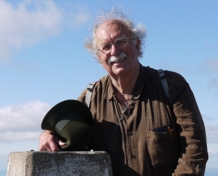
John Charles Barrell FBA FEA is a British scholar of eighteenth and early nineteenth century studies.
Open Marxism is a school of thought which draws on libertarian socialist critiques of party communism and stresses the need for openness to praxis and history through an anti-positivist (dialectical) method grounded in the "practical reflexivity" of Karl Marx's own concepts. The "openness" in open Marxism also refers to a non-deterministic view of history in which the unpredictability of class struggle is foregrounded.

Edward Thomas Daniell was an English artist known for his etchings and the landscape paintings he made during an expedition to the Middle East, including Lycia, part of modern-day Turkey. He is associated with the Norwich School of painters, a group of artists connected by location and personal and professional relationships, who were mainly inspired by the Norfolk countryside.
Gregory Claeys is Professor Emeritus of History at the University of London.
William Vaughan is a British art historian and has been Emeritus Professor of History of Art at Birkbeck College, University of London since 2003.

Eric John Ernest Hobsbawm was a British historian of the rise of industrial capitalism, socialism and nationalism. A life-long Marxist, his socio-political convictions influenced the character of his work. His best-known works include his trilogy about what he called the "long 19th century", The Age of Extremes on the short 20th century, and an edited volume that introduced the influential idea of "invented traditions".
David Hersh Solkin, FBA is the Walter H. Annenberg Professor of the History of Art at the Courtauld Institute, which he joined in 1986. In 2007, Solkin became the Institute's first Dean and Deputy Director. Solkin is an expert in the art of J. M. W. Turner.

Christiana Joan Elizabeth Ruth Payne is a British art historian at Oxford Brookes University who is a specialist in genre painting and the depiction of the natural environment in British art of the eighteenth and nineteenth centuries.

Michael J. Rosenthal is emeritus professor of the history of art at the University of Warwick. He is a specialist both in British art and culture of the eighteenth and early nineteenth centuries, and the arts of early colonial Australia.

Ann Cathleen Bermingham is professor emeritus of art history at the University of California, Santa Barbara. She is a specialist in 18th and 19th-century European art, and particularly British art.

Dana Rebecca Arnold, is a British art historian and academic, specialising in architectural history. Since 2016, she has been Professor of Art History at the University of East Anglia. She previously taught at the University of Leeds, the University of Southampton and the University of Middlesex.

Jaleh Mansoor is an Iranian-born Canadian art historian, critic, and theorist of modern and contemporary art. She is an associate professor in the faculty of Art History, Visual Art and Theory at the University of British Columbia.
References
- ↑ "Prof. Dr. Andrew Hemingway". Zentralinstitut für Kunstgeschichte. Archived from the original on 11 March 2016. Retrieved 11 March 2016.
- ↑ University College London library. Retrieved 11 March 2016.
- ↑ Teach-in with Gregory Sholette & Andrew Hemingway. Arts & Labor, 4 December 2011. Retrieved 11 March 2016.
- ↑ Emeritus Professors. University College London, History of Art. Retrieved 11 March 2016.
- ↑ Bettie Allison Rand Lectures in Art History: Andrew Hemingway. University of North Carolina at Chapel Hill. Retrieved 11 March 2016.