
The Catalan Countries are those territories where the Catalan language is spoken. They include the Spanish regions of Catalonia, the Balearic Islands, Valencian Community, and parts of Aragon and Murcia (Carche), as well as the Principality of Andorra, the department of Pyrénées-Orientales in France, and the city of Alghero in Sardinia (Italy). It is often used as a sociolinguistic term to describe the cultural-linguistic area where Catalan is spoken. In the context of Catalan nationalism, the term is sometimes used in a more restricted way to refer to just Catalonia, Valencia and the Balearic Islands. The Catalan Countries do not correspond to any present or past political or administrative unit, though most of the area belonged to the Crown of Aragon in the Middle Ages. Parts of Valencia (Spanish) and Catalonia (Occitan) are not Catalan-speaking.
The Republican Left of Catalonia is a pro-Catalan independence, social democratic political party in the Spanish autonomous community of Catalonia, with a presence also in Valencia, the Balearic Islands and the French department of Pyrénées-Orientales. It is also the main sponsor of the independence movement from France and Spain in the territories known as Catalan Countries, focusing in recent years on the creation of a Catalan Republic in Catalonia proper. Its current president is Oriol Junqueras and its secretary-general is Marta Rovira. The party is a member of the European Free Alliance.

The Unified Socialist Party of Catalonia was a communist political party active in Catalonia between 1936 and 1997. It was the Catalan branch of the Communist Party of Spain and the only party not from a sovereign state to be a full member of the Third International.
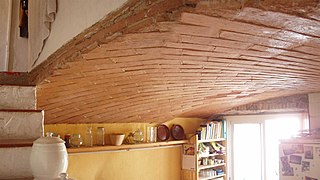
The Catalan vault, also called thin-tile vault, Catalan turn, Catalan arch, boveda ceiling, or timbrel vault, is a type of low brickwork arch forming a vaulted ceiling that often supports a floor above. It is constructed by laying a first layer of light bricks lengthwise "in space", without centering or formwork, and has a much gentler curve than most other methods of construction.

Agustí Cerdà i Argent is a Spanish politician, president of the minority Catalan nationalist party Republican Left of the Valencian Country since its foundation in September of year 2000. He was a Spanish MP during the 2004 term.
Òmnium Cultural is a Spanish association based in Barcelona, Catalonia. It was originally created in the 1960s to promote the Catalan language and spread Catalan culture.
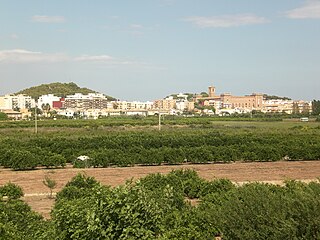
El Puig, officially El Puig de Santa Maria since 2012, is a village situated 15 km north of the city of Valencia in the comarca of Horta Nord, Spain. Its name means "hill" in Valencian). The municipality comprises three main areas, the first being the village itself, which is dominated by a monastery, and two large wooded hills next to it, the largest of which has the ruins of a castle fortress at the top. Originally, however, there was another hill named La Pedrera which disappeared gradually during the 20th century to make way for the V-21 motorway, with the rock being used to construct one of the jetties at Valencia's port. The second section is the coastal area of 4 km of beach with eight housing developments that are generally only inhabited in the summer; and finally, there is an industrial park located between them.
The names of the Valencian Community are diverse, even though Comunitat Valenciana is the only denomination with official status in its Statute of Autonomy. Nonetheless, this legal document includes in its Preamble other legal denominations that portray the history and nature of the territory: Regne de València and País Valencià.

Simat de la Valldigna is a municipality in the comarca of Safor in the Valencian Community, Spain. It is 50 km from Valencia, and 20 km from Cullera and Gandia. It is also near Xàtiva and Alzira.
Blaverism is a Valencian regionalist ideology in the Valencian Community (Spain) that emerged with the Spanish transition to democracy characterised by strong anti-Catalanism, born out of its opposition to Joan Fuster's book Nosaltres, els valencians (1962), which promoted the concept of the Catalan Countries which includes Valencia. They consider Fuster's ideas as an imperialist Catalan nationalist movement that tries to impose Catalan domination upon Valencia. Blaverism takes its name from the blue fringe which distinguishes the Valencian flag from other flags with a common origin, particularly from the Catalan.

Valencian Left was a nationalist Valencian leftist political party founded in July 1934, that advocated self-determination of the Valencian Community. The party was suppressed in Francoist Spain and was not revived when democracy returned to Spain in the late 1970s.

La Forja - Jovent Revolucionari is a left-wing Catalan independence youth organization that is active in all the Catalan Countries. La Forja is part of the Popular Unity Candidacy–Constituent Call (CUP-CC) coalition and has very close ties with the political party Poble Lliure.

Coalició Compromís, also known as Compromís, is a Valencianist electoral coalition in the Valencian Community, Spain. The parties involved include Més-Compromís, the left-wing Valencian People's Initiative, and the ecologist group Greens Equo of the Valencian Country and independent members. Together, they defend Valencianist, progressive and ecological politics.

The Grup d'Acció Valencianista (GAV) is a pro-Valencian blaverist organization which was created in 1977. They define themselves as "the fighting and warlike faction of real valencianism". Nonetheless, they are generally considered as an extreme right group due to their activities.
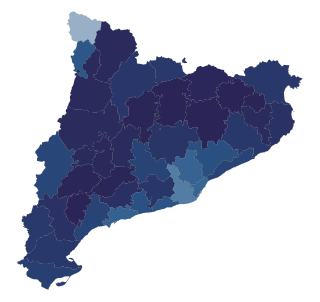
A non-binding Catalan self-determination referendum, also known as the Citizen Participation Process on the Political Future of Catalonia, was held on Sunday, 9 November 2014, to gauge support on the political future of Catalonia. While also referred to as "Catalan independence referendum", the vote was rebranded as a "participation process" by the Government of Catalonia, after a "non-referendum popular consultation" on the same topic and for the same date had been suspended by the Constitutional Court of Spain.
Revolutionary Communist League was a political party in Spain. It was founded in 1971 by members of the Catalan group Comunisme, a split of the Popular Liberation Front (FLP). The LCR had a trotskyist ideology, adopting more heterodox political positions in the 1980s.
Left Nationalists was a Catalan socialist and independentist political organization founded in 1979 from historical militants of the Socialist Party of National Liberation (PSAN), National Front of Catalonia, Catalan Communist Collective and independents linked to social movements. Its structure was based in local assemblies, and claimed the right to self-determination of Catalonia within a confederal Catalan Countries. NE also defined itself as national-popular and socialist. The party attracted activist from social movements, specially environmentalists, feminists, gays, youth, etc. The most representative were Jordi Carbonell, Josep Maria Espinàs, Magda Oranich, Avel·lí Artís i Gener and Armand de Fluvià. NE disbanded in 1984.

Valencian Socialist Party was a political party in Valencia, Spain. It existed between 1974 and 1978, during the Francoist dictatorship and the early Spanish transition to democracy, which had banned all the political organizations other than those in the Movimiento Nacional. The party wasn't legalized until the 9 of April 1977.

Antoni "Toni" Comín i Oliveres is a Catalan intellectual and politician from Spain. He is currently the executive vice-president of the Council for the Republic and has been an MEP since July 2019. He is the fourth child of the politician and intellectual Alfonso Carlos Comín i Ros and Maria Lluïsa Oliveres i Sanvicens, whose other children are Maria, Pere and Betona. He is the partner of the stage designer Sergi Corbera, and they have a daughter called Laia.
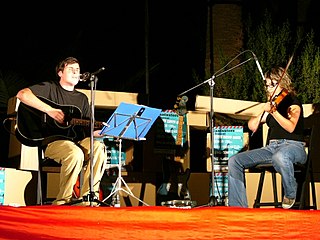
Pau Alabajos i Ferrer is a spanish singer-songwriter and politician. As of 2017 he has seven records. He is the current Secretary of the musicians and singers association in the Valencian Country Col•lectiu Ovidi Montllor (COM).
