Related Research Articles

Universal Pictures is an American film production and distribution company owned by Comcast through the NBCUniversal Film and Entertainment division of NBCUniversal.

Major film studios are production and distribution companies that release a substantial number of films annually and consistently command a significant share of box office revenue in a given market. In the American and international markets, the major film studios, often simply known as the majors, are commonly regarded as the five diversified media conglomerates whose various film production and distribution subsidiaries collectively command approximately 80 to 85% of U.S. box office revenue. The term may also be applied more specifically to the primary motion picture business subsidiary of each respective conglomerate.

Harry Reichenbach was a US press agent and publicist who dreamed up sensational publicity stunts to promote films. He was one of the founding members of the Associated Motion Picture Advertisers.

William Wadsworth Hodkinson, known more commonly as W. W. Hodkinson, was born in Independence, Kansas. Known as The Man Who Invented Hollywood, he opened one of the first movie theaters in Ogden, Utah in 1907 and within just a few years changed the way movies were produced, distributed, and exhibited. He became a leading West Coast film distributor in the early days of motion pictures and in 1912 he co-founded and became president of the first nationwide film distributor, Paramount Pictures Corporation. Hodkinson was also responsible for doodling the mountain that became the Paramount logo in 1914. After being driven out of Paramount, he established his own independent distribution company, the W. W. Hodkinson Corporation, in 1917, before selling it off in 1924. He left the motion picture business in 1929 to form Hodkinson Aviation Corporation, and later formed the Central American Aviation Corporation and Companía Nacional de Aviación in Guatemala.
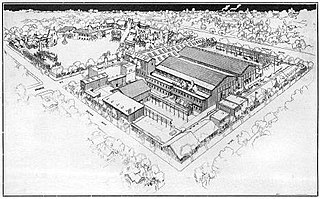
Famous Players-Lasky Corporation was an American motion picture and distribution company formed on July 19, 1916 from the merger of Adolph Zukor's Famous Players Film Company—originally formed by Zukor as Famous Players in Famous Plays—and the Jesse L. Lasky Feature Play Company.
The Independent Moving Pictures Company (IMP) was a motion picture studio and production company founded in 1909 by Carl Laemmle. The company was based in New York City, with production facilities in Fort Lee, New Jersey. In 1912, IMP merged with several other production companies to form Universal Film Manufacturing Company, later re-named Universal Pictures Company with Laemmle as president.
Mutual Film Corporation was an early American film conglomerate that produced some of Charlie Chaplin's greatest comedies. Founded in 1912, it was absorbed by Film Booking Offices of America, which evolved into RKO Pictures.
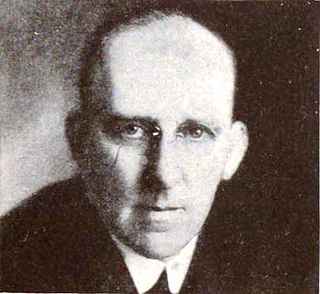
Charles Eyton was an actor-producer who became general manager of Famous Players-Lasky Corporation during the silent film era.

The Motion Picture Association – Canada, or MPA-Canada, is a film industry trade group that speaks for and represents the major U.S. producers and distributors of motion pictures, streaming media, and television programming in Canada.
Mary Parent is an American film producer, and former studio executive. In February 2011, she co-founded Disruption Entertainment, a company with a first-look deal at Paramount Pictures. She was formerly the Chairperson of Metro Goldwyn Mayer's Worldwide Motion Picture Group. She was a former President of Production for Universal Studios. There, she was responsible for Meet the Fockers, The Bourne Supremacy, Serenity, and other films. In 2004, Parent and Scott Stuber were named Vice Chairman of Worldwide Production for Universal Pictures. In 2005, Universal inked a production deal with the duo under the shingle Stuber/Parent Productions. Under Stuber/Parent, she has produced such films as Role Models (2008), Welcome Home Roscoe Jenkins (2008), The Kingdom (2007), and You, Me and Dupree (2006). She produced Guillermo del Toro's Pacific Rim, the Darren Aronofsky epic Noah and The SpongeBob Movie: Sponge Out of Water (2015). Parent worked at New Line Cinema in the 1990s.

The Alliance of Motion Picture and Television Producers (AMPTP) is a trade association based in Sherman Oaks, California, that represents over 350 American television and film production companies in collective bargaining negotiations with entertainment industry trade unions that include, among others, SAG-AFTRA, the Directors Guild of America, the Writers Guild of America, West, the Writers Guild of America, East, the American Federation of Musicians, and the International Alliance of Theatrical Stage Employees.
The Centaur Film Company was an American motion picture production company founded in 1907 in Bayonne, New Jersey, by William and David Horsley. It was the first independent motion picture production company in the United States. In 1909 the company added a West Coast production unit, the Nestor Film Company, which established the first permanent film studio in Hollywood, California, in 1911. The company was absorbed by the Universal Film Manufacturing Company in 1912.
Homer Scott was a founding member of the American Society of Cinematographers (A.S.C.) and was their president from 1925-1926. He was also a member and director of its predecessor organization, The Static Club of America.

Jane is a 1915 American silent film produced by the Oliver Morosco company and distributed by Paramount Pictures. It is based on a stage play Jane by W.H. Lestocq and Harry Nicholls. Frank Lloyd directed, early in his career, and up-and-coming stage comic Charlotte Greenwood debuts and stars in her first motion picture. This was Lloyd's second directed feature film after several years of making shorts. This film survives in the Library of Congress.

Joe Brandt was an American publicist, screenwriter, editor, film producer, and general manager. He co-founded Columbia Pictures with Harry and Jack Cohn.

The United States Motion Picture Corporation was an early American independent film studio that produced comedic films on the East Coast. It existed during the "transitional" period before the Hollywood studio system centralized film production. The United States Motion Picture Corporation made one reel silent films in the Wilkes-Barre, Pennsylvania, area from 1916 through 1919.
The New York Motion Picture Company is a film production and distribution company from 1909 until 1914. It changed names to New York Picture Corporation in 1912. It released films through several different brand names, including 101 Bison, Kay-Bee, Broncho, Domino, Reliance, and Keystone Studios.
The Morosco Photoplay Company was created in 1914 by Frank Garbutt. It was named for Oliver Morosco. In 1916 it was acquired by Famous Players-Lasky Corporation and became a subsidiary. Charles Eyton was appointed to supervise the company's productions.
Pallas Pictures was a film studio in the U.S. headed by Frank A. Garbutt. In 1913 the film production company Bosworth Incorporated was founded to release film adaptations of Jack London's stories. Hobart Bosworth was President of the company but as Jack London wrote, "Mr. Garbutt has absolute charge of the entire business of Bosworth, Inc." The company rented studio space until September 1914 when Bosworth Inc. constructed its own studio at 211 N. Occidental Blvd., Los Angeles. When Hobart Bosworth left in 1915 Garbutt assumed full control of Bosworth Inc. Several months later the company was renamed Pallas Pictures, with Melodile Garbutt listed as president of Pallas Pictures. The Pallas logo was a capital "P" with an owl on a branch.
References
- ↑ "Motion Picture Publicity Men Organize". Moving Picture World. August 19, 1916. Retrieved 2012-08-10.
- ↑ Vitagraph, Lubin, Selig, and Essanay
- ↑ "Movie Ad Men in Association". The Fourth Estate. August 5, 1916. Retrieved 2012-08-10.
- ↑ The 1963 Film Daily Yearbook of Motion Pictures. New York City. 1963. p. 357. Retrieved 2012-08-20.
| General | |
|---|---|
| National libraries | |

 | This advertising-related article is a stub. You can help Wikipedia by expanding it. |