| |||||||||||||||||||||||||||||||||||||||||||||||||||||||||||||||||||||||||||||
18 seats in the Legislative Assembly of the Cayman Islands 10 seats needed for a majority | |||||||||||||||||||||||||||||||||||||||||||||||||||||||||||||||||||||||||||||
| Turnout | 79.93% [1] | ||||||||||||||||||||||||||||||||||||||||||||||||||||||||||||||||||||||||||||
| |||||||||||||||||||||||||||||||||||||||||||||||||||||||||||||||||||||||||||||
| |||||||||||||||||||||||||||||||||||||||||||||||||||||||||||||||||||||||||||||
General elections were held in the Cayman Islands on 22 May 2013. [2] The incumbent United Democratic Party (UDP) government fell on a motion of non-confidence in December 2012 and was replaced by an interim government made up of former UDP members who formed the People's National Alliance (PNA). The main competition in the election was between the People's Progressive Movement (Progressives) and the UDP, with the PNA and a new political group the Coalition for Cayman (C4C) presenting an insufficient number of candidates to win a majority government.
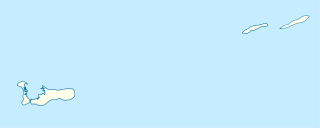
The Cayman Islands is an autonomous British Overseas Territory in the western Caribbean Sea. The 264-square-kilometre (102-square-mile) territory comprises the three islands of Grand Cayman, Cayman Brac and Little Cayman, which are located to the south of Cuba and northeast of Honduras, between Jamaica and the Yucatán Peninsula. As of July 2018, the total population of the Cayman Islands is estimated to be 59,613, making it the second-most populated British overseas territory after Bermuda. The capital city is George Town, situated on Grand Cayman, by far the most populous of the three islands.
The People's Progressive Movement is a political party in the Cayman Islands headed by Alden McLaughlin.
A majority government refers to one or multiple governing parties that hold an absolute majority of seats in legislature. This is as opposed to a minority government, where the largest party in a legislature only has a plurality of seats.
The Progressives won half of the seats (9), with the UDP and C4C taking 3 each, and outgoing Premier of the Cayman Islands Juliana O'Connor-Connolly holding the only seat for the PNA. The two incumbent independents were also re-elected. Progressive leader Alden McLaughlin formed a new government.
The Premier of the Cayman Islands is the political leader and head of government. The post of Premier in the Cayman Islands is the equivalent to Chief Minister or Prime Minister in other British Overseas Territories. It is the highest political level that can be attained within the British overseas territory. Prior to 2009, the position was known as Leader of Government Business.
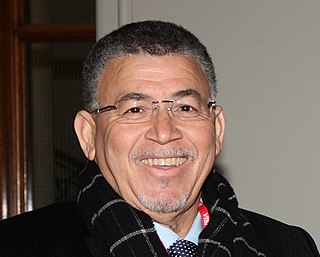
Alden McNee McLaughlin Jr., MBE, is a Caymanian politician who has been Premier of the Cayman Islands since 2013. McLaughlin serves as leader of the People's Progressive Movement in the Cayman Islands. McLaughlin is the elected member for George Town, currently serving his fifth term in the Legislative Assembly. He has represented the district of George Town in the Legislative Assembly of the Cayman Islands continuously since 2000.
In the 2009 elections, the United Democratic Party led by its founder and former Premier McKeeva Bush won a majority government. Bush returned to office as Premier until December 2012, when he lost a motion of confidence in the legislature. The confidence motion was triggered by a criminal investigation of Bush and was supported by the opposition People's Progressive Movement and dissident members of his own party, including members of the cabinet. A new government was formed by these dissidents, led by Bush's former deputy Juliana O'Connor-Connolly. Bush would later be charged with four counts of breach of trust, and five counts of theft. Bush continued to lead his party. [3] O'Connor-Connolly and her cabinet formed their own party called the People's National Alliance, [4] but only the five incumbent cabinet ministers stood as candidates under its banner. A fourth party, the Coalition for Cayman, put forward seven candidates, whilst 17 independents also contested the elections. [5]
William McKeeva Bush, JP OBE is a Caymanian politician, Speaker of the Legislative Assembly of the Cayman Islands and former Premier of the Cayman Islands. Bush, the leader of the Cayman Democratic Party, is the elected member for the district of West Bay. He is the country's longest ever serving political figure with service spanning over 30 years, currently serving his ninth term in the Legislative Assembly of the Cayman Islands.
The outgoing Legislative Assembly had 18 members, of which three were appointed (the Chief Secretary, the Attorney-General and the Financial Secretary) and 15 were elected. [2] However, under constitutional changes passed in 2009, the new assembly will have 18 elected members. [6] George Town gained 2 new seats, and Bodden Town gained one new seat. Each of the six districts forms a constituency, with six members elected in George Town, four each in West Bay and Bodden Town, two in Cayman Brac and Little Cayman and one in North Side and East End. [7] The members of the multi-member districts are elected by plurality-at-large voting, where every voter can vote for as many candidates as there are seats.
The Legislative Assembly of the Cayman Islands is the unicameral legislature of the British Overseas Territory of the Cayman Islands. It is composed of 21 members; 19 elected members for a four-year term and two members ex officio.
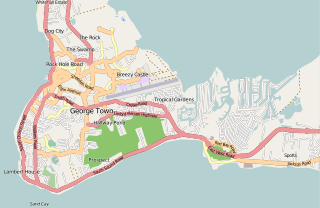
George Town is a city situated on Grand Cayman island of the Cayman Islands. It serves as the capital of the Cayman Islands, in the British West Indies. As of 2007, the city had a population of 28,836, making it the second largest city of all the British Overseas Territories.
West Bay is a district located on the west side of Grand Cayman Island in the British West Indies. The population is 11,436.
The opposition Progressives more than doubled their seat count to 9, bringing them one seat short of an overall majority. Progressive leader Alden McLaughlin has said he will talk with Change for Cayman (C4C) and independent MLAs about the possibility of supporting his government. Another option would be having an opposition member become speaker, which would give the Progressives a majority of 9-8 among voting members. [8]
The opposition United Democratic Party (UDP) lost 1 seat but was down 6 from their 2009 result, and failed to sweep the West Bay district for the first time in 12 years. The governing People's National Alliance, a breakaway group from the UDP, lost 4 of its 5 seats. C4C, a new political organization, won 3 seats, while incumbent independents Ezzard Miller and Arden McLean (a former Progressive) held their seats.
| Party | Votes | % | Seats | +/– | |
|---|---|---|---|---|---|
| People's Progressive Movement | 21,859 | 36.1 | 9 | +4 | |
| United Democratic Party | 16,816 | 27.8 | 3 | –6 | |
| Coalition for Cayman | 11,275 | 18.6 | 3 | New | |
| People's National Alliance | 3,436 | 5.7 | 1 | New | |
| Independents | 7,212 | 11.9 | 2 | +1 | |
| Total votes cast | 60,598 | 100 | 18 | +3 | |
| Total voters | 14,760 | – | – | – | |
| Registered voters/turnout | 18,492 | 79.82 | – | – | |
| George Town (6 members) | ||||||
|---|---|---|---|---|---|---|
| Result | Candidate | Votes | Vote % | Incumbent | ||
| First Elected Member | Kurt Tibbetts | 2470 | 41.9% | Kurt Tibbetts | ||
| Second Elected Member | Roy McTaggart | 2160 | 36.7% | Michael Adam | ||
| Third Elected Member | Alden McLaughlin | 2145 | 36.4% | Alden McLaughlin | ||
| Fourth Elected Member | Marco Archer | 2085 | 35.4% | Ellio Solomon | ||
| Fifth Elected Member | Winston Conolly | 2039 | 34.6% | new seat | ||
| Sixth Elected Member | Joseph Hew | 1940 | 32.9% | new seat | ||
| Unsuccessful candidates | Michael Adam | 1889 | 32.1% | |||
| Sharon Roulstone | 1812 | 30.8% | ||||
| Lucille Seymour | 1768 | 30.0% | ||||
| Kenneth Bryan | 1735 | 29.5% | ||||
| Jude Scott | 1681 | 28.5% | ||||
| Derrington Miller | 1590 | 27.0% | ||||
| Ellio Solomon | 1528 | 25.9% | ||||
| Jonathan Piercy | 1439 | 24.4% | ||||
| Walling Whittaker | 1413 | 24.0% | ||||
| Renard Moxam | 1345 | 22.8% | ||||
| Rayal Bodden | 1330 | 22.6% | ||||
| Stefan Baraud | 1124 | 19.1% | ||||
| Jaqueline Hayes | 1035 | 17.6% | ||||
| Frank McField | 211 | 3.6% | ||||
| Mathew Leslie | 91 | 1.5% | ||||
| West Bay (4 members) | ||||||
|---|---|---|---|---|---|---|
| Result | Candidate | Votes | Vote % | Incumbent | ||
| First Elected Member | McKeeva Bush | 1583 | 47.3% | McKeeva Bush | ||
| Second Elected Member | Tara Rivers | 1483 | 44.3% | Rolston Anglin | ||
| Third Elected Member | Bernie Bush | 1460 | 43.6% | Cline Glidden | ||
| Fourth Elected Member | Eugene Ebanks | 1307 | 39.0% | Eugene Ebanks | ||
| Unsuccessful candidates | Velma Powery-Hewitt | 1072 | 32.0% | |||
| Mervin Smith | 1065 | 31.8% | ||||
| Woody DaCosta | 855 | 25.5% | ||||
| Rolston Anglin | 782 | 23.4% | ||||
| Ray Farrington | 671 | 20.0% | ||||
| Dalkeith Bothwell | 650 | 19.4% | ||||
| Cline Glidden | 617 | 18.4% | ||||
| Bryan Ebanks | 552 | 16.5% | ||||
| Dwene Ebanks | 370 | 11.1% | ||||
| Andrea Christian | 262 | 7.8% | ||||
| Bodden Town (4 members) | ||||||
|---|---|---|---|---|---|---|
| Result | Candidate | Votes | Vote % | Incumbent | ||
| First Elected Member | Anthony Eden | 1781 | 49.6% | Mark Scotland | ||
| Second Elected Member | Osbourne Bodden | 1615 | 45.0% | Anthony Eden | ||
| Third Elected Member | Wayne Panton | 1571 | 43.7% | Dwayne Seymour | ||
| Fourth Elected Member | Alva Suckoo | 1393 | 38.8% | new seat | ||
| Unsuccessful candidates | Maureen Pitcairn | 1352 | 37.6% | |||
| Charles Clifford | 1220 | 34.0% | ||||
| Christopher Saunders | 1098 | 30.6% | ||||
| Mark Scotland | 864 | 24.1% | ||||
| Dwayne Seymour | 712 | 19.8% | ||||
| Errington Webster | 512 | 14.3% | ||||
| Arnold Berry | 206 | 5.7% | ||||
| Gregg Anderson | 192 | 5.3% | ||||
| Vincent Frederick | 136 | 3.8% | ||||
| Cayman Brac and Little Cayman (2 members) | ||||||
|---|---|---|---|---|---|---|
| Result | Candidate | Votes | Vote % | Incumbent | ||
| First Elected Member | Moses Kirkconnell | 628 | 75.2% | Moses Kirkconnell | ||
| Second Elected Member | Juliana O'Connor-Connolly | 461 | 55.2% | Juliana O'Connor-Connolly | ||
| Unsuccessful candidates | David Bodden | 186 | 22.3% | |||
| Maxine McCoy-Moore | 93 | 11.1% | ||||
| North Side (1 member) | ||||||
|---|---|---|---|---|---|---|
| Result | Candidate | Votes | Vote % | Incumbent | ||
| Elected Member | Ezzard Miller | 326 | 70.1% | Ezzard Miller | ||
| Unsuccessful candidate | Joseph Ebanks | 139 | 29.9% | |||
| East End (1 member) | ||||||
|---|---|---|---|---|---|---|
| Result | Candidate | Votes | Vote % | Incumbent | ||
| Elected Member | Arden McLean | 317 | 57.2% | Arden McLean | ||
| Unsuccessful candidate | John McLean | 237 | 42.8% | |||
No party won an overall majority, but with the Progressives winning half of the seats and three times more seats than any other grouping, they're expected to form the government, either on their own or in coalition with independent members. It is expected that the government will be formed within a week of the election. [8]
Independent members-elect from the C4C group and others had held preliminary talks among themselves to see about forming a coalition government with the Progressives. [9] However, Alden McLaughlin's Progressives have secured a workable majority in the legislature by getting the agreement of outgoing premier Juliana O'Connor-Connolly to serve as speaker, leaving the Progressives a 9-8 majority of ordinarily voting members. McLaughlin held a news conference on Saturday May 25 naming the Progressives that would sit in cabinet and also indicating that he had asked C4C-backed MLA Tara Rivers to join the cabinet, which would give the government a 10-7 working majority. [10] Thereafter, Rivers held a public meeting to assess her constituents views on whether to join the cabinet, the public was nearly unanimous in supporting her to join. [11] Following Rivers public meeting, the two other C4C MLAs indicated that they would reconsider their previous announcement not to join the government. As a result, McLaughlin cancelled a planned morning news conference on Tuesday May 28 in order to have further discussions with the C4C MLAs with an eye to a potential Progressives/C4C coalition government. [12]
Later Tuesday, it was announced that O'Connor-Connolly would join the Progressive caucus despite earlier statements that she would not do so when she was announced as speaker. As a result, the Progressives have a true majority of 10-8 allowing them to be appointed to government by the Governor of the Cayman Islands without a vote of the legislature. [13] Thereafter, McLaughlin announced the full make-up of his cabinet, including a portfolio for C4C MLA Tara Rivers. McLaughlin also announced that C4C MLA Winston Connolly would sit in the government caucus and play a role in Rivers' ministry in a non-cabinet position and that the government would support the other C4C MLA Roy McTaggart for chair of the Public Accounts Committee. [14] Two weeks after the election, McTaggart crossed the floor to sit with his C4C colleagues in the government caucus, accordingly he will have to step down from his position as Chairman of Public Accounts, a post always occupied by an opposition member. [15] This leaves the government with a 13-5 majority.
This will be the last election under the block voting system as a result of the election of the Progressives. Progressive leader Alden McLaughlin reiterated his commitment after the election to move to a "one man one vote" system with a single-member electoral districts. McLaughlin will use the result of the non-binding 2012 referendum on such a system rather than holding a new referendum. [8]
After the results of the vote, the husband of the fifth-place finisher in the West Bay electoral district Velma Powery-Hewitt, filed a suit in the Grand Court of the Cayman Islands challenging the eligibility of Tara Rivers to have run and serve in the legislative assembly. Had the challenge been successful, Powery-Hewitt stood to take Rivers' seat in the legislature.
The Cayman Islands constitution forbids election to the legislative assembly to a person:
The challenger argued that Rivers had been absent to the UK for more than 400 days where Rivers worked at a law firm. Rivers argued that her work at the law firm included extensive training and that it should be deemed "attendance as a student at (an) educational establishment" as permitted by the constitution. The challenger also argued that by applying for and receiving a U.S. passport, to which Rivers was entitled by virtue of having been born there, she was express allegiance to the United States and was therefore ineligible under the restrictions against dual citizenship. Rivers argued that no allegiance was given in exchange for the passport and that she was required by law as a U.S. citizen to enter the U.S. using a U.S. passport, not the passport of another country.
The court ruled with Rivers and she was allowed to keep her seat. [16] This prompted some complaint from others who did not present themselves as candidates though they had the same qualifications as Rivers but were advised they were ineligible to run by elections officials, and by an individual who had renounced her U.S. citizenship believing she had to do so to run. Powery-Hewitt's husband later attempted to appeal the decision, [17] but as the Constitution states that electoral questions are the sole jurisdiction of the Grand Court, the Court of Appeal declined to hear the case. [18]
The British Columbia Liberal Party is a centre-right provincial political party in British Columbia, Canada. The base of the BC Liberal Party is made up of supporters of both the federal Liberal Party and Conservative Party, and its policies are a mixture of Liberal and Conservative. The party forms the Official Opposition. Andrew Wilkinson became leader of the party on February 3, 2018, after winning the Leadership Election on the fifth ballot, making him the Leader of the Official Opposition of British Columbia.
The Progressive Conservative Association of Alberta was a provincial centre-right party in the Canadian province of Alberta. The party formed the provincial government, without interruption, from 1971 until the party's defeat in the 2015 provincial election under Premiers Peter Lougheed, Don Getty, Ralph Klein, Ed Stelmach, Alison Redford, Dave Hancock and Jim Prentice. At 44 years, this was the longest unbroken run in government at the provincial or federal level in Canadian history.
The United Farmers of Ontario (UFO) was an agrarian and populist provincial political party in Ontario, Canada. It was the Ontario provincial branch of the United Farmers movement of the early part of the 20th century.
The Alberta Liberal Party is a provincial political party in Alberta, Canada. Founded in 1905, it was the dominant political party until the 1921 election, with the first three provincial Premiers being Liberals. Since 1921, it has formed the official opposition in the Legislative Assembly of Alberta several times, most recently from 1993 until 2012. Fourteen Liberals have served as Leader of the Opposition of Alberta.
The Saskatchewan general election of 1999 was the twenty-fourth provincial election held in the Canadian province of Saskatchewan. It was held on September 16, 1999 to elect members of the 24th Legislative Assembly of Saskatchewan.
Calgary-Foothills is a provincial electoral district for the Legislative Assembly of Alberta, Canada. It is located in the northwest corner of Calgary. It elected six consecutive Progressive Conservative MLAs from its creation in 1971 until ousted Premier Jim Prentice disclaimed his winning seat on the 2015 general election night, later electing a member of the Wildrose in the following by-election.
Darwin Kurt Tibbetts, OBE is a Caymanian politician and former Leader of Government Business in the Cayman Islands. Tibbetts served as leader of the People's Progressive Movement party from June 2003 to February 2011. Tibbetts served as the first elected member for the district of George Town, serving six terms in the Legislative Assembly of the Cayman Islands.
David Graeme "Dave" Hancock, is a Canadian lawyer and was the 15th Premier of Alberta in 2014. Since 2017, he has served as a judge of the Provincial Court of Alberta.. From 1997 to 2014, he was a Member of the Legislative Assembly of Alberta representing Edmonton-Whitemud as a Progressive Conservative until announcing resigning from the legislature on September 12, 2014.
The 27th Saskatchewan general election was held on November 7, 2011, to elect 58 members of the Legislative Assembly of Saskatchewan (MLAs). The election was called on October 10 by the Lieutenant Governor of Saskatchewan, on the advice of Premier Brad Wall. Wall's Saskatchewan Party government was re-elected with an increased majority of 49 seats, the third-largest majority government in the province's history. The opposition New Democratic Party was cut down to only nine ridings, its worst showing in almost 30 years.
Richard William "Ric" McIver is a politician and businessman from Calgary, Alberta, Canada, who has served on Calgary City Council (2001–10) and has been an MLA in the Legislative Assembly of Alberta since 2012. He served in several cabinet positions under Premiers Alison Redford, Dave Hancock and Jim Prentice. Following the party's defeat in the 2015 provincial election McIver was chosen interim leader of the Progressive Conservative Association of Alberta.
The 2015 general election of Alberta, Canada, took place on May 5, 2015, following a request of Premier Jim Prentice to the Lieutenant Governor of Alberta Donald Ethell to dissolve the Legislative Assembly on April 7, 2015. This election elected members to the 29th Alberta Legislature. It was only the fourth time in provincial history that saw a change of government, and was the last provincial election for both the Alberta Progressive Conservative and Wildrose Parties, which would merge in 2017 to form the United Conservative Party.
The members of the 23rd Manitoba Legislature were elected in the Manitoba general election held in November 1949. The legislature sat from February 14, 1950, to April 23, 1953.
The 2015 Prince Edward Island general election was held May 4, 2015 to elect members of the 65th General Assembly of Prince Edward Island. Under amendments passed by the Legislative Assembly of Prince Edward Island in 2008, Prince Edward Island elections are usually held on the first Monday of October in the fourth calendar year, unless it is dissolved earlier by the Lieutenant Governor of Prince Edward Island due to a motion of no confidence. The current government had hinted that an election would be held "before Mother's Day" 2015, and such a dissolution would avoid any conflicts with the next federal election, expected to be held in October 2015.
The 2019 Prince Edward Island general election will occur on or before October 7, 2019, under the fixed election date provisions of the Prince Edward Island Elections Act requiring a provincial election to be held by the first Monday of October in the fourth calendar year unless it is called earlier by the Lieutenant Governor of Prince Edward Island due to a motion of no-confidence in the Legislative Assembly or at the request of the Premier. The election will be held concurrently with a referendum on electoral reform.
General elections were held in the Cayman Islands on 24 May 2017. They were the first elections held after electoral reforms approved in a 2012 referendum, which introduced single member constituencies.