Plurality voting is an electoral system in which each voter is allowed to vote for only one candidate, and the candidate who polls the most among their counterparts is elected. In a system based on single-member districts, it may be called first-past-the-post (FPTP), single-choice voting, simple plurality or relative/simple majority. In a system based on multi-member districts, it may be referred to as winner-takes-all or bloc voting. The system is often used to elect members of a legislative assembly or executive officers. It is the most common form of the system, and is used in most elections in the United States, the lower house in India, most elections in the United Kingdom, and Canada.
Regular elections in Croatia are mandated by the Constitution and legislation enacted by Parliament. The presidency, Parliament, county prefects and assemblies, city and town mayors, and city and municipal councils are all elective offices. Since 1990, five presidential elections have been held. During the same period, nine parliamentary elections were also held. In addition, there were six nationwide local elections. Croatia has held two elections to elect 11 members of the European Parliament following its accession to the EU on 1 July 2013.

France is a representative democracy. Public officials in the legislative and executive branches are either elected by the citizens or appointed by elected officials. Referendums may also be called to consult the French citizenry directly on a particular question, especially one which concerns amendment to the Constitution.

A referendum, in the Italian legal system is a request directed to the whole electorate to express their view on a determined question. It is the main instrument of direct democracy in Italy.
Elections in Benin take place within the framework of a multi-party democracy and a presidential system. Both the President and the National Assembly are directly elected by voters, with elections organised by the Autonomous National Electoral Commission (CENA).
BC-STV is the proposed voting system recommended by the Citizens' Assembly on Electoral Reform in October 2004 for use in British Columbia, and belongs to the single transferable vote family of voting systems. BC-STV was supported by a majority (57.7%) of the voters in a referendum held in 2005 but the government had legislated that it would not be bound by any vote lower than 60% in favour. Because of the strong majority support for BC-STV, the government elected to stage a second referendum in 2009, but with increased public funding for information campaigns to better inform the electorate about the differences between the existing and proposed systems. The leadership of both the 'yes' side and the 'no' side were assigned by the government. The proposal was rejected with 60.9% voting against, vs. 39.1% in favour, in the 2009 vote.
Electoral reform in Virginia refers to efforts to change the electoral system in the Commonwealth of Virginia. Virginia has undergone much electoral change since its settling in 1607, many of which were required by federal legislation. However, it remains a relatively conservative state in this respect compared to California and others which have experimented with various alternative systems.

The United Kingdom Alternative Vote referendum, also known as the UK-wide referendum on the Parliamentary voting system was held on Thursday 5 May 2011 in the United Kingdom (UK) to choose the method of electing MPs at subsequent general elections as part of the Conservative – Liberal Democrat Coalition Agreement drawn up after the 2010 general election which had resulted in the first hung parliament since February 1974 and also indirectly in the aftermath of the 2009 expenses scandal under the provisions of the Parliamentary Voting System and Constituencies Act 2011 and was the first national referendum to be held under provisions laid out in the Political Parties, Elections and Referendums Act 2000.
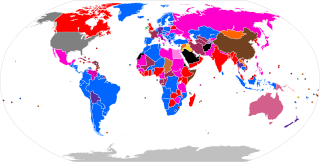
An electoral system is a set of rules that determine how elections and referendums are conducted and how their results are determined. Political electoral systems are organized by governments, while non-political elections may take place in business, non-profit organisations and informal organisations.

A legislative election was held in Belize on 7 March 2012 to elect all 31 members of the Belize House of Representatives as well as offices in the various local governments. The election was run by the Elections and Boundaries Commission's Elections and Boundaries Department. Dean Barrow and his United Democratic Party (UDP) were re-elected, but lost eight seats to the opposition People's United Party (PUP) to maintain a slim 17-14 majority in the Belize House. The upper house of the Belize National Assembly, the Senate, was appointed after the election by the UDP-led government in accordance with the Constitution of Belize.

A referendum on the electoral law was held in San Marino on 3 July 2005. Voters were asked four questions on changes to the electoral law and electoral system. Although all four were approved by a majority of those voting, voter turnout was just 21.7%, meaning that the quorum of 32% of registered voters (10,143) was not achieved for any question. This resulted in all four questions failing, including two that proposed raising the quorum to 40%.

General elections were held in the Cayman Islands on 22 May 2013. The incumbent United Democratic Party (UDP) government fell on a motion of non-confidence in December 2012 and was replaced by an interim government made up of former UDP members who formed the People's National Alliance (PNA). The main competition in the election was between the People's Progressive Movement (Progressives) and the UDP, with the PNA and a new political group the Coalition for Cayman (C4C) presenting an insufficient number of candidates to win a majority government.

A fifteen-part constitutional referendum was held in Colombia on 25 October 2003. Whilst all fifteen proposals were approved by voters, only one question had a sufficient numbers of votes to pass the 25% quorum requirement.

A referendum on the archive law was held in Slovenia on 8 June 2014. Voters were asked whether they were in favor of the amendments to the law that were passed in January 2014. The amendments were rejected by 67% of voters, although the referendum was invalidated by "no" voters accounting for only 7.79% of all registered voters, well below the 20% quorum.

A three-part referendum was held in Poland on 6 September 2015. Voters were asked whether they approved of introducing single-member constituencies for Sejm elections, maintaining state financing of political parties and introducing a presumption in favour of the taxpayer in disputes over the tax law.

Federal elections were held in Switzerland on 28 October 1917. The Free Democratic Party retained its majority in the National Council. They were the last elections held under the majoritarian system; following a referendum in 1918 in which two-thirds of voters voted for the introduction of proportional representation, the electoral system was changed and early elections held in 1919.
Four referendums were held in San Marino on 15 May 2016. Three of the four proposals were approved, with the repeal of law 137 rejected.
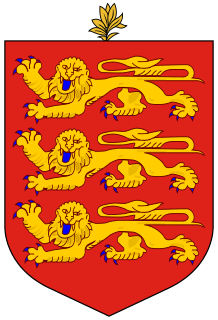
A referendum on the electoral system for the States was held in Guernsey on 10 October 2018.

A referendum on reforming the electoral system is scheduled to be held in the Falkland Islands on Thursday 7 November 2019. Voters will be asked if they want to replace the two existing electoral constituencies with a single constituency for the whole of the Islands.

Parliamentary elections were held in the Federated States of Micronesia on 5 March 2019, alongside a referendum on calling a Constitutional Convention. All 14 seats in Congress were up for election, and all 13 incumbents standing for re-election were returned to Congress.