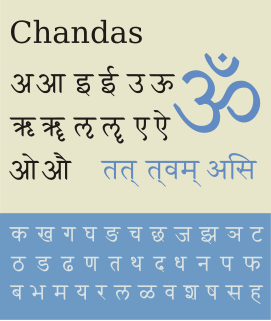
Devanagari, also called Nagari, is a left-to-right abugida, based on the ancient Brāhmī script, used in the Indian subcontinent. It was developed in ancient India from the 1st to the 4th century CE and was in regular use by the 7th century CE. The Devanagari script, composed of 47 primary characters including 14 vowels and 33 consonants, is the fourth most widely adopted writing system in the world, being used for over 120 languages.

Hindi, or more precisely Modern Standard Hindi, is an Indo-Aryan language spoken chiefly in North India. Hindi has been described as a standardised and Sanskritised register of the Hindustani language, which itself is based primarily on the Khariboli dialect of Delhi and neighbouring areas of Northern India. Hindi, written in the Devanagari script, is one of the two official languages of the Government of India, along with the English language. It is an official language in 9 States and 3 Union Territories and an additional official language in 3 other States. Hindi is also one of the 22 scheduled languages of the Republic of India.

A text editor is a type of computer program that edits plain text. Such programs are sometimes known as "notepad" software, following the naming of Microsoft Notepad. Text editors are provided with operating systems and software development packages, and can be used to change files such as configuration files, documentation files and programming language source code.

Urdu is an Indo-Aryan language spoken chiefly in South Asia. It is the official national language and lingua franca of Pakistan. In India, Urdu is an Eighth Schedule language whose status, function, and cultural heritage is recognized by the Constitution of India; it has some form of official status in several Indian states. In Nepal, Urdu is a registered regional dialect.

Hindustani is the lingua franca of Northern India and Pakistan; in linguistics and some other contexts, it is also known as Hindi–Urdu,.

In linguistics, specifically phonetics and phonology, schwa is the mid central vowel sound in the middle of the vowel chart, denoted by the IPA symbol ⟨ə⟩, or another vowel sound close to that position. It is the vowel sound produced when the lips, tongue, and jaw are completely relaxed. An example in English is the vowel sound of the ⟨a⟩ in the word about. Schwa in English is mainly found in unstressed positions, but in some other languages it occurs more frequently as a stressed vowel.
Devanāgarī is an Indian script used for many languages of India and Nepal, including Hindi, Marathi, Nepali and Sanskrit. There are several somewhat similar methods of transliteration from Devanāgarī to the Roman script, including the influential and lossless IAST notation.

There is no national language in India. However, article 343(1) of the Indian constitution specifically mentions that, "The official language of the Union shall be Hindi in Devanagari script. The form of numerals to be used for the official purposes of the Union shall be the international form of Indian numerals." The business in Indian parliament can only be transacted in Hindi or in English. English is allowed to be used in official purposes such as parliamentary proceedings, judiciary, communications between the Central Government and a State Government. There are various official languages in India at the state/territory level. States within India have the liberty and powers to specify their own official language(s) through legislation. In addition to the official languages, the constitution recognizes 22 regional languages, which include Hindi but not English, as scheduled languages.

Marwari, is a Rajasthani language spoken in the Indian state of Rajasthan. Marwari is also found in the neighbouring states of Gujarat and Haryana, eastern Pakistan, and some migrant communities in Nepal. With some 7.8 million or so speakers, it is one of the largest varieties of Rajasthani. Most speakers live in Rajasthan, with a quarter-million in Sindh and a tenth of that number in Nepal. There are two dozen dialects of Marwari.
Formatted text, styled text, or rich text, as opposed to plain text, has styling information beyond the minimum of semantic elements: colours, styles, sizes, and special features in HTML.

A grammar checker, in computing terms, is a program, or part of a program, that attempts to verify written text for grammatical correctness. Grammar checkers are most often implemented as a feature of a larger program, such as a word processor, but are also available as a stand-alone application that can be activated from within programs that work with editable text.

Awadhi, also known as Oudhi (औधी/𑂌𑂡𑂲) is an Eastern Hindi language of the Indo-Aryan branch spoken in northern India. It is primarily spoken in the Awadh region of present-day Uttar Pradesh, India. The name Awadh is connected to Ayodhya, the ancient city, which is regarded as the homeland of the Hindu god Rama. It was, along with Braj Bhasha, used widely as a literary vehicle before being displaced by Hindustani in the 19th century.

Adobe InCopy is a professional word processor made by Adobe Inc. that integrates with Adobe InDesign. While InDesign is used to publish printed material, including newspapers and magazines, InCopy is used for general word processing. The software enables editors to write, edit, and design documents. The software includes standard word processing features such as spell check, track changes, and word count, and has various viewing modes that allow editors to visually inspect design elements — just as it looks to the designer working in Adobe InDesign.

Google Translate is a multilingual neural machine translation service developed by Google, to translate text, documents and websites from one language into another. It offers a website interface, a mobile app for Android and iOS, and an application programming interface that helps developers build browser extensions and software applications. As of October 2021, Google Translate supports 109 languages at various levels and as of April 2016, claimed over 500 million total users, with more than 100 billion words translated daily.
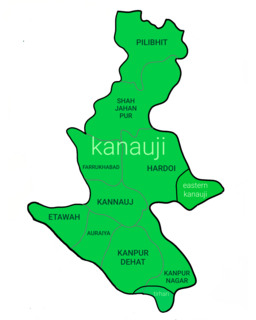
Kannauji is an Indo-Aryan language spoken in the Kannauj region of the Indian state of Uttar Pradesh. Kannauji is closely related to Hindustani, with a lexical similarity of 83–94% with Hindi. Some consider it to be a dialect of Hindustani, whereas others consider it a separate Western Hindi language. Kannauji has at least 9.5 million native speakers as of 2001.
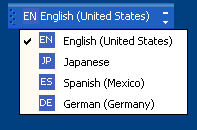
The Text Services Framework (TSF) is a COM framework and API in Windows XP and later Windows operating systems that supports advanced text input and text processing. The Language Bar is the core user interface for Text Services Framework.
Indic Computing means "computing in Indic", i.e., Indian Scripts and Languages. It involves developing software in Indic Scripts/languages, Input methods, Localization of computer applications, web development, Database Management, Spell checkers, Speech to Text and Text to Speech applications and OCR in Indian languages.
Schwa deletion, or schwa syncope, is a phenomenon that sometimes occurs in Assamese, Hindi, Urdu, Bengali, Kashmiri, Punjabi, Gujarati, and several other Indo-Aryan languages with schwas that are implicit in their written scripts. Languages like Marathi and Maithili with increased influence from other languages through coming into contact with them—also show a similar phenomenon. Some schwas are obligatorily deleted in pronunciation even if the script suggests otherwise.

Azhagi is a freeware transliteration tool, which enables its users to type in a number of regional Indian languages, including Tamil, Hindi, and others, using an English keyboard. In 2002, The Hindu dubbed Azhagi as a tool that "stand[s] out" among various similar software "emerg[ing] nearly every other day". Since year 2000, Azhagi has provided support for Tamil transliteration; this was later expanded to nearly 13 Indian languages, featuring 16 total built-in languages as of the day of writing.
IndoWordNet is a linked lexical knowledge base of wordnets of 18 scheduled languages of India, viz., Assamese, Bangla, Bodo, Gujarati, Hindi, Kannada, Kashmiri, Konkani, Malayalam, Meitei (Manipuri), Marathi, Nepali, Odia, Punjabi, Sanskrit, Tamil, Telugu and Urdu.

