Related Research Articles
Pedro Shimose Kawamura is a poet, journalist, professor and essayist from Bolivia. He has been based in Madrid, Spain since 1971. Shimose is considered one of Bolivia's most notable poets.
Alfonso Chase is a contemporary Costa Rican author. He was educated in Costa Rica, Mexico, Venezuela and the United States, and he began his career in poetry in 1965. He has received numerous awards for his writing, including the Premio Nacional de Poesía twice, the Premio Nacional de la Novela (1968) and the Premio Nacional de Cuento (1975); he has also been awarded the Premio Carmen Lyra, de Literatura Infantil y Juvenil for children's literature (1978). As well as representing Costa Rica in several international committees, he founded the Department of Publications of Costa Rica's Ministry of Culture, Youth and Sports in 1970. He has worked at the Universidad Nacional in Heredia since 1974, and was named Fulbright Scholar in Residence at the University of Arkansas-Fayetteville in the United States in 1991–1992.

Víctor Montoya is a Bolivian writer, cultural journalist, and pedagogue. Imprisoned by the dictatorship in his native Bolivia, he became an exile following a campaign by Amnesty International in 1977.

Carlos Murciano is a Spanish poet and prose author, known as well as a musicologist, literary and art critic.
Consuelo Hernández is a Colombian American poet, scholar, literary critic and associate professor of Latin American studies at American University since 1995.
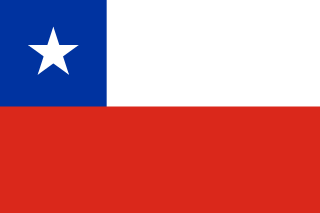
Chilean literature refers to all written or literary work produced in Chile or by Chilean writers. The literature of Chile is usually written in Spanish. Chile has a rich literary tradition and has been home to two Nobel prize winners, the poets Gabriela Mistral and Pablo Neruda. It has also seen three winners of the Miguel de Cervantes Prize, considered one of the most important Spanish language literature prizes: the novelist, journalist and diplomat Jorge Edwards (1998), and the poets Gonzalo Rojas (2003) and Nicanor Parra (2011).
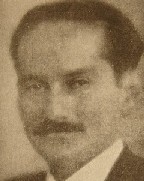
Luciano Durán Böger was a Bolivian poet, writer and politician. Son of Luciano Duran Pérez and Aurora Böger Rivero, was born in 1904 in Santa Ana, capital of the Yacuma province of the Department of Beni in Bolivia and died in 1996 in the city of La Paz.

Yolanda Bedregal de Cónitzer was a Bolivian poet and novelist, known as Yolanda of Bolivia. She is known for her explorations of human emotions, and especially in her later years, isolation and loneliness.
Gigia Talarico is a Chilean-born Bolivian writer and poet.

Héctor Borda Leaño was a Bolivian politician, anthropologist and poet. He was born into an intellectual family of landowner gentry from Sucre and joined the Falange Socialista Boliviana (FSB), as a teenager in the early 1940s. Eventually he was elected for this party to the national congress 1966-1969. In the early 1970s he broke out from the FSB together with Marcelo Quiroga Santa Cruz and Walter Vasquez Michel. After the military coup led by Hugo Banzer in 1971 Borda was forced into exile, first to Argentina and again in 1977 to Sweden. He returned to Bolivia in 1982 as elected senator for the newly formed Partido Socialista (PS-1).

Eliana Navarro Barahona was a Chilean poet. Her poetry was praised from an early date by literary critic Hernán Díaz Arrieta. Her poetry has been studied in various Chilean and foreign universities and her work appears in many national and foreign anthologies.
Blanca Santa Cruz y Ossa was a Chilean writer and editor of children's and young adult literature, with a special focus on intercultural literature, writing and compiling stories related to Chilean and international legends and myths.
Enriqueta Peptitpas Cotton, better known as Henriette Morvan or Damita Duende, was a Chilean journalist, writer, and editor. Associated with the genres of children's and young adult literature, she wrote and compiled related stories.

Alicia Morel Chaigneau was a Chilean writer, novelist, storyteller, poet, and essayist best known for her work in the field of children's literature and theater for children and puppets.
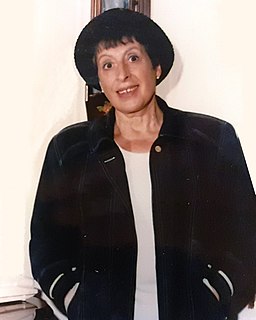
María Victoria Moreno Márquez was a Spanish writer and teacher. She was one of the pioneers of literature for children and young people in Galician. The Day of Galician Literature was devoted to her on 17 May 2018.
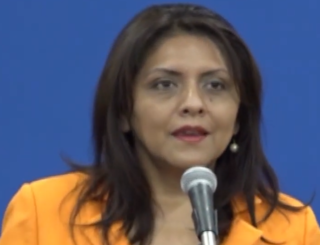
Gísela Karina López Rivas is a Bolivian journalist, activist, and politician. She was the Minister of Communications of Bolivia from 23 January 2017 to 23 January 2019, during the third government of President Evo Morales.
Udalrico Zambrana, full name Udalrico Antonio Zambrana Franco, is a Bolivian poet.

Blanca Álvarez González was a Spanish journalist, writer, and poet. Her work included poetry, novels, and essays, as well as children's and youth literature.

Reynaldo Enrique Lacámara Calaf is a Chilean writer who was president of the Chilean Society of Writers.
María José Ferrada is a journalist and writer from Chile. She has written numerous books for children and young adults in the Spanish language, and her work has been widely translated. She has received multiple awards for her work, including the Premio Academia of the Academia Chilena de la Lengua, and the Literary Prize of the City of Santiago, and her books for children have been published in several countries, including Spain, Argentina, Colombia, Brazil, Mexico, and Italy, in addition to Chile. She is currently the editor of Chile para Niños, which is the National Library of Chile's digital resource center for children.
References
- ↑ Méndez J., Mauricio (2009). Breve poesía desde Santa Cruz (in Spanish). Santa Cruz de la Sierra: La mancha. p. 151.
- 1 2 3 Urrutiaga Almada, Julio. "A poesia de Claudia Vaca Flores". Revista Arara. Archived from the original on 2020-10-21.
- 1 2 Herrera Farell, Ricardo David (2 May 2021). "Educación y memoria: las historias de vida de docentes chiquitanos". El Deber.
- 1 2 "Calma para expandir la mente". Los Tiempos. 6 May 2019.
- 1 2 "Vaca Flores, Claudia Cecilia (1984)". Academia Boliviana de la Literatura Infantil. Archived from the original on 2016-03-17.
- ↑ "Bolivia no tiene un plan lector". El Deber. 3 Aug 2019.
 | This article needs additional or more specific categories .(January 2022) |