
An alcopop is any of certain mixed alcoholic beverages with relatively low alcohol content, including:
- Malt beverages to which various fruit juices or other flavorings have been added
- Wine coolers: beverages containing wine to which ingredients such as fruit juice or other flavorings have been added
- Mixed drinks containing distilled alcohol and sweet liquids such as fruit juices or other flavourings

Cola is a carbonated soft drink flavored with vanilla, cinnamon, citrus oils, and other flavorings. Cola became popular worldwide after the American pharmacist John Stith Pemberton invented Coca-Cola, a trademarked brand, in 1886, which was imitated by other manufacturers. Most colas originally contained caffeine from the kola nut, leading to the drink's name, though other sources of caffeine are generally used in modern formulations. The Pemberton cola drink also contained a coca plant extract. His non-alcoholic recipe was inspired by the coca wine of pharmacist Angelo Mariani, created in 1863.

Pepsi is a carbonated soft drink with a cola flavor, manufactured by PepsiCo. As of 2023, Pepsi is the second most valuable soft drink brand worldwide behind Coca-Cola; the two share a long-standing rivalry in what has been called the "cola wars".

Jolt Cola was a carbonated soft drink produced by The Jolt Company, Inc.. The cola drink was created in 1985 by C. J. Rapp as a highly caffeinated beverage. It was targeted towards students and young professionals, stressing its use as a stimulant in a similar manner as energy drinks. Its slogan reads "All the sugar and twice the caffeine!"

Gatorade is an American brand of sports-themed beverage and food products, built around its signature line of sports drinks. The drink is manufactured by PepsiCo and is distributed in over 80 countries. The beverage was developed in 1965 by a team of researchers led by Robert Cade. It was originally made for the Gators at the University of Florida to replenish the carbohydrates that the school's student-athletes burned and the combination of water and electrolytes that they lost in sweat during vigorous sports activities.

Crystal Pepsi is a cola soft drink made by PepsiCo. It was initially released in the United States and Canada from 1992 to 1994. It was briefly sold in the United Kingdom and Australia.

Diet or light beverages are generally sugar-free, artificially sweetened beverages with few or no calories. They are marketed for diabetics and other people who want to reduce their sugar and/or caloric intake.

Tab was a diet cola soft drink produced and distributed by The Coca-Cola Company, introduced in 1963 and discontinued in 2020. The company's first diet drink, Tab was popular among some people throughout the 1960s and 1970s as an alternative to Coca-Cola. Several variations were made, including a number of fruit-flavored, root beer, and ginger ale versions. Caffeine-free and clear variations were released in the late 1980s and early 1990s.

Pepsi Max is a low-calorie, sugar-free cola, marketed by PepsiCo as an alternative to Pepsi and Diet Pepsi, except for Norway, where it is the main Pepsi flavor. Pepsi Max is available primarily in Asian, European and Australia/New Zealand markets. While Pepsi Max was released in April 1993, it did not become available in the United States until 2007.

A&W Cream Soda is a cream soda carbonated soft drink introduced by A&W Root Beer in 1986.

Rockstar is an energy drink created in 2001, which, as of 2020, had a 10% market share of the global energy drink market, the third-highest after Red Bull and Monster Energy. Rockstar is based in Purchase, New York. As of January 2013, Rockstar Energy Drink was available in more than 20 flavors and in more than 30 countries. Since March 2020 Rockstar is a part of PepsiCo.
Post Consumer Brands is an American consumer packaged goods food manufacturer headquartered in Lakeville, Minnesota.

Diet Pepsi, currently stylised in all caps as Pepsi Diet, is a diet carbonated cola soft drink produced by PepsiCo, introduced in 1964 as a variant of Pepsi with no sugar. First test marketed in 1963 under the name Patio Diet Cola, it was re-branded as Diet Pepsi the following year, becoming the first diet cola to be distributed on a national scale in the United States. In the 1960s and 1970s, its competition consisted of the Coca-Cola Company's subsequently discontinued Tab. The United States represents the largest single market for Diet Pepsi.
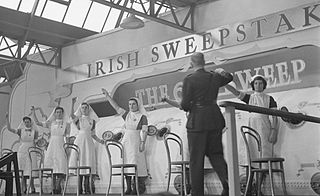
In the United States, a sweepstake is a type of contest where a prize or prizes may be awarded to a winner or winners. Sweepstakes began as a form of lottery that were tied to products sold. In response, the FCC and FTC refined U.S. broadcasting laws. Under these laws sweepstakes became strictly "No purchase necessary to enter or win" and "A purchase will not increase your chances of winning", especially since many sweepstakes companies skirted the law by stating only "no purchase necessary to enter", removing the consideration to stop abuse of sweepstakes. Today, sweepstakes in the United States are used as marketing promotions to reward existing consumers and to draw attention to a product. By definition, the winner is determined by pure random chance rather than skill.
Shasta Beverages is an American soft drink manufacturer that markets a value-priced soft drink line with a wide variety of soda flavors, as well as a few drink mixers, under the brand name Shasta. The company name is derived from Mount Shasta in northern California and the associated Shasta Springs.

Crystal Light is an American brand of powdered and artificially sweetened beverage mixes produced by Kraft Heinz. It was introduced in 1982 to a test market and released to the public in April 1984. General Foods, a now defunct company, were the original sellers of the product, but now it is sold by Kraft Foods. It is available in a wide variety of flavors, such as lemonade, sweet tea, and fruit punch.

Tropicana Brands is an American fruit-based beverage company. It was founded in 1947 by Anthony T. Rossi in Bradenton, Florida. Between 1998 and 2021 it was a subsidiary of PepsiCo. In August 2021, 61% of Tropicana was sold along with the rest of PepsiCo's juice brand portfolio for $3.3 billion to PAI Partners. PepsiCo retained the remaining 39% of the companies ownership.

Slice was a line of fruit-flavored soft drinks originally manufactured by PepsiCo and introduced in 1984 but discontinued by PepsiCo in North America in the late 2000s. Slice was reintroduced in the United States and Canada as a brand of organic food by "New Slice Ventures LLC", which acquired the trademark rights in those countries.
Tab Clear was a variation of Tab. It is Coca-Cola's contribution to the short-lived "clear cola" movement during the early 1990s. It was introduced in the United States on December 14, 1992, in the United Kingdom a month later and in Japan in March 1993 to initially positive results. Tab Clear was, however, discontinued after only a short time of marketing in 1994. Unlike most other "clear" soft drinks, Tab Clear contained caffeine and, according to the company, had the flavor of cola.
Apple Inc. products has had various design motifs since its inception. Recent motifs were mainly developed under the collaboration of Steve Jobs and Jony Ive beginning in 1997, radically altering the previous Apple computer designs.


 A translucent indigo iMac G3
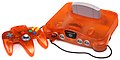 A translucent orange Nintendo 64
 A translucent blue DualShock


