
Lieutenant-General William Tryon was a British Army officer and colonial administrator who served as governor of North Carolina from 1764 to 1771 and the governor of New York from 1771 to 1777. He also served during the Seven Years' War, the Regulator Movement, and the American War of Independence.
Tryon County is a former county which was located in the U.S. state of North Carolina. It was formed in 1768 from the part of Mecklenburg County west of the Catawba River, although the legislative act that created it did not become effective until April 10, 1769. Due to inaccurate and delayed surveying, Tryon County encompassed a large area of northwestern South Carolina. It was named for William Tryon, governor of the North Carolina Colony from 1765 to 1771.

The Suffolk Resolves was a declaration made on September 9, 1774, by the leaders of Suffolk County, Massachusetts. The declaration rejected the Massachusetts Government Act and resulted in a boycott of imported goods from Britain unless the Intolerable Acts were repealed. The Resolves were recognized by statesman Edmund Burke as a major development in colonial animosity leading to adoption of the United States Declaration of Independence from the Kingdom of Great Britain in 1776, and he urged British conciliation with the American colonies, to little effect. The First Continental Congress endorsed the Resolves on September 17, 1774, and passed the similarly themed Continental Association on October 20, 1774.
Matthew Locke was a general during the American Revolutionary War, a wagon driver, and a U.S. Congressman from North Carolina between 1793 and 1799.
What is known today as the Tryon Resolves was a brief declaration adopted and signed by "subscribers" to the Tryon County Association that was formed in Tryon County, North Carolina in the early days of the American Revolution. In the Resolves—a modern name for the Association's charter document—the county representatives vowed resistance to the increasingly coercive actions being enacted by the government of Great Britain against its North American colonies. The document was signed on August 14, 1775, but—like other similar declarations of the time—stopped short of calling for total independence from Britain.
The Liberty Point Resolves, also known as "The Cumberland Association", was a resolution signed by fifty residents of Cumberland County, North Carolina, early in the American Revolution.
Committee of Public Safety was an organization during the French Revolution.
Prior to the American Revolution, the colonies formed Committees of Safety to represent the interests of their respective communities. They determined the judicial outcome of civil cases, organized the local militia, arrested and tried those suspected of criminal or subversive activities.

The Mecklenburg Resolves, or Charlotte Town Resolves, were a list of statements adopted at Charlotte, in Mecklenburg County, North Carolina on May 31, 1775; drafted in the month following the fighting at Lexington and Concord. Similar lists of resolves were issued by other local colonial governments at that time, none of which called for independence from Great Britain. The Mecklenburg Resolves are thought to be the basis for the unproven "Mecklenburg Declaration of Independence". While not a declaration, the Resolves annulled and vacated all laws originating from the authority of the King or Parliament, and ended recognition of the Crown's power in the colony of North Carolina and all other American colonies. It became the first colony to formally do so, taking place about a year before the Halifax Resolves were passed by the Fourth North Carolina Provincial Congress.
Joseph Hardin Sr. was an Assemblyman for the Province of North Carolina, and was a signatory of the Tryon Resolves. Early in the War for Independence, as a member of the militia from Tryon County, Hardin fought the Cherokee allies of Britain along the western frontier. Later in the war, having taken his family over the Appalachian Mountains to the Washington District for safety against the advance of the Red Coats out of South Carolina, Hardin joined the Overmountain Men. He saw action at the Battle of Ramsour's Mill and the decisive Battle of Kings Mountain. Following the peace with Britain, Hardin was a co-founder and second Speaker of the House for the State of Franklin; and an Assemblyman in the Southwest Territory before its statehood as Tennessee.

The following outline is provided as an overview of and topical guide to the U.S. state of North Carolina. Wikipedia:WikiProject North Carolina Category:Top-importance North Carolina articles are indicated.
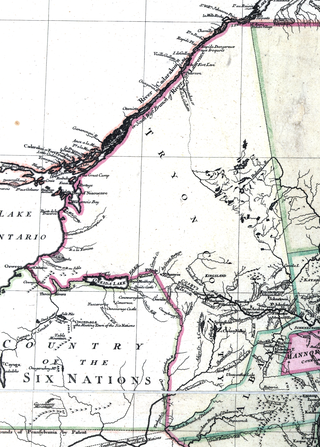
Tryon County was a county in the colonial Province of New York in the British American colonies. It was created from Albany County on March 24, 1772, and was named for William Tryon, the last provincial governor of New York. The county's boundaries extended much further than any current county. Its eastern boundary with the also-new Charlotte County ran "from the Mohawk River to the Canada line, at a point near the old village of St. Regis and passing south to the Mohawk between Schenectady and Albany." It extended north to the St. Lawrence River; its western boundary was the Treaty of Fort Stanwix's Line of Property, following the Unadilla River, Oneida Lake, Onondaga River and Oswego River to Lake Ontario, as the Iroquois Confederacy still controlled locations further west in the Indian Reserve. Tryon County's seat was Johnstown, which is today the county seat of Fulton County. The Tryon County Courthouse, built in 1772–1773, was listed on the National Register of Historic Places in 1972. The Tryon County Jail, also built in 1772–1773, was listed on the National Register of Historic Places in 1981.
The Salisbury District of North Carolina, was originally one of six colonial judicial districts established in 1766 by the Governor William Tryon of the Province of North Carolina. Immediately preceding the onset of the American War of Independence in 1775, these six regions were renamed "military districts" by the North Carolina Provincial Congress and used for organizing the North Carolina militia. The other military districts were Edenton, Halifax, Hillsborough, New Bern, and Wilmington districts. The military district designation was discontinued in 1835 during the North Carolina Constitution Convention.
Adlai Osborne was a lawyer, public official, plantation owner, and educational leader from Rowan County, North Carolina. During the American Revolution, he served on the Rowan County Committee of Safety and commanded the 2nd Rowan County Regiment of the North Carolina militia. He was elected as a delegate to the Continental Congress, but did not serve. In 1789, he was a delegate to the convention in Fayetteville that ratified the United States Constitution.
Rowan Resolves is the short name for a colonial era document called Resolutions by inhabitants of Rowan County concerning resistance to Parliamentary taxation and the Provincial Congress of North Carolina. It was signed in Salisbury, Rowan County, in the royal Province of North Carolina on August 8, 1774 in response to a series of punitive laws passed by the British Parliament in 1774, the Intolerable Acts, after the political protest against the Tea Act in Boston, the Colony of Massachusetts Bay, commonly known as Boston Tea Party. Rowan County was the first county in North Carolina to adopt such resolutions in the early stages of the American Revolution.
The Salisbury District Brigade was an administrative division of the North Carolina militia during the American Revolutionary War (1776–1783). This unit was established by the Fourth North Carolina Provincial Congress on May 4, 1776, and disbanded at the end of the war.
The Rowan County Regiment was originally established in about August 1, 1775 as a local militia in Rowan County in the Province of North Carolina. When the North Carolina Provincial Congress authorized thirty-five existing county militias to be organized on September 9, 1775, the Rowan County Regiment was included and all officers were appointed with commissions from the Provincial Congress. The members of the Rowan County Regiment were mostly from what was Rowan County at the time. Prior to establishment of the Rowan County Regiment, many of its officers were active in the Rowan County Committee of Safety. The regiment included 160 known companies and one or more of these companies were engaged in 36 known battles or skirmishes during the American Revolution. After the establishment of the Rowan County Regiment, several other counties were created from Rowan County, including Burke County in 1777, Iredell County in 1788, Davidson County in 1822 and Davie County in 1836.
The 2nd Rowan County Regiment was first established on October 22, 1775, as a local militia in Rowan County in the Province of North-Carolina. This regiment was created from the existing Rowan County Regiment of militia. Its original officers were Col Adlai Osborne, Lt Col Christopher Beekman, and Major Charles McDowell. Adlai Osborne was a leader in Rowan County and member of the Rowan County Committee of Safety. On May 9, 1777, the regiment was renamed the Burke County Regiment, which was active until the end of the Revolutionary War in 1783.
The Rowan County Committee of Safety was one of the 18 Committees of Safety in North Carolina authorized by the Continental Congress and endorsed by the Second North Carolina Provincial Congress. It was established in Rowan County, North Carolina in 1774. Meeting minutes from 1774 to 1776 have survived and are available through a digital collection. The Rowan County Committee of Safety was instrumental in banning trade with Britain and preparing for the American Revolution. One of its major achievements was the Rowan Resolves.
Hugh Montgomery was a member of Rowan County Committee of Safety in 1775, and, in spite of his age, briefly commanded of the Rowan County Regiment during the American Revolutionary War.
