
Kent is a town in Litchfield County, Connecticut, United States. Located alongside the border with New York, the town's population was 3,019 according to the 2020 census. The town is part of the Northwest Hills Planning Region. Kent is home to three boarding schools: Kent School, the Marvelwood School, and South Kent School. The Schaghticoke Indian Reservation is also located within town borders. The town was also home to former U.S. Secretary of State Henry Kissinger and Family Guy creator Seth MacFarlane.
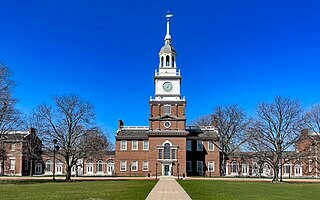
The Henry Ford is a history museum complex in Dearborn, Michigan, United States, within Metro Detroit. The museum collection contains the presidential limousine of John F. Kennedy, Abraham Lincoln's chair from Ford's Theatre, Thomas Edison's laboratory, the Wright Brothers' bicycle shop, the Rosa Parks bus, and many other historical exhibits. It is the largest indoor–outdoor museum complex in the United States and is visited by over 1.7 million people each year. It was listed on the National Register of Historic Places in 1969 as Greenfield Village and Henry Ford Museum and designated a National Historic Landmark in 1981 as "Edison Institute".

The Bredgar and Wormshill Light Railway (BWLR) is located near the villages of Wormshill and Bredgar in Kent, just south of Sittingbourne. It is a 2 ft narrow gauge railway about three-quarters mile (1.2 km) in length.

The Roaring Camp & Big Trees Narrow Gauge Railroad is a 3 ft narrow-gauge tourist railroad in California that starts from the Roaring Camp depot in Felton, California and runs up steep grades through redwood forests to the top of nearby Bear Mountain, a distance of 3.25 miles.

Francis Nelson Blount was an American businessman, railroad enthusiast and president and founder of Blount Seafood Corporation and the founder of Steamtown, USA, the Monadnock, Steamtown & Northern Railroad, and the Green Mountain Railroad. A millionaire and a railroad enthusiast, Blount's collection of vintage steam locomotives and rail cars—originally based in New England—was one of the largest ever assembled and still remains the cornerstone of the modern-day Steamtown National Historic Site.

The Durango and Silverton Narrow Gauge Railroad, often abbreviated as the D&SNG, is a 3 ft (914 mm) narrow-gauge heritage railroad that operates on 45.2 mi (72.7 km) of track between Durango and Silverton, in the U.S. state of Colorado. The railway is a federally-designated National Historic Landmark and was also designated by the American Society of Civil Engineers as a National Historic Civil Engineering Landmark in 1968.

The Mt. Rainier Scenic Railroad or MRSR, formerly the Mt. Rainier Railroad and Logging museum (MRRR), is a steam-powered heritage railroad operating in the U.S. state of Washington between Elbe and Mineral. The railroad travels on trackage that passes through thick forest just south of Mount Rainier. The depot, gift shop and ticket office are located in Elbe. The train travels to the Logging Museum exhibits located in Mineral. The MRRR ran its collection of vintage rail equipment over 7 miles of track, part of Tacoma Rail's Mountain Division.

The Ghost Town & Calico Railway is a 3 ft narrow-gauge heritage railroad and amusement park attraction within Knott's Berry Farm, an amusement park located in Buena Park, California.

The East Broad Top Railroad (EBT) is a 3 ft narrow gauge historic and heritage railroad headquartered in Rockhill Furnace, Pennsylvania. Operating from 1871 to 1956, it is one of the United States' oldest and best-preserved narrow-gauge railroads, and was designated a National Historic Landmark in 1964. The railroad is now preserved for use as a tourist attraction until operations ceased in 2011. After a nine-year closure, in February 2020 it was announced that the railroad had been purchased by a non-profit foundation and regular train service resumed in the summer of 2021.

There were more than a thousand British narrow-gauge railways ranging from large, historically significant common carriers to small, short-lived industrial railways. Many notable events in British railway history happened on narrow-gauge railways including the first use of steam locomotives, the first public railway and the first preserved railway.

A Corliss steam engine is a steam engine, fitted with rotary valves and with variable valve timing patented in 1849, invented by and named after the US engineer George Henry Corliss of Providence, Rhode Island. Corliss assumed the original invention from Frederick Ellsworth Sickels, who held the patent (1829) in the US patent office.
The Rough and Tumble Engineers Historical Association puts on the second- or third-oldest Threshermen’s Reunion in the United States. It is held in the middle of August each year, from Wednesday through Saturday, in Kinzers, Pennsylvania, about eight miles east of the city of Lancaster. The association’s name is taken from the 1890s book Rough and Tumble Engineering: Book of Instructions for Operators of Farm and Traction Engines by James H. Maggard.

Powerland Heritage Park, formerly known as Antique Powerland, is a collection of museums and a self-described heritage site for power equipment, such as farm machinery, commercial trucks, trains, trolleys, construction equipment, logging equipment, and the engines which power them. It is located in Brooks, Oregon, United States, and is operated by the non-profit Antique Powerland Museum Association (APMA). It was initially established by a group of enthusiasts "dedicated to the preservation, restoration and demonstration of steam powered equipment, antique farm machinery and implements."

The Midwest Old Threshers Reunion is an annual event that takes place in the small town of Mt. Pleasant, Iowa, United States, and runs for five days, ending on the Labor Day weekend. It was first held in 1950, and has taken place every year except 2020, when it was cancelled due to the COVID-19 pandemic. When it first started, it focused on steam engines and antique agricultural equipment, but has developed into an entertainment event with a wider remit. The tiny town of less than 10,000 inhabitants receives thousands of visitors from around the world.
Hesston Steam Museum is an outdoor museum operated by the La Porte County Historical Steam Society in Hesston, Indiana. It is located at 1201 E 1000 N, La Porte, IN 46350. The museum occupies 155 acres and is the home of four different gauge railroads along with numerous other pieces of steam powered and vintage farm equipment.

The Railway Museum of Catalonia is a museum in Vilanova i la Geltrú. The museum has a large collection of historic railway locomotives and other rolling stock in a former station and roundhouse. It is located close to the railway station in Vilanova i la Geltrú, 40 km south of Barcelona.

The Southern California Railway Museum, formerly known as the Orange Empire Railway Museum, is a railroad museum in Perris, California, United States. It was founded in 1956 at Griffith Park in Los Angeles before moving to the former Pinacate Station as the "Orange Empire Trolley Museum" in 1958. It was renamed "Orange Empire Railway Museum" in 1975 after merging with a museum then known as the California Southern Railroad Museum, and adopted its current name in 2019. The museum also operates a heritage railroad on the museum grounds.

Railroads have played an important role in New England ever since the Granite Railway, America's first commercial railway, began operations in Massachusetts in 1826. As industrialization spread across the region, hundreds of railroads were built throughout the 19th century. Railroad mileage peaked around World War I, and from that point on mileage began to shrink. Despite this, railroads continue to be important for freight and passenger transportation in the region, with the New Haven Line holding the title of busiest railroad line in the entire United States.
Beginning in 1917, steam locomotives, which consume lots of fuel and even more water, were gradually retired and replaced mostly by a rather simple fuel switch to diesel since the 1920s. Already from the 1880s onwards, railway electrification started, which required much more infrastructure, for generation, grid, Overhead lines before electric locomotives could come in use. The timeframe of these processes varied by country. Leading in electrification was Switzerland, having 50% of the grid electrified by 1928, with long Trans-Alpine tunnels, steep inclines, small radius turns, and the availability of hydro electric power but lack of domestic coal mines.

