Related Research Articles
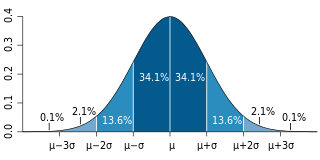
In probability theory and related fields, a stochastic or random process is a mathematical object usually defined as a family of random variables in a probability space, where the index of the family often has the interpretation of time. Stochastic processes are widely used as mathematical models of systems and phenomena that appear to vary in a random manner. Examples include the growth of a bacterial population, an electrical current fluctuating due to thermal noise, or the movement of a gas molecule. Stochastic processes have applications in many disciplines such as biology, chemistry, ecology, neuroscience, physics, image processing, signal processing, control theory, information theory, computer science, and telecommunications. Furthermore, seemingly random changes in financial markets have motivated the extensive use of stochastic processes in finance.
In mathematics and science, a nonlinear system is a system in which the change of the output is not proportional to the change of the input. Nonlinear problems are of interest to engineers, biologists, physicists, mathematicians, and many other scientists since most systems are inherently nonlinear in nature. Nonlinear dynamical systems, describing changes in variables over time, may appear chaotic, unpredictable, or counterintuitive, contrasting with much simpler linear systems.
TRIZ combines an organized, systematic method of problem-solving with analysis and forecasting techniques derived from the study of patterns of invention in global patent literature. The development and improvement of products and technologies in accordance with TRIZ are guided by the laws of technical systems evolution. Its development, by Soviet inventor and science-fiction author Genrich Altshuller and his colleagues, began in 1946. In English, TRIZ is typically rendered as the theory of inventive problem solving.

Genrikh Saulovich Altshuller was a Soviet engineer, inventor, and writer. He is most notable for creating the Theory of Inventive Problem Solving, better known by its Russian acronym TRIZ. He founded the Azerbaijan Public Institute for Inventive Creation and was the first President of the TRIZ Association. He also wrote science fiction under the penname Genrikh Altov.
Morphological analysis or general morphological analysis is a method for exploring possible solutions to a multi-dimensional, non-quantified complex problem. It was developed by Swiss astronomer Fritz Zwicky. General morphology has found use in fields including engineering design, technological forecasting, organizational development and policy analysis.
In planning and policy, a wicked problem is a problem that is difficult or impossible to solve because of incomplete, contradictory, and changing requirements that are often difficult to recognize. It refers to an idea or problem that cannot be fixed, where there is no single solution to the problem; and "wicked" denotes resistance to resolution, rather than evil. Another definition is "a problem whose social complexity means that it has no determinable stopping point". Moreover, because of complex interdependencies, the effort to solve one aspect of a wicked problem may reveal or create other problems. Due to their complexity, wicked problems are often characterized by organized irresponsibility.

Applied ecology is a sub-field within ecology that considers the application of the science of ecology to real-world questions. It is also described as a scientific field that focuses on the application of concepts, theories, models, or methods of fundamental ecology to environmental problems.
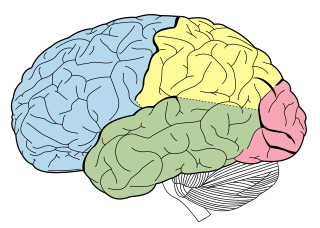
Problem solving is the process of achieving a goal by overcoming obstacles, a frequent part of most activities. Problems in need of solutions range from simple personal tasks to complex issues in business and technical fields. The former is an example of simple problem solving (SPS) addressing one issue, whereas the latter is complex problem solving (CPS) with multiple interrelated obstacles. Another classification of problem-solving tasks is into well-defined problems with specific obstacles and goals, and ill-defined problems in which the current situation is troublesome but it is not clear what kind of resolution to aim for. Similarly, one may distinguish formal or fact-based problems requiring psychometric intelligence, versus socio-emotional problems which depend on the changeable emotions of individuals or groups, such as tactful behavior, fashion, or gift choices.
Problem shaping means revising a question so that the solution process can begin or continue. It is part of the larger problem process that includes problem finding and problem solving. Problem shaping often involves the application of critical thinking.
The laws of technical systems evolution are the most general evolution trends for technical systems discovered by TRIZ author G. S. Altshuller after reviewing thousands USSR invention authorship certificates and foreign patent abstracts.
Unified Structured Inventive Thinking (USIT) is a structured, problem-solving methodology for finding innovative solution concepts to engineering-design type problems. Historically, USIT is related to Systematic Inventive Thinking (SIT), which originated in Israel and is related to TRIZ, the Russian methodology. It differs from TRIZ in several ways, but most importantly it is a simpler methodology, which makes it quicker to learn and easier to apply. It requires no databases or computer software.
Geometry is a branch of mathematics concerned with properties of space such as the distance, shape, size, and relative position of figures. Geometry is, along with arithmetic, one of the oldest branches of mathematics. A mathematician who works in the field of geometry is called a geometer. Until the 19th century, geometry was almost exclusively devoted to Euclidean geometry, which includes the notions of point, line, plane, distance, angle, surface, and curve, as fundamental concepts.
Innovation management is a combination of the management of innovation processes, and change management. It refers to product, business process, marketing and organizational innovation. Innovation management is the subject of ISO 56000 series standards being developed by ISO TC 279.
Systematic inventive thinking (SIT) is a thinking method developed in Israel in the mid-1990s. Derived from Genrich Altshuller's TRIZ engineering discipline, SIT is a practical approach to creativity, innovation and problem solving, which has become a well known methodology for innovation. At the heart of SIT's method is one core idea adopted from Genrich Altshuller's TRIZ which is also known as Theory of Inventive Problem Solving (TIPS): that inventive solutions share common patterns. Focusing not on what makes inventive solutions different – but on what they share in common – is core to SIT's approach.

Greg Yezersky is an American engineer, consultant and university lecturer, the creator of the General Theory of Innovation (GTI).

Problem structuring methods (PSMs) are a group of techniques used to model or to map the nature or structure of a situation or state of affairs that some people want to change. PSMs are usually used by a group of people in collaboration to create a consensus about, or at least to facilitate negotiations about, what needs to change. Some widely adopted PSMs include
Advanced Innovation Design Approach (AIDA) is a holistic approach for enhancing the innovative and competitive capabilities of industrial companies. The name Advanced Innovation Design Approach (AIDA) was proposed in the research project "Innovation Process 4.0" run at the University of Applied Sciences Offenburg, Germany in co-operation with 10 German industrial companies in 2015–2019. AIDA can be considered as a pioneering mindset, an individually adaptable range of strong innovation techniques such as comprehensive front-end innovation process, advanced innovation methods, best tools and methods of the theory of inventive problem solving TRIZ, organisational measures for accelerating innovation, IT-solutions for Computer-Aided Innovation, and other tools for new product development, elaborated in the recent decade in the industry and academia.
S.I.T Systematic Inventive Thinking LTD. is a privately owned innovation company. Founded in Tel Aviv, Israel in 1995, it now has offices/affiliates in the UK, Australia, Chile, China, and Colombia.
In TRIZ, inventive standards are a set of rules of synthesis and transformation of technical systems directly resulting from laws of evolution of these systems. As a rule, solving of a complex inventive problem is addressed to a combination of at least one TRIZ method and physical effect. Based on frequently used combinations of TRIZ methods and physical effects Genrich Altshuller proposed inventive standards.
The nine windows technique, also known as 9 windows, 9 boxes, 9 screens, multiscreen diagram, or system operator tool is a creative problem-solving technique that analyzes a problem across time and relative to its place within a system.
References
- ↑ Chakrabarti, Amaresh (9 March 2013). Engineering Design Synthesis: Understanding, Approaches and Tools. Springer Science & Business Media. pp. 140–141. ISBN 978-1-4471-3717-7.
- ↑ Orloff, Michael A. (7 October 2006). Inventive Thinking through TRIZ: A Practical Guide. Springer Science & Business Media. pp. 254–255. ISBN 978-3-540-33223-7.
- ↑ Cameron, Gordon (30 December 2010). Trizics. Gordon Cameron. pp. 89–90. ISBN 978-1-4583-0412-4.
 | This engineering-related article is a stub. You can help Wikipedia by expanding it. |