
The Kastrioti were an Albanian noble family, active in the 14th and 15th centuries as the rulers of the Principality of Kastrioti. At the beginning of the 15th century, the family controlled a territory in the Mat and Dibra regions. The most notable member was Gjergj Kastrioti, better known as Skanderbeg, regarded today as an Albanian hero for leading the resistance against Mehmed the Conqueror's efforts to expand the Ottoman Empire into Albania. After Skanderbeg's death and the fall of the Principality in 1468, the Kastrioti family gave their allegiance to the Kingdom of Naples and were given control over the Duchy of San Pietro in Galatina and the County of Soleto, now in the Province of Lecce, Italy. Ferrante, son of Gjon Kastrioti II, Duke of Galatina and Count of Soleto, is the direct ancestor of all male members of the Kastrioti family today. Today, the family consists of two Italian branches, one in Lecce and the other in Naples. The descendants of the House of Kastrioti in Italy use the family name "Castriota Scanderbeg".

Gjergj Kastrioti, commonly known as Skanderbeg, was an Albanian feudal lord and military commander who led a rebellion against the Ottoman Empire in what is today Albania, North Macedonia, Greece, Kosovo, Montenegro, and Serbia.
The Battle of Torvioll, also known as the Battle of Lower Dibra, was fought on 29 June 1444 on the Plain of Torvioll, in what is now Albania. Gjergj Kastrioti Skanderbeg was an Ottoman Albanian general who decided to return to his homeland and take the reins of a new Albanian league against the Ottoman Empire. He and 300 other Albanians who fought in the Battle of Niš deserted the Ottoman Army and made their way to Krujë, which quickly fell due to subversion. He then formed the League of Lezhë, a confederation of Albanian princes united in war against the Ottoman Empire. Realising the threat, Murad II sent one of his most experienced generals, Ali Pasha, to crush the new state with a force of 25,000 men.

The Muzaka family was an noble Albanian family that ruled over the region of Myzeqe in the Late Middle Ages. The Muzaka are also referred to by some authors as a tribe or a clan. The earliest historical document that mentions the Muzaka family is written by the Byzantine historian Anna Komnene. At the end of the 13th and beginning of the 14th century members of the Muzaka family controlled a region between the rivers of Devoll and Vjosë. Some of them were loyal to the Byzantine Empire while some of them allied with Charles of Anjou who gave them impressive Byzantine-like titles in order to subdue them more easily. In the 1340s, Stefan Dušan pressed further south into Albania, and by 1343-45 had taken central towns and territories in southern Albania, including domains of the Muzaka family. However, they would fall back under local control after his death in 1355. After the Battle of Savra in 1385 the territory of Albania came under the Ottoman Empire; they served the Ottomans until 1444 when Theodor Corona Musachi joined Skanderbeg's rebellion. When the Ottomans suppressed Skanderbeg's rebellion and captured the territory of Venetian Albania in the 15th century many members of the Muzaka family retreated to Italy. Those who stayed in Ottoman Albania lost their feudal rights, some converted to Islam and achieved high ranks in the Ottoman military and administrative hierarchy.

Vrana, historically known as Vrana Konti was an Albanian military leader who was distinguished in the Albanian-Turkish Wars as one of the commanders of Gjergj Kastrioti Skanderbeg, of whom he was one of the closest councillors. He probably belonged to the class of small lords who were tied to the Kastrioti family and possibly belonged to a common lineage (fis) with them. In his youth, he fought as a mercenary in the armies of Alfonso the Magnanimous. The term conte ("count") with which he became known in historical accounts didn't refer to an actual title he held, but to his status as a figure of importance.
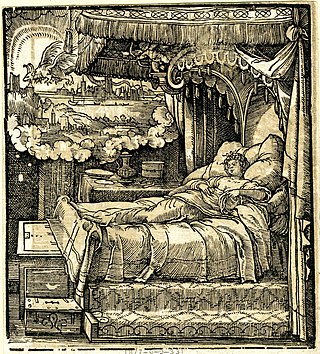
Voisava was a noblewoman and wife of Gjon Kastrioti, an Albanian feudal lord from the House of Kastrioti. They had nine children together, one of whom was the Albanian national hero Gjergj Kastrioti, better known as Skanderbeg.
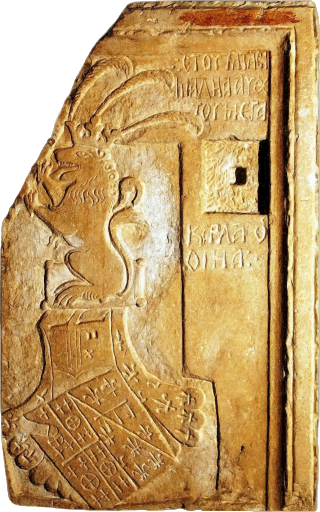
The Thopia were one of the most powerful Albanian feudal families in the Late Middle Ages, part of the nobility of the Angevin Kingdom of Albania.

The Historiography of Skanderbeg involves the study and writing of the history of Gjergj Kastrioti, known as Skanderbeg. This includes the analysis of historical sources, interpretation of events, and consideration of cultural and political factors in shaping the narrative of his life and deeds. Skanderbeg's historiography has sparked debates and evolved over centuries, reflected in various interpretations and historiographical approaches throughout different periods.
The Albanian nobility was an elite hereditary ruling class in Albania, parts of the western Balkans and later in parts of the Ottoman world. The Albanian nobility was composed of landowners of vast areas, often in allegiance to states like the Byzantine Empire, various Serbian states, the Republic of Venice, the Ottoman Empire and the Kingdom of Naples in addition to the Albanian principalities. They often used Byzantine, Latin or Slavic titles, such as sebastokrator, despot, dux, conte and zupan.

Nicholas II Dukagjini was an Albanian nobleman of the Dukagjini family in the 15th century. He was the son of Pal Dukagjini, one of the founding members of the League of Lezhë. Nicholas Dukagjini fled to Italy after the second Siege of Shkodra in 1479, but is well known for the return to his homeland two years later, together with Skanderbeg’s son Gjon Kastrioti and other noblemen to lead the armed movement against the Ottomans.
Gojko Balšić or Gojko Balsha and his brothers George Strez and John were the lords of Misia, a coastal area from the White Drin towards the Adriatic. The brothers were members of the house of Balšić, which earlier held the Lordship of Zeta. They participated in founding the League of Lezhë, an alliance led by their maternal uncle Gjergj Kastrioti Skanderbeg. Gojko supported Skanderbeg until the latter's death in 1468, and then continued to fight against the Ottomans within Venetian forces.
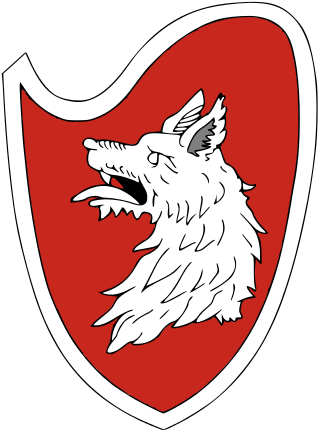
George Strez Balšić or Gjergj Strez Balsha and his brothers Gojko and Ivan were the lords of Misia, a coastal area from the White Drin towards the Adriatic. The brothers were members of the Balšić noble family, which had earlier held Zeta. They participated in founding of the League of Lezhë, an alliance led by their maternal uncle Skanderbeg. George later betrayed Skanderbeg, by selling a domain to the Ottomans, while his two brothers continued to support Skanderbeg until his death and then continued to fight for the Venetian forces.
Ivan Strez Balšić or John Balsha fl. 1444–1469) and his brothers George Strez and Gojko Balšić were the lords of Misia, a coastal area from the White Drin towards the Adriatic. The brothers were members of the Balšić family, which earlier held Zeta, but had now placed itself among the nobility in Albania. They participated in founding of the League of Lezhë, an alliance led by their maternal uncle Skanderbeg. Ivan and Gojko supported Skanderbeg until he died in 1468 and then continued to fight against Ottomans together with Venetian forces. After Skanderbeg's death Venice installed Ivan Strez Balšić as Skanderbeg's successor.
Pal or Gjergj Kastrioti was an Albanian medieval ruler in the latter part of the 14th century in northern Albania. Not much is known about his life. He is mentioned in only two historical sources which describe his rule as extending in a region between Mat and Dibër. His son was Gjon Kastrioti and his grandson Skanderbeg, the Albanian national hero.
Family tree of the Balšić noble family

Tanusio Thopia or Tanush Thopia was an Albanian count that served Princes of Taranto Philip I and Robert, and Dukes of Durazzo John and Charles. He had domains in Mat.
The Bailo of Corfu was the leader of the Venetian delegation to the island of Corfu who oversaw the affairs of the island while under Venetian rule and protected the commercial and military interests of the Republic of Venice. The first mention of a bailo in Corfu is in 1386 and is found in a Greek chronicle. The bailo of Corfu is also mentioned in a document by historian Marco Guazzo from 1544.
Riccardo Gandolfi was an Italian composer and music critic.
Heraldry, as a scholarly discipline that deals with the study and origin of various symbols and elements, emerged in Albania towards the end of the 13th century. Over time, it has evolved as an inseparable component of European heraldry, encompassing its advancements, shifts and accomplishments.

Mamica Kastrioti was a 15th century Albanian princess from the House of Kastrioti. She is best known as the younger sister of the Albanian hero Skanderbeg.
