
Club Atlético San Lorenzo de Almagro, commonly known as San Lorenzo de Almagro, is an Argentine professional sports club based in the Boedo neighborhood of Buenos Aires. It is best known for its football team, which plays in the Primera División, the first tier of the Argentine football league system. San Lorenzo is also considered one of the Big Five of Argentine football, along with Independiente, River Plate, Boca Juniors, and Racing Club.
Christian Federico von Wernich is an Argentine Roman Catholic priest and a former chaplain of the Buenos Aires Province Police while it was under the command of General Ramón Camps, during the dictatorial period known as the National Reorganization Process (1976–1983). Wernich worked in Miguel Etchecolatz's Direction of Investigations of the provincial police with the rank of Inspector. He became internationally known in 2006 after being indicted for murder and kidnapping in aid of the military junta; he was convicted at trial in October 2007 and sentenced to life imprisonment.

San Alberto Department is a department of Córdoba Province, Argentina. It is composed by many municipalities and communes. Its main industry is tourism and it is visited by many people each summer. San Alberto includes cities and towns as Mina Clavero, Villa Cura Brochero and Nono.
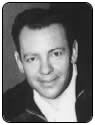
Tito Alonso (1926–1979) was an Argentine film actor.

Luis Moglia Barth was an Argentine film director and screenwriter, and one of the influential directors in the Golden Age of Argentine cinema. He directed some 30 films between 1927 and 1959, often screenwriting for his pictures. He died in Buenos Aires, aged 81.

Carlos Rinaldi was an Argentine film director of the classical era of Argentine cinema and beyond. He began his career in 1937 with Argentina Sono Film, working in editing. Subsequently, he joined Associated Argentine Artists, where he was responsible for the editing of the company's entire production, earning recognition as the leading editor of his time. Rinaldi made his directorial debut with La cuna vacía in 1949 and directed numerous films until 1980.
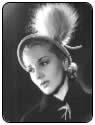
Aída Alberti was an Argentine film actress of the Golden Age of Argentine cinema.
The Gaucho Priest is a 1941 Argentine historical film of the Golden Age of Argentine cinema, directed by Lucas Demare and written by Hugo Mac Dougall and Miguel Mileo. The film's art direction was by Ralph Pappier.

Lucas Demare was an Argentine film director, screenwriter, and film producer notable for his work during the classical era of Argentine cinema and beyond.

Leonardo Castellani was an Argentine priest, essayist, novelist, poet and theologian.

Lorenzo Carlo Domenico Milani Comparetti was an Italian Catholic priest. He was an educator of poor children and an advocate of conscientious objection.
Arturo Soto Rangel was a Mexican film, television, and stage actor. Soto was best known for appearing in over 250 Mexican films. He appeared in one American movie, The Treasure of the Sierra Madre, which won three Academy Awards and starred Humphrey Bogart, Walter Huston, Tim Holt, Bruce Bennett, and many other successful actors. Soto last appeared on television in 1963, where he starred in Voy de gallo.

Ángel Magaña was an Argentine film actor of the Golden Age of Argentine cinema during the 1930s, 1940s and 1950s.
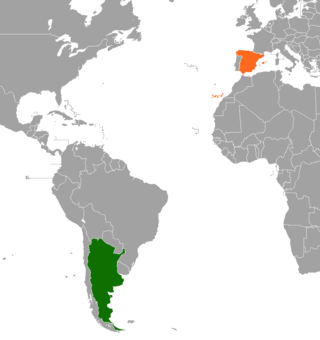
Argentina–Spain relations are the bilateral relations between the Argentine Republic and the Kingdom of Spain. Since a great portion of the immigrants to Argentina before the mid-19th century were of Spanish descent, the large majority of Argentines are at least partly of Spanish ancestry. Also, a significant part of the late-19th century/early-20th century immigrants to Argentina were Spaniards. Both nations are members of the Organization of Ibero-American States and the United Nations.
The Catholic sexual abuse scandal in Latin America is a significant part of the series of Catholic sex abuse cases.
Augusto Cesar Vatteone was an Argentine film director and screenwriter of the Golden Age of Argentine cinema. His 1943 film Juvenilia was highly acclaimed in Argentina, and he won the Silver Condor Award for Best Director and Best Film for it at the 1944 Argentine Film Critics Association Awards.

Lorenzo Bartolomé Massa was an Argentine Catholic priest. He was one of the main founders of Club San Lorenzo de Almagro and scout group Don Bosco's Argentine Explorers.
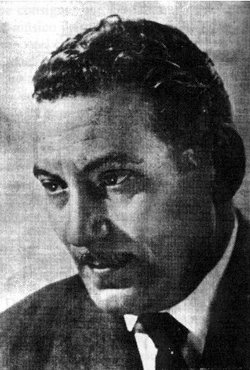
Alberto Amado Ribero, known professionally as Tito Ribero, was an Argentine film score composer, composer, singer, and musician. In addition to having his own orchestra, he provided the film scores to over 200 movies, at his most prolific in the 1950s and 1960s. For Del otro lado del puente he won the Silver Condor Award for Best Original Score from the Argentine Academy of Cinematography Arts and Sciences in 1953.
María Renée Cura was an Argentine geographer, writer and Indologist. She was the founder of Anand Bhavan, a centre for Indological studies, at her native place, Chivilcoy in Buenos Aires, Argentina, named after the present day Allahabad museum and the former residence of Nehru family.

Club Atlético San Lorenzo de Almagro is the men's professional club basketball section of the homonymous sports club based in Buenos Aires, Argentina. The team plays in the Liga Nacional de Básquet (LNB), which is the first tier level division of the Argentine basketball league system, and Pan-America's premier men's basketball league, the Basketball Champions League Americas. Their home arena is the Estadio Ciudad de Santiago del Estero. The team is currently coached by Silvio Santander. In the period 1942-1973, he stood out for what he did at the amateur and semi-amateur level, in which he won 29 regional titles, won the Argentine Club Championship, and was South American runner-up in 1958. In addition, he was one of the founding clubs of the National League, playing the opening game of said tournament on April 26, 1985. Although the club is known mainly for its soccer part, it is also one of the most important basketball clubs in the country and South America, being a multi-champion at various times in its history. He has to his credit five Leagues, two Liga de las Américas, and other titles such as a Super 4, and two Super Cups. San Lorenzo is the first, and so far, the only Argentine basketball team to face an NBA team. It is the only club that has been four-time and five-time champion of the National League.


