Demography of the Philippines records the human population, including its population density, ethnicity, education level, health, economic status, religious affiliations, and other aspects. The Philippines annualised population growth rate between the years 2010–2015 was 1.72%. According to the 2015 census, the population of the Philippines is 100,981,437. The first census in the Philippines was held in the year 1591 which counted 667,612 persons.

Tagalog is an Austronesian language spoken as a first language by the ethnic Tagalog people, who make up a quarter of the population of the Philippines and as a second language by the majority. Its standardized form, officially named Filipino, is the national language of the Philippines, and is one of two official languages alongside English.

The Commonwealth of the Philippines was the administrative body that governed the Philippines from 1935 to 1946, aside from a period of exile in the Second World War from 1942 to 1945 when Japan occupied the country. It replaced the Insular Government, a United States territorial government, and was established by the Tydings–McDuffie Act. The Commonwealth was designed as a transitional administration in preparation for the country's full achievement of independence. Its foreign affairs remained managed by the United States.

Filipino is the national language of the Philippines. Filipino is also designated, along with English, as an official language of the country. It is a standardized variety of the Tagalog language, an Austronesian regional language that is widely spoken in the Philippines. As of 2007, Tagalog is the first language of 28 million people, or about one-third of the Philippine population, while 45 million speak Tagalog as their second language. Tagalog is among the 185 languages of the Philippines identified in the Ethnologue. Officially, Filipino is defined by the Commission on the Filipino Language as "the native dialect, spoken and written, in Metro Manila, the National Capital Region, and in other urban centers of the archipelago."
Taglish or Englog is code-switching in the use of English and Tagalog, the most common languages of the Philippines. The words Taglish and Englog are portmanteaus of the words Tagalog and English. The earliest use of the word Taglish dates back to 1973, while the less common form Tanglish is recorded from 1999.

The Cebuano language, also often referred colloquially to by most of its speakers simply as Bisaya/Binisaya, is an Austronesian language spoken in the southern Philippines, namely in Central Visayas, western parts of Eastern Visayas and on majority of Mindanao. The language originates from the island of Cebu, and is spoken primarily by various Visayan ethnolinguistic groups who are native to those areas, mainly the Cebuanos. While Filipino (Tagalog) has the largest number of speakers of Philippine languages, Cebuano had the largest native language-speaking population in the Philippines until about the 1980s. It is by far the most widely spoken of the Visayan languages, which are in turn part of the wider Philippine languages.

Pangasinan (Pangasinense) is an Austronesian language, and one of the eight major languages of the Philippines. It is the primary and predominant language of the entire province of Pangasinan and northern Tarlac, on the northern part of Luzon's central plains geographic region, most of whom belong to the Pangasinan ethnic group. Pangasinan is also spoken in southwestern La Union, as well as in the municipalities of Benguet, Nueva Vizcaya, Nueva Ecija, and Zambales that border Pangasinan. A few Aeta groups in Central Luzon's northern part also understand and even speak Pangasinan as well.

Over 2 billion people speak English, making English the largest language by number of speakers, and the third largest language by number of native speakers. With 300 million native speakers, the United States of America is the largest English-speaking country. As pictured in the pie graph below, most native speakers of English are Americans.

There are some 120 to 187 languages spoken in the Philippines, depending on the method of classification. Almost all are Malayo-Polynesian languages native to the archipelago. A number of Spanish-influenced creole varieties generally called Chavacano are also spoken in certain communities. The 1987 constitution designates Filipino, a standardized version of Tagalog, as the national language and an official language along with English. Filipino is regulated by Komisyon sa Wikang Filipino and therefore serves as a lingua franca used by Filipinos of various ethnolinguistic backgrounds.

Philippine literature is literature associated with the Philippines from prehistory, through its colonial legacies, and on to the present.
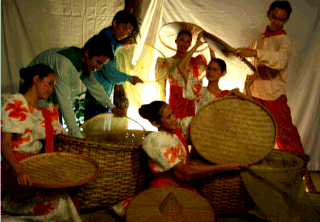
Spanish was the official language of the Philippines from the beginning of Spanish rule in the late 16th century, through the conclusion of the Spanish–American War in 1898 and remained co-official, along with English, until 1987. It was at first removed in 1973 by a constitutional change, but after a few months it was re-designated an official language by presidential decree and remained official until 1987, with the present Constitution re-designating it instead as an "optional and voluntary language".
Philippine English is any variety of English native to the Philippines, including those used by the media and the vast majority of educated Filipinos. English is taught in schools as one of the two official languages of the country, the other being Filipino (Tagalog). Due to the highly multilingual nature of the Philippines, code-switching such as Taglish and Bislish is prevalent across domains from casual settings to formal situations.
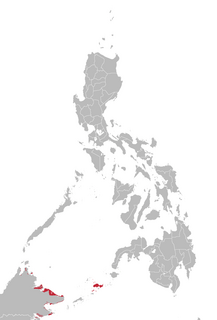
Tausug is an Austronesian language spoken in the province of Sulu in the Philippines, and in the eastern area of the state of Sabah, Malaysia by the Tausug people.
A national language is a language that has some connection—de facto or de jure—with people and the territory they occupy. There is little consistency in the use of this term. One or more languages spoken as first languages in the territory of a country may be referred to informally or designated in legislation as national languages of the country. National languages are mentioned in over 150 world constitutions.

Filipinos are the people who are native to or citizens of the country of the Philippines. Filipinos come from various Austronesian ethnolinguistic groups. Currently, there are more than 185 ethnolinguistic groups, each with its own language, identity, culture and history. The number of individual languages listed for Philippines is 185. Of these, 183 are living and 2 are extinct. Of the living languages, 175 are indigenous and 8 are non-indigenous. Furthermore, as of 2019, 39 are institutional, 67 are developing, 38 are vigorous, 28 are endangered, and 11 are dying.
Hokkien is a Southern Min language spoken by part of the ethnic Chinese population of the Philippines. The use of Hokkien in the Philippines is influenced by Tagalog and Philippine English. Hokaglish is an oral contact language involving Philippine Hokkien, Tagalog and English.

A Spanish Filipino is a Filipino who has Spanish or Hispanic lineage, mostly born and raised in the Philippines.
Filipino Sign Language (FSL) or Philippine Sign Language, is a sign language originating in the Philippines. Like other sign languages, FSL is a unique language with its own grammar, syntax and morphology; it is neither based on nor resembles Filipino or English. Some researchers consider the indigenous signs of FSL to be at risk of being lost due to the increasing influence of foreign sign languages such as ASL.
Mandarin Chinese is spoken and taught academically to Chinese Filipinos in the Philippines. Both Standard Chinese and Taiwanese Mandarin are taught and spoken in the Philippines, with some schools and speakers using Simplified Chinese characters, some using Traditional Chinese characters and some using a mixture of both.

Ilocano is an Austronesian language spoken in the Philippines. It is the third most-spoken native language in the country.
