
Firlej (plural: Firlejowie) was a Polish szlachta (nobility) family. Magnates in the 15th and 17th century.
Firlej (plural: Firlejowie) was a Polish szlachta (nobility) family. Magnates in the 15th and 17th century.
According to Kasper Niesiecki, Ostafi of Lewart coat of arms came from Franconia, Germany, to Poland, in 1317, to serve Polish king Władysław Łokietek. He was nicknamed Firlej, and the name became his family name. From the 15th to 17th centuries, the Firlej family was a powerful magnate family in the Lesser Poland (Małopolska) region.
From the time of Jan Firlej, the Firlej family were staunch Calvinists (Protestantism) condemned by Catholics. Although most of Jan's sons converted to Catholicism as early as the 1670s, one branch of the family persisted in Calvinism until the mid-17th century, when this one died out.
Over time, the Firlej family declined severely, the richest lines had no male descendants, and the poorer lines grew so large that they fell into the ranks of the middle and poor nobility.
The history of the Firlej family is not fully known or documented. Most historical descriptions end with the year 1730. In 1995 the Society of Friends of Janowiec was established in Janowiec, which organises meetings on the Firlej family and publishes cyclical studies.


Łukasz de Bnin Opaliński of Łodzia coat of arms (1581–1654) was a Polish nobleman.

Mikołaj Zebrzydowski (1553–1620) of Radwan coat of arms, voivode of Lublin from 1589, Grand Crown Marshal between 1596–1600, voivode of Kraków from 1601. He is famous for an armed rebellion against King Sigismund III Vasa, the Zebrzydowski Rebellion, a rokosz named after himself. It took place in 1606, and was defeated by 1607. After the failed rebellion, he sponsored the creation of the Roman Catholic monastery of Kalwaria Zebrzydowska, which is regarded as one of the most important pilgrimage sites of Poland.
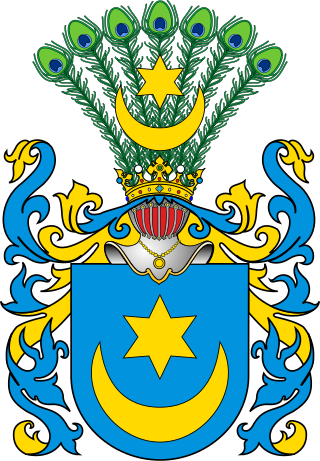
The House of Tarnowski is the name of a Polish noble and aristocratic family. Because Polish adjectives have different forms for the genders, Tarnowska is the form for a female family member.

Katarzyna Tomicka (c.1517–1551) was a Polish noblewoman, known as the sister-in-law and opponent of her sister-in-law queen Barbara Radziwiłł.
Piotr Firlej was a Polish nobleman (szlachcic).

Mikołaj Kamieniecki h. Pilawa was a Polish nobleman (szlachcic) and the first Great Hetman of the Crown.

The House of Wiśniowiecki was a Polish-Lithuanian princely family of Ruthenian-Lithuanian origin, notable in the history of the Polish–Lithuanian Commonwealth. They were powerful magnates with estates predominantly in the Ruthenian lands of the Crown of the Kingdom of Poland, and they used the Polish coat of arms of Korybut.

The Kraków Voivodeship was a voivodeship (province) in the Kingdom of Poland from the 14th century to the partition of Poland in 1795. Located in the southwestern corner of the country, it was part of the Lesser Poland region and the Lesser Poland Province.
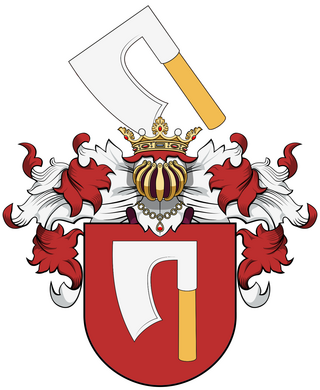
The House of Tęczyński was a powerful family of nobility (szlachta) in the Kingdom of Poland, during the times of the late Piast dynasty, the Jagiellon dynasty and in the early decades of the Polish–Lithuanian Commonwealth. They were an important family from Lesser Poland (Małopolska), active in Polish politics of their time.

The House of Zbaraski was a princely family of Ruthenian origin in the Crown of the Kingdom of Poland domiciled in Volhynia. The name is derived from the town of Zbarazh, the core of their dominions. They were the Gediminids descended from Kaributas. The line ended in 1631, with their assets overtaken by their agnates, the Wiśniowiecki family. A branch of the princes Nieświcki family.

Zborowski of the Jastrzębiec coat of arms was a Polish noble family from Greater Poland, It played a significant role in Polish politics in the 16th century.

Jakub Szydłowiecki was a Polish nobleman and politician. In the years 1493-1501 he was Burgrave of Kraków and was a courtier of the king from 1496, Treasurer of the Crown Court in 1497, Grand Teasurer of the Crown from 1501 to 1506, and castellan and starost of Sandomierz, Sochaczew and Łęczyca.
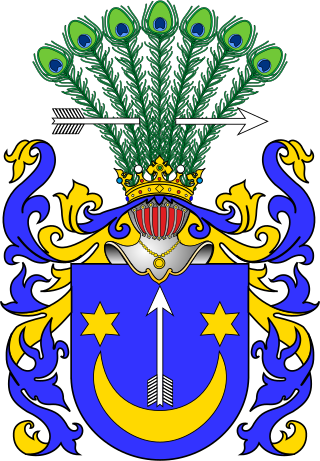
Mikołaj Daniłowicz was a Polish–Lithuanian nobleman and politician. He was Castellan of Lviv from 1614, Treasurer of the Crown Court from 1610, Grand Treasurer of the Crown from 1617, Speaker of the Sejm in 1593, amongst many other positions as governors of various states.
Tarło was a Polish magnate (szlachta) family. The seats of the family in the 16th century were, among others: Laszki Murowane near Chyrów, Sambor, Dębowiec near Jasło, Samoklęski and Potok near Krosno.

Jan Daniłowicz (1570–1628) was a Polish nobleman, voivode of the Ruthenian Voivodeship and grandfather of King Jan III Sobieski.
The Sieniawski family was a Polish szlachta family. They were magnates in the First Republic of Poland. Their properties were inherited by the Czartoryski family after the family expired in the 18th century.
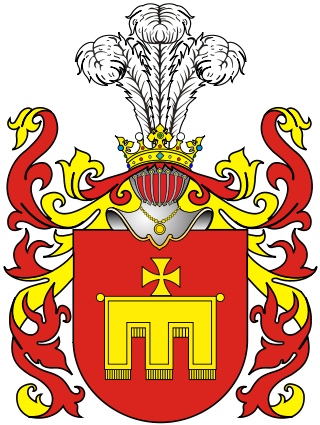
The Zebrzydowski was a Polish noble family.
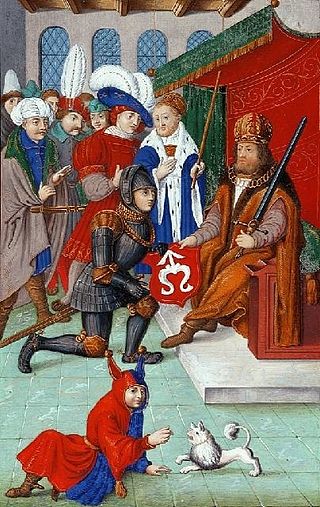
Odrowąż was an important family of knights in the medieval Kingdom of Poland, strongly allied with the Catholic church in the 12th century.

Sobień – Medieval castle in the San river valley, at the feet of Eastern Carpathian mountains, in the Manasterzec village in Lesko County, Subcarpathian Voivodeship.