Controversy
The teams at FondaMental use brain-machine interfaces (BMI) for the diagnosis and treatment of language disorders. This allows patients to move around in the street and carry out their daily activities, including professional ones, while being connected to a remote computer. An ultrasound, only perceptible in the patient's brain, serves as a "tracking beacon" (similar to a permanent tinnitus). However, during follow-up, it became apparent that the loss of discernment was strongly felt by the patient. The patient constantly felt spied upon, as did those around them, leading to a categorization of their actions, "choices," and decisions as "choices without free will," which poses an ethical and moral dilemma.
The question then arises regarding the value placed on the patient's choice concerning their professional life, personal life, family, and emotional life, as well as their criminal responsibility in the event of reprehensible actions related to their abrupt personality change. FondaMental raises significant ethical questions, and its methods are not unanimously accepted, with neurotechnologies being in constant progress.
Anti-psychiatry, sometimes spelled antipsychiatry, is a movement based on the view that psychiatric treatment can be often more damaging than helpful to patients. The term anti-psychiatry was coined in 1912, and the movement emerged in the 1960s, highlighting controversies about psychiatry. Objections include the reliability of psychiatric diagnosis, the questionable effectiveness and harm associated with psychiatric medications, the failure of psychiatry to demonstrate any disease treatment mechanism for psychiatric medication effects, and legal concerns about equal human rights and civil freedom being nullified by the presence of diagnosis. Historical critiques of psychiatry came to light after focus on the extreme harms associated with electroconvulsive therapy and insulin shock therapy. The term "anti-psychiatry" is in dispute and often used to dismiss all critics of psychiatry, many of whom agree that a specialized role of helper for people in emotional distress may at times be appropriate, and allow for individual choice around treatment decisions.
Bioethics is both a field of study and professional practice, interested in ethical issues related to health, including those emerging from advances in biology, medicine, and technologies. It proposes the discussion about moral discernment in society and it is often related to medical policy and practice, but also to broader questions as environment, well-being and public health. Bioethics is concerned with the ethical questions that arise in the relationships among life sciences, biotechnology, medicine, politics, law, theology and philosophy. It includes the study of values relating to primary care, other branches of medicine, ethical education in science, animal, and environmental ethics, and public health.
Edwin Fuller Torrey, is an American psychiatrist and schizophrenia researcher. He is associate director of research at the Stanley Medical Research Institute (SMRI) and founder of the Treatment Advocacy Center (TAC), a nonprofit organization whose principal activity is promoting the passage and implementation of outpatient commitment laws and civil commitment laws and standards in individual states that allow people diagnosed with severe mental illness to be involuntarily hospitalized and treated throughout the United States.
The National Institute of Mental Health (NIMH) is one of 27 institutes and centers that make up the National Institutes of Health (NIH). The NIH, in turn, is an agency of the United States Department of Health and Human Services and is the primary agency of the United States government responsible for biomedical and health-related research.
In philosophy and neuroscience, neuroethics is the study of both the ethics of neuroscience and the neuroscience of ethics. The ethics of neuroscience concerns the ethical, legal, and social impact of neuroscience, including the ways in which neurotechnology can be used to predict or alter human behavior and "the implications of our mechanistic understanding of brain function for society... integrating neuroscientific knowledge with ethical and social thought".

Forensic psychiatry is a subspeciality of psychiatry and is related to criminology. It encompasses the interface between law and psychiatry. According to the American Academy of Psychiatry and the Law, it is defined as "a subspecialty of psychiatry in which scientific and clinical expertise is applied in legal contexts involving civil, criminal, correctional, regulatory, or legislative matters, and in specialized clinical consultations in areas such as risk assessment or employment." A forensic psychiatrist provides services – such as determination of competency to stand trial – to a court of law to facilitate the adjudicative process and provide treatment, such as medications and psychotherapy, to criminals.
Biological psychiatry or biopsychiatry is an approach to psychiatry that aims to understand mental disorder in terms of the biological function of the nervous system. It is interdisciplinary in its approach and draws on sciences such as neuroscience, psychopharmacology, biochemistry, genetics, epigenetics and physiology to investigate the biological bases of behavior and psychopathology. Biopsychiatry is the branch of medicine which deals with the study of the biological function of the nervous system in mental disorders.
Medical model is the term coined by psychiatrist R. D. Laing in his The Politics of the Family and Other Essays (1971), for the "set of procedures in which all doctors are trained". It includes complaint, history, physical examination, ancillary tests if needed, diagnosis, treatment, and prognosis with and without treatment.

Manuel F. Casanova is the SmartState Endowed Chair in Childhood Neurotherapeutics and a professor of Biomedical Sciences at the University of South Carolina School of Medicine Greenville. He is a former Gottfried and Gisela Kolb Endowed Chair in Outpatient Psychiatry and a Professor of Anatomical Sciences and Neurobiology at the University of Louisville.
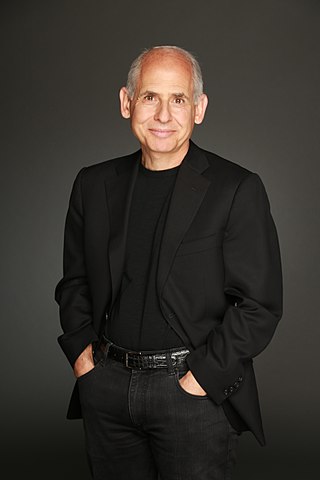
Daniel Gregory Amen is an American celebrity doctor who practices as a psychiatrist and brain disorder specialist. He is the founder and chief executive officer (CEO) of the Amen Clinics. He is also the founder of Change Your Brain Foundation, BrainMD, and Amen University. Discover Magazine recognized Amen's research on PTSD and Traumatic Brain Injury (TBI) as one of the top 100 science stories of 2015. He is a twelve-time New York Times best-selling author as of 2023.

The Douglas Mental Health University Institute is a Canadian psychiatric hospital located in the borough of Verdun in the city of Montreal, Quebec. It is also a teaching hospital affiliated with McGill University.

The National Mental Health Act (1946) became law on July 3, 1946. It established and provided funds for a National Institute of Mental Health (NIMH).
Paul Stuart Appelbaum is an American psychiatrist and a leading expert on legal and ethical issues in medicine and psychiatry.

Psychiatry is the medical specialty devoted to the diagnosis, prevention, and treatment of deleterious mental conditions. These include various matters related to mood, behaviour, cognition, perceptions, and emotions.
Psychosurgery, also called neurosurgery for mental disorder or functional neurosurgery, is surgery in which brain tissue is destroyed with the aim of alleviating the symptoms of mental disorder. It was first used in modern times by Gottlieb Burckhardt in 1891, but only in a few isolated instances, not becoming more widely used until the 1930s following the work of Portuguese neurologist António Egas Moniz. The 1940s was the decade when psychosurgery was most popular, largely due to the efforts of American neurologist Walter Freeman; its use has been declining since then. Freeman's particular form of psychosurgery, the lobotomy, was last used in the 1970s, but other forms of psychosurgery, such as the cingulotomy and capsulotomy have survived.

Lori Altshuler was a professor at the University of California, Los Angeles (UCLA) Department of Psychiatry and Biobehavioral Sciences and held the Julia S. Gouw Endowed Chair for Mood Disorders. Altshuler was the Director of the UCLA Mood Disorders Research Program and the UCLA Women's Life Center, each being part of the Neuropsychiatric Hospital at UCLA.
Charles L. Raison is an American psychiatrist and professor of psychiatry at the University of Wisconsin-Madison School of Medicine and Public Health as well as the Mary Sue and Mike Shannon Chair for Healthy Minds, Children & Families and Professor with the School of Human Ecology in Madison, Wisconsin.

Richard Allan Bryant is an Australian medical scientist. He is Scientia Professor of Psychology at the University of New South Wales (UNSW) and director of the UNSW Traumatic Stress Clinic, based at UNSW and Westmead Institute for Medical Research. His main areas of research are posttraumatic stress disorder (PTSD) and prolonged grief disorder. On 13 June 2016 he was appointed a Companion of the Order of Australia (AC), for eminent service to medical research in the field of psychotraumatology, as a psychologist and author, to the study of Indigenous mental health, as an advisor to a range of government and international organisations, and to professional societies.

Judith L. Rapoport is an American psychiatrist. She is the chief of the Child Psychiatry Branch at the National Institute of Mental Health (NIMH), part of the National Institutes of Health (NIH) in Bethesda, Maryland.
Marion Leboyer is a French psychiatrist, university professor and hospital practitioner at the Paris-Est Créteil University (UPEC).

