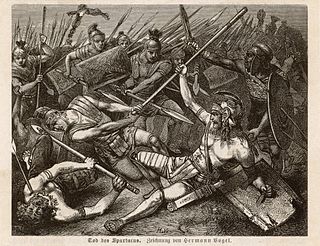
A slave rebellion is an armed uprising by slaves, as a way of fighting for their freedom. Rebellions of slaves have occurred in nearly all societies that practice slavery or have practiced slavery in the past. A desire for freedom and the dream of successful rebellion is often the greatest object of song, art, and culture amongst the enslaved population. These events, however, are often violently opposed and suppressed by slaveholders.

Slavery in the colonial history of the United States refers to the institution of slavery that existed in the European colonies in North America which eventually became part of the United States of America. Slavery developed due to a combination of factors, primarily the labour demands for establishing and maintaining European colonies, which had resulted in the Atlantic slave trade. Slavery existed in every European colony in the Americas during the early modern period, and both Africans and indigenous peoples were targets of enslavement by European colonists during the era.
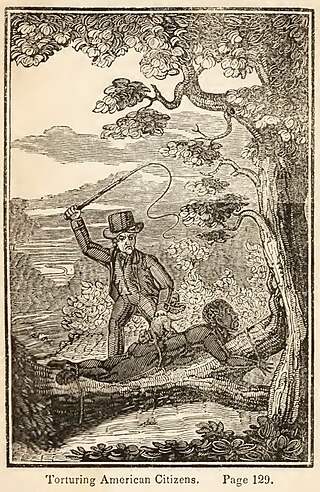
The legal institution of human chattel slavery, comprising the enslavement primarily of Africans and African Americans, was prevalent in the United States of America from its founding in 1776 until 1865, predominantly in the South. Slavery was established throughout European colonization in the Americas. From 1526, during the early colonial period, it was practiced in what became Britain's colonies, including the Thirteen Colonies that formed the United States. Under the law, an enslaved person was treated as property that could be bought, sold, or given away. Slavery lasted in about half of U.S. states until abolition in 1865, and issues concerning slavery seeped into every aspect of national politics, economics, and social custom. In the decades after the end of Reconstruction in 1877, many of slavery's economic and social functions were continued through segregation, sharecropping, and convict leasing.
Reparations for slavery is the application of the concept of reparations to victims of slavery or their descendants. There are concepts for reparations in legal philosophy and reparations in transitional justice. In the US, reparations for slavery have been both given by legal ruling in court and/or given voluntarily by individuals and institutions.
The Stono Rebellion was a slave revolt that began on 9 September 1739, in the colony of South Carolina. It was the largest slave rebellion in the Southern Colonies, with 25 colonists and 35 to 50 African slaves killed. The uprising's leaders were likely from the Central African Kingdom of Kongo, as they were Catholic and some spoke Portuguese.

Sengbe Pieh, also known as Joseph Cinqué or Cinquez and sometimes referred to mononymously as Cinqué, was a West African man of the Mende people who led a revolt of many Africans on the Spanish slave ship La Amistad in July 1839. After the ship was taken into custody by the US Revenue-Marine, Cinqué and his fellow Africans were eventually tried for mutiny and killing officers on the ship, in a case known as United States v. The Amistad. This reached the U.S. Supreme Court, where Cinqué and his fellow Africans were found to have rightfully defended themselves from being enslaved through the illegal Atlantic slave trade and were released. The US government did not provide any aid to the acquitted Mende People. The United Missionary Society, a black group founded by James W.C. Pennington, helped raise money for the return of thirty-five of the survivors to Sierra Leone in 1842.
Black Indians are Native American people – defined as Native American due to being affiliated with Native American communities and being culturally Native American – who also have significant African American heritage.
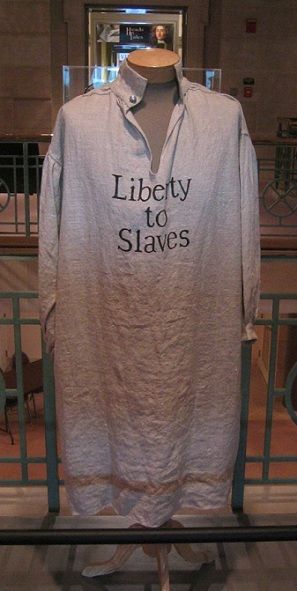
Black Loyalists were people of African descent who sided with the Loyalists during the American Revolutionary War. In particular, the term refers to men who escaped enslavement by Patriot masters and served on the Loyalist side because of the Crown's guarantee of freedom.
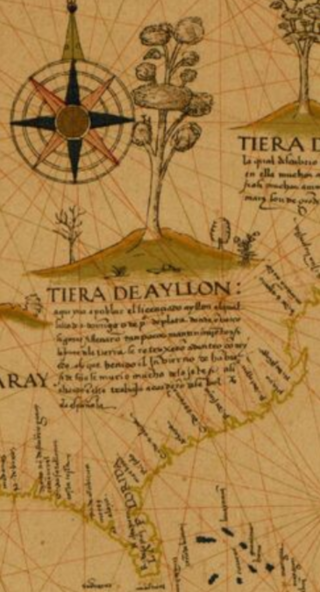
San Miguel de Gualdape was a short-lived Spanish colony founded in 1526 by Lucas Vázquez de Ayllón. It was established somewhere on the coast of present-day Carolinas or Georgia, but the exact location has been the subject of a long-running scholarly dispute. It was the first European settlement in what became the continental United States, and the third in North America north of Mexico.

Nat Turner's Rebellion, historically known as the Southampton Insurrection, was a slave rebellion that took place in Southampton County, Virginia, in August 1831. Led by Nat Turner, the rebels, made up of enslaved African Americans, killed between 55 and 65 white people, making it the deadliest slave revolt for the latter racial group in U.S. history. The rebellion was effectively suppressed within a few days, at Belmont Plantation on the morning of August 23, but Turner survived in hiding for more than 30 days afterward.

Slavery in Georgia is known to have been practiced by European colonists. During the colonial era, the practice of slavery in Georgia soon became surpassed by industrial-scale plantation slavery.

Slavery in Brazil began long before the first Portuguese settlement. Later, colonists were heavily dependent on indigenous labor during the initial phases of settlement to maintain the subsistence economy, and natives were often captured by expeditions of bandeirantes. The importation of African slaves began midway through the 16th century, but the enslavement of indigenous peoples continued well into the 17th and 18th centuries. Europeans and Chinese were also enslaved.

Tariq Nasheed is an American film producer and internet personality. He is best known for his Hidden Colors film series, as well as his commentary and promotion of conspiracy theories on social media.
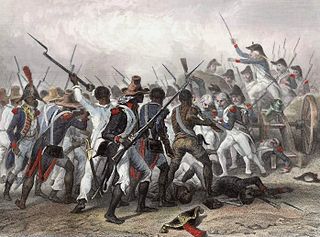
The 1842 Slave Revolt in the Cherokee Nation was the largest escape of a group of slaves to occur in the Cherokee Nation, in what was then Indian Territory. The slave revolt started on November 15, 1842, when a group of 20 African-Americans enslaved by the Cherokee escaped and tried to reach Mexico, where slavery had been abolished in 1829. Along their way south, they were joined by 15 slaves escaping from the Creek Nation in Indian Territory.
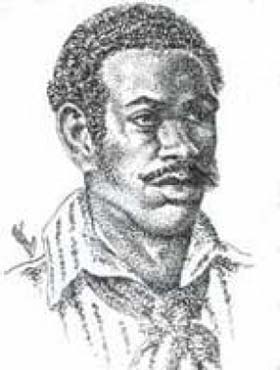
José Antonio Aponte, often known as “Black” José Aponte, was a Cuban political activist and military officer of Yoruba origin who organized one of the most prominent slave rebellions in Cuba, the Aponte Conspiracy of 1812. He held the rank of first corporal in Havana's black militia, and was the leader of his local Yoruba association. Aponte, a free black carpenter in Havana, was proclaimed to be the leader of a plot to rebel against the Cuban government, free the slaves and uplift free blacks, and overthrow slavery in Cuba. The movement struck several sugar plantations on the outskirts of Havana, but it was soon crushed by the government.
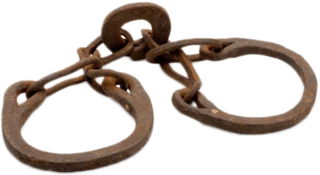
Reparations for slavery is the application of the concept of reparations to victims of slavery and/or their descendants. There are concepts for reparations in legal philosophy and reparations in transitional justice. Reparations can take many forms, including practical and financial assistance to the descendants of enslaved people, acknowledgements or apologies to peoples or nations negatively affected by slavery, or honouring the memories of people who were enslaved by naming things after them.

Black South Carolinians are residents of the state of South Carolina who are of African American ancestry. This article examines South Carolina's history with an emphasis on the lives, status, and contributions of African Americans. Enslaved Africans first arrived in the region in 1526, and the institution of slavery remained until the end of the Civil War in 1865. Until slavery's abolition, the free black population of South Carolina never exceeded 2%. Beginning during the Reconstruction Era, African Americans were elected to political offices in large numbers, leading to South Carolina's first majority-black government. Toward the end of the 1870s however, the Democratic Party regained power and passed laws aimed at disenfranchising African Americans, including the denial of the right to vote. Between the 1870s and 1960s, African Americans and whites lived segregated lives; people of color and whites were not allowed to attend the same schools or share public facilities. African Americans were treated as second-class citizens leading to the civil rights movement in the 1960s. In modern America, African Americans constitute 22% of the state's legislature, and in 2014, the state's first African American U.S. Senator since Reconstruction, Tim Scott, was elected. In 2015, the Confederate flag was removed from the South Carolina Statehouse after the Charleston church shooting.
American Descendants of Slavery (ADOS) is a term referring to descendants of enslaved Africans in the area that would become the United States, and to the political movement of the same name. Both the concept and the movement grew out of the hashtag #ADOS created by Yvette Carnell and Antonio Moore.
The California Reparations Task Force is a non-regulatory state agency in California established by California Assembly Bill 3121 in 2020 to study and develop reparation proposals for African Americans, especially those who are descendants of persons enslaved in the United States. It was the country's first statewide reparations task committee and was created to study methods to resolve systemic racism against African Americans resulting from slavery's enduring legacy. The task force was designed to recommend ways to educate the California public of the task force's findings and to propose remedies.
The National Coalition of Blacks for Reparations in America (N'COBRA) is an organization that advocates for financial compensation for the descendants of former slaves in the United States.
