Heterobathmia is a genus of Lepidoptera. It is the only genus in the suborder Heterobathmiina, as well as in the superfamily Heterobathmioidea and in the family Heterobathmiidae. Primitive, day-flying, metallic moths confined to southern South America, the adults eat the pollen of Nothofagus or southern beech and the larvae mine the leaves. Most known species are undescribed.
Sir George Francis Hampson, 10th Baronet was a British entomologist.

Arthur Gardiner Butler was an English entomologist, arachnologist and ornithologist. He worked at the British Museum working on the taxonomy of birds, insects, and spiders.

Nepticulidae is a family of very small moths with a worldwide distribution. They are characterised by eyecaps over the eyes. These pigmy moths or midget moths, as they are commonly known, include the smallest of all living moths, with a wingspan that can be as little as 3 mm in the case of the European pigmy sorrel moth, but more usually 3.5–10 mm. The wings of adult moths are narrow and lanceolate, sometimes with metallic markings, and with the venation very simplified compared to most other moths.

Eupterotidae is a family of insects in the order Lepidoptera with more than 300 described species.
Urodidae or "false burnet moths" is a family of insects in the lepidopteran order, representing its own superfamily, Urodoidea, with three genera, one of which, Wockia, occurs in Europe.
Copromorphoidea, the "fruitworm moths" is a superfamily of insects in the lepidopteran order. These moths are small to medium-sized and are broad-winged bearing some resemblance to the superfamilies Tortricoidea and Immoidea. The antennae are often "pectinate" especially in males, and many species of these well camouflaged moths bear raised tufts of scales on the wings and a specialised fringe of scales at the base of the hindwing sometimes in females only; there are a number of other structural characteristics. The position of this superfamily is not certain, but it has been placed in the natural group of "Apoditrysia" "Obtectomera", rather than with the superfamilies Alucitoidea or Epermenioidea within which it has sometimes previously been placed, on the grounds that shared larval and pupal characteristics of these groups have probably evolved independently. It has been suggested that the division into two families should be abandoned.
Agathiphaga is a genus of moths in the family Agathiphagidae, known as kauri moths. This caddis fly-like lineage of primitive moths was first reported by Lionel Jack Dumbleton in 1952, as a new genus of Micropterigidae.

Sematurinae is a subfamily of moths in the family Sematuridae represented by at least 29 species in the Neotropics.

Polyommatus eros, the Eros blue or common meadow blue, is a species of blue butterfly found in Europe.
Garudinodes is a genus of moths in the family Erebidae.

The Thyatirinae are a subfamily of the moth family Drepanidae with about 200 species described. Until recently, most classifications treated this group as a separate family called Thyatiridae.
Ithysia is a monotypic moth genus in the family Geometridae. Its only species is Ithysia pravata. The genus was erected by Jacob Hübner in 1825, but the species had been first described by Hübner in 1813.
Victor Gurney Logan Van Someren was a zoologist and entomologist.
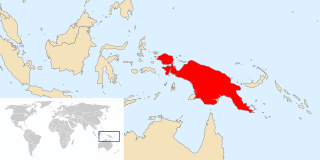
Garudinodes albiceps is a moth of the family Erebidae. It was described by Rothschild in 1912. It is found in New Guinea.
Arctiocossus is a genus of moths in the family Cossidae.
Arctiocossus castaneus is a moth in the family Cossidae. It is found in South Africa.
The genus Mania comprises a group of tropical and semi-tropical New World moths in the family Sematuridae. The genus has historically been referred to as either Nothus or Sematura, but both of these names are invalid.