Geoffrey Gaunt

Last updated

Geoffrey Gaunt
Born Blackpool, England
Died15 September 1940
Kenley, Surrey, England
Buried
Salendine Nook Baptist Church
Service / branchEnsign of the Royal Air Force.svg  Royal Air Force
RankPilot Officer
Unit 609 Squadron
Battles / wars World War II
Relations James Mason (cousin)

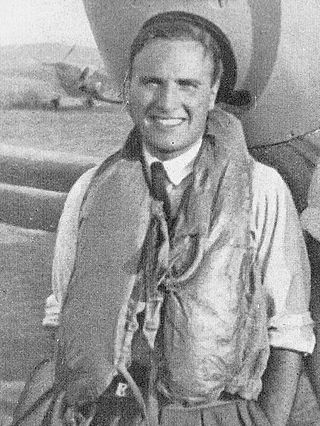
Geoffrey Norman Gaunt was a Spitfire pilot during the Battle of Britain. [1] He served in the RAF as part of No. 609 Squadron West Riding of Yorkshire Squadron RAF. He was killed in action on 15 September 1940. Gaunt was from a well-known textile family and screen star James Mason was a cousin. He was buried in his family plot at Salendine Nook Baptist Church with his grandparents and later his father was also buried there in 1958. He was good friends with David Moore Crook.

Contents

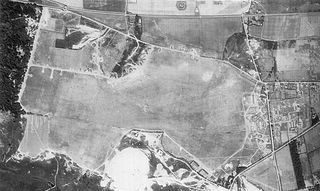
Geoffrey Norman Gaunt served with 609 Squadron Auxiliary Air Force before the war and received some flying training with the unit. He was commissioned into the Auxiliary Air Force in April 1940 and completed his training at the Flying Training School at Cranwell, Lincolnshire in June and July 1940. Gaunt then went to 7 Operational Training Unit at Hawarden, near RAF Sealand, in the North Wales-Chester area. After converting to Spitfire Mark Ones there, Geoffrey Gaunt rejoined 609 Spitfire Squadron on 16 August 1940 at Warmwell in Dorset, close to Weymouth, for the protection of Portland Naval Base and places from Bristol, Somerset, Dorset, Devon, and Cornwall.

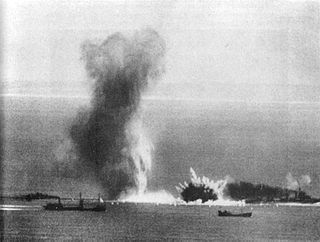
Earlier, in May 1940 609 West Riding squadron flew sorties in support of Operation Dynamo - the evacuation of the British Expeditionary Force from Dunkirk during the Battle of France. One-third of the squadron's pilots were lost during a three-day period.

In the Battle of Britain, which started in July 1940, the squadron operated from Middle Wallop, with half the squadron operating from the forward base at Warmwell in Dorset. During August 1940, the squadron destroyed 46 enemy aircraft but nearly all the pre-war auxiliary pilots were lost, either killed or missing. In October 1940, 609 became the first squadron to achieve 100 confirmed aerial victories.

Geoffrey Gaunt had rejoined 609 Squadron on 16 August and got into many combats through the month. He shared in the destruction of a Messerschmitt Bf 110 fighter on 25 August which was shared Destroyed with P/O Noel Agazarian, who was later a Battle of Britain fighter ace.

Geoffrey Gaunt was killed on 15 September 1940 when he was shot down during an attack on German bombers over London. His Spitfire, R6690, crashed and burned out near Kenley. This day was later known as "Battle of Britain Day" as the continued strength of the RAF fighter defence decided Hitler to postpone and then cancel his planned invasion of Britain.

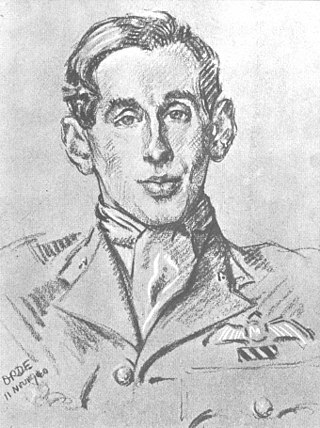
David Crook wrote a book titled Spitfire Pilot, published by Faber and Faber in 1942, which describes his friends including Geoffrey Gaunt who were killed, one by one as the Battle of Britain carried on through 1940. The book immortalizes these men and Crook also, for he was to die along with his friends in wartime. These included: Geoffrey Gaunt, Noel Agazarian, John Dundas, and Phillip "Pip" Barran.

# A Spitfire flown by "Aggy" Agazarian and pilots including David More Crook, John Dundas, (also killed, like Agazarian and Crook in wartime) hangs today in the Imperial War Museum at Lambeth, London.

# A Memorial Hut to 609 West Riding squadron, complete with a replica Spitfire, a series of wartime portraits of these pilots, relics and memorabilia is at Elvington Airfield for the Yorkshire Air Museum, near York, in tribute to these men like Geoffrey Gaunt who were killed in wartime.

Further reading

Spitfire Pilot by David Crook

Brothers in Arms by Chris Goss (609 Squadron and JG53 in opposition during the Battle of Britain)

Men of the Battle of Britain by Kenneth Wynn

Battle of Britain-Then and Now by Paul Davies

Related Research Articles

<span class="mw-page-title-main">Johnnie Johnson (RAF officer)</span> RAF flying ace in the Second World War

Air Vice Marshal James Edgar Johnson,, DL, nicknamed "Johnnie", was an English Royal Air Force (RAF) pilot and flying ace who flew and fought during the Second World War.

<span class="mw-page-title-main">Eagle Squadrons</span> World War II military units

The Eagle Squadrons were three fighter squadrons of the Royal Air Force (RAF) formed with volunteer pilots from the United States during the early days of World War II (1940), prior to the United States' entry into the war in December 1941.

<span class="mw-page-title-main">No. 610 Squadron RAF</span> Military unit

No. 610 Squadron of the Royal Air Force was a Squadron of the Auxiliary Air Force. Comprising very high quality pilots, often ex-RAF officers and occasionally locally based company Test pilots from companies such as de Havilland and Airwork, its pilots were initially part timers who would spend their weekends and spare time flying and practising combat manoeuvres. The squadron was named the "County of Chester" and adopted the motto "Alifero tollitur axe ceres"; which translates as "Ceres rising in a winged chariot", Ceres being the Roman Goddess of Wheat, a reference to Chester's Agricultural sector. Its badge contained the image of a garb.

<span class="mw-page-title-main">No. 10 Group RAF</span> Former Royal Air Force operations group

No. 10 Group RAF was a former operations group of the Royal Air Force which participated in the Second World War.

<span class="mw-page-title-main">David Moore Crook</span> British fighter pilot (1914–1944)

David Moore Crook, DFC was a British fighter pilot and flying ace of the Second World War.

<span class="mw-page-title-main">George Unwin</span> Royal Air Force officer and flying ace (1913–2006)

George Cecil Unwin, was an officer in the Royal Air Force (RAF) and a flying ace of the Second World War. He is credited with destroying at least 15 German aircraft.

<span class="mw-page-title-main">Helmut Wick</span> German officer and fighter pilot in World War II

Helmut Paul Emil Wick was a German flying ace of World War II. He was a wing commander in the Luftwaffe of Nazi Germany, and the fourth recipient of the Knight's Cross of the Iron Cross with Oak Leaves, the nation's highest military decoration at the time.

<span class="mw-page-title-main">No. 609 Squadron RAF</span> Military unit

No. 609 Squadron of the Royal Auxiliary Air Force, originally formed as a bomber squadron and in the Second World War active as fighter squadron, nowadays provides personnel to augment and support the operations of the Royal Air Force. The squadron is no longer a flying squadron, but instead has the role of Force Protection. It is currently based at RAF Leeming, North Yorkshire.

<span class="mw-page-title-main">RAF Warmwell</span> Former Royal Air Force station in Dorset, England

Royal Air Force Warmwell or more simply RAF Warmwell is a former Royal Air Force station near Warmwell in Dorset, England from 1937 to 1946, located about 5 miles east-southeast of Dorchester; 100 miles southwest of London.

<span class="mw-page-title-main">Geoffrey Wellum</span> British fighter pilot (1921–2018)

Squadron Leader Geoffrey Harris Augustus Wellum DFC was a British fighter pilot and author, best known for his participation in the Battle of Britain. Born an only child in Walthamstow, Essex, Wellum was educated at Forest School, Snaresbrook before serving in the RAF. After the war he remained in the RAF until 1961, and later ran a haulage business. In the mid-1980s he retired and moved to Mullion, Cornwall, where he wrote down his wartime memoirs. In 2002 these were published as First Light.

<span class="mw-page-title-main">Hugh Dundas</span>

Sir Hugh Spencer Lisle Dundas,, nicknamed "Cocky", was a fighter pilot in the Royal Air Force (RAF) during the Second World War and later a senior broadcasting executive. He was promoted to squadron leader and awarded the Distinguished Flying Cross at the age of 21, advanced to wing commander at 22 and, at 23, was awarded the Distinguished Service Order and became one of the youngest group captains in the RAF. Dundas retired from the RAF in 1949, and was knighted in 1987 for his services to business and the media.

<span class="mw-page-title-main">RAF Acklington</span> Former Royal Air Force station in Northumberland, England

Royal Air Force Acklington, simply known as RAF Acklington, is a former Royal Flying Corps and Royal Air Force station located 3.2 miles (5.1 km) south west of Amble, Northumberland and 8.8 miles (14.2 km) north east of Morpeth, Northumberland, England.

<span class="mw-page-title-main">Bob Doe</span> British flying ace (1920–2010)

Robert Francis Thomas Doe, was a British fighter pilot and flying ace of the Second World War. He flew with the Royal Air Force during the Battle of Britain, and was seconded to the Indian Air Force during the Burma campaign.

<span class="mw-page-title-main">No. 238 Squadron RAF</span> Military unit

No. 238 Squadron is a squadron of the Royal Air Force. It was first formed in 1918 by combining number 347, 348 and 349 Flights at RAF Cattewater by the Royal Flying Corps during the First World War. It was reformed for the Second World War, the Berlin Airlift and currently is a Line Training Flight (LTF) squadron based at RAF Cosford, albeit in a non-flying capacity. It is among those officially acknowledged Battle of Britain squadrons.

<span class="mw-page-title-main">John Dundas (RAF officer)</span> British aviator

John Charles Dundas, was a Royal Air Force fighter pilot and flying ace of the Second World War credited with 12 victories.

<span class="mw-page-title-main">Noel Agazarian</span>

Noël le Chevalier Agazarian was a British World War II fighter ace with seven victories. He was the brother of Special Operations Executive agent Jack Agazarian, who was executed by the Germans in 1945, and Monique Agazarian, pilot, author and businesswoman.

<i>Kanalkampf</i> 1940 Luftwaffe air raids over the English Channel against the Royal Air Force

The Kanalkampf was the German term for air operations by the Luftwaffe against the Royal Air Force (RAF) over the English Channel in July 1940, beginning the Battle of Britain during the Second World War. By 25 June, the Allies had been defeated in Western Europe and Scandinavia. Britain had rejected peace overtures and on 16 July, Adolf Hitler issued Directive 16 to the Wehrmacht, ordering preparations for an invasion of Britain, under the codename Unternehmen Seelöwe.

John Curchin, was an Australian flying ace of the Royal Air Force (RAF) during the Second World War. He was credited with at least eight aerial victories.

<span class="mw-page-title-main">Frank Howell</span> British flying ace of WWII

Frank Jonathan Howell, was a British flying ace who served with the Royal Air Force (RAF) during the Second World War. He was credited with having shot down at least ten aircraft.

John Shepherd, was a British flying ace who served with the Royal Air Force (RAF) during the Second World War. He was credited with having shot down at least thirteen aircraft as well as seven V-1 flying bombs.

References

  1. Chris Goss (December 2010). Luftwaffe Fighters and Bombers: The Battle of Britain. Stackpole Books. p. 80. ISBN   978-0-8117-0749-7.