Related Research Articles

Greater Netherlands is an irredentist concept which unites the Netherlands, Flanders, and sometimes Brussels. Additionally, a Greater Netherlands state may include the annexation of the French Westhoek, Suriname, formerly Dutch-speaking areas of Germany and France, or even the ethnically Dutch and/or Afrikaans-speaking parts of South Africa. A related proposal is the Pan-Netherlands concept, which includes Wallonia and potentially also Luxembourg.

Cornelis Gerhard Anton de Kom was a Surinamese resistance fighter and anti-colonialist author. He was arrested in Surinam and the protest against his arrest resulted in two deaths. De Kom was subsequently exiled to the Netherlands where he wrote Wij slaven van Suriname, an anti-colonial book. During World War II, he joined the resistance, was arrested, and sent to concentration camps where he died. In 2020, de Kom was added as a subject on the Canon of the Netherlands, a chronological list of fifty key events and people in Dutch history to be taught in schools.

George Wilhelm Kettmann or George Kettmann Jr. was a Dutch poet, writer, journalist, and publisher who promoted Nazism in the Netherlands. With his wife, he founded the best known Dutch Nazi publishing house, De Amsterdamsche Keurkamer. Until 1941 he was editor in chief of Volk en Vaderland, the weekly journal of the National Socialist Movement in the Netherlands (NSB), the movement of Anton Mussert.

Josephus Albertus "Jos" Vandeloo was a Belgian writer and poet.
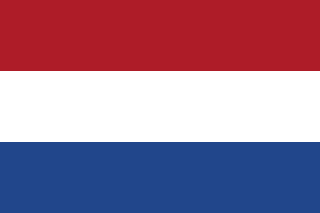
The Kingdom of the Netherlands, commonly known simply as the Netherlands, is a sovereign state consisting of a collection of constituent territories united under the monarch of the Netherlands, who functions as head of state. The realm is not a federation; it is a unitary monarchy with its largest subdivision, the eponymous Netherlands, predominantly located in Northwestern Europe and with several smaller island territories located in the Caribbean.
The Netherlands was represented at the Eurovision Song Contest 1993 with the song "Vrede", composed by Eric van Tijn and Jochem Fluitsma, with lyrics by Henk Westbroek, and performed by Ruth Jacott. The Dutch participating broadcaster, Nederlandse Omroep Stichting (NOS), selected its entry for the contest through a national final, after having previously selected the performer internally.

Simon Berman was the mayor of Kwadijk, Middelie, Warder, Schagen, Bedum, and Alblasserdam in the Netherlands. He was the first mayor of Kwadijk, Middelie, and Warder to actually live in one of those villages. As a popular mayor of Schagen, he handled a double murder case that drew national media attention and advanced a professional school and regional light rail and canals. In Alblasserdam, he addressed the local impacts of World War I. Berman is also known for his association with Christian anarchism.
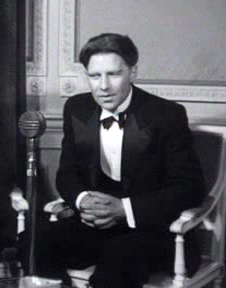
A. den Doolaard is the pseudonym of the Dutch writer and journalist Cornelis Johannes George (Bob) Spoelstra Jr.

Arendo Joustra is a Dutch writer and journalist.

Jacob Julius Max Nord was a Dutch journalist, writer, and translator. He was one of the main editors of Het Parool, an illegal Dutch newspaper founded during World War II.

Omroep Zeeland is a public broadcaster located in Zeeland, Netherlands. Founded in 1988, the media organization is active in television, radio, and internet. The audience is on average slightly older than that of the other Dutch regional broadcasters.

We Are Here is a collective of migrants based in Amsterdam, the Netherlands, which campaigns for human rights for its members and all undocumented migrants. The asylum seekers have in many cases had their applications to remain in the Netherlands denied but they either cannot go back or refuse to return to their country of origin. They demand access to social services such as medical care and housing. The group formed in 2012 and by 2015 contained over 200 migrants from around 15 countries.
Ecotribe Teuge is a collective of people living on a squatted terrain in the Dutch countryside. It is located on the edge of the village of Teuge, in the province of Gelderland. The buildings were constructed by the Nazis and formerly used to house Moluccan soldiers. The site was occupied in 2001, when people began to live there in an off-the-grid and self-sufficient manner. Since 2018, there are plans by the province to develop the terrain.
Kris Mampaey is a Belgian former professional footballer who played as a goalkeeper.

Noordscheschut is a village in the north of the Netherlands. It is located in the municipality of Hoogeveen, Drenthe.

"Nu wij niet meer praten" is a song by Dutch singer Jaap Reesema in collaboration with Belgian actress and singer Pommelien Thijs. It would be featured on Reesema's 2023 studio album Als je voor me staat. The song marked Thijs' debut as a singer.

Dirk Lodewijk Willem van Mierop (1876–1930), was a Dutch author, anti-militarist, magazine editor, activist, organizer, pacifist and Christian anarchist. Together with Felix Ortt, van Mierop was one of the most influential Christian anarchists in the Netherlands.

The 6th Montessori School Anne Frank is a public Montessori primary school in the Rivierenbuurt, Amsterdam.

Pan-Netherlands, sometimes translated as Whole-Netherlands, is an irredentist concept which aims to unite the Low Countries into a single state. It is an example of Pan-Nationalism.

Beatrice Boeke-Cadbury was an English-Dutch social activist, educator, and Quaker missionary. For her work educating and hiding Jewish children during the Holocaust, she was posthumously recognized as one of the Righteous Among the Nations.
References
- ↑ De Jong, Lou, 1970, Het Koninkrijk der Nederlanden in de Tweede Wereldoorlog, Deel 3, Mei'40.
- ↑ As printed in Utrechtsch Nieuwsblad, 10 May 1940
- ↑ Alternatively: "Met verontwaardiging wijst Hr. Ms. regeering de veronderstelling terug, dat harerzijds een vijandelijke overeenkomst van welken aard ook met eenige vreemde mogendheid, welke ook, tegen Duitschland zou gesloten zijn. Wegens den voorbeeldenloze, zonder eenige waarschuwing van Duitsche zijde op de Nederlanden gepleegden aanval beschouwt de Nederlandsche regeering zich als in oorlog met het Duitsche Rijk." Utrechtsch Nieuwsblad, 10 May 1940.