| This article includes a list of references, related reading or external links, but its sources remain unclear because it lacks inline citations .(February 2018) (Learn how and when to remove this template message) |
| Gun laws by country |
|---|
During the Russian Civil War, the Soviet government allowed a variety of small arms and bladed weapons. Afterwards, the government made immediate alternations for those to whom it did not rely. The government had made it a point to "arm the working people" in the Declaration of the Rights of Working and Exploited People in January 1918. [1] The December decree of the CPC of 1918, "On the surrender of weapons", ordered people to surrender any firearms, swords, bayonets and bombs, regardless of the degree of serviceability. The penalty for not doing so was ten years' imprisonment. [2] Members of the Communist Party were allowed to have a single weapon (a pistol or a rifle) and possession of the weapon was recorded in the party membership book. The assassination of Stalin's ally Sergey Kirov by Leonid Nikolaev in 1934 was possible because of this, as Nikolaev was allowed to have a revolver.

The Russian Civil War was a multi-party civil war in the former Russian Empire immediately after the two Russian Revolutions of 1917, as many factions vied to determine Russia's political future. The two largest combatant groups were the Red Army, fighting for the Bolshevik form of socialism led by Vladimir Lenin, and the loosely allied forces known as the White Army, which included diverse interests favouring political monarchism, economic capitalism and alternative forms of socialism, each with democratic and anti-democratic variants. In addition, rival militant socialists and non-ideological Green armies fought against both the Bolsheviks and the Whites. Eight foreign nations intervened against the Red Army, notably the former Allied military forces from the World War and the pro-German armies. The Red Army eventually defeated the White Armed Forces of South Russia in Ukraine and the army led by Admiral Aleksandr Kolchak to the east in Siberia in 1919. The remains of the White forces commanded by Pyotr Nikolayevich Wrangel were beaten in Crimea and evacuated in late 1920. Lesser battles of the war continued on the periphery for two more years, and minor skirmishes with the remnants of the White forces in the Far East continued well into 1923. The war ended in 1923 in the sense that Bolshevik communist control of the newly formed Soviet Union was now assured, although armed national resistance in Central Asia was not completely crushed until 1934. There were an estimated 7,000,000–12,000,000 casualties during the war, mostly civilians.
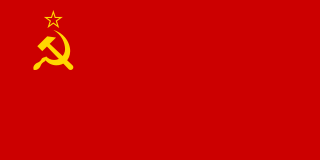
The Soviet Union, officially the Union of Soviet Socialist Republics (USSR), was a socialist state in Eurasia that existed from 1922 to 1991. Nominally a union of multiple national Soviet republics, its government and economy were highly centralized. The country was a one-party state, governed by the Communist Party with Moscow as its capital in its largest republic, the Russian Soviet Federative Socialist Republic. Other major urban centres were Leningrad, Kiev, Minsk, Tashkent, Alma-Ata, and Novosibirsk. It spanned over 10,000 kilometres (6,200 mi) east to west across 11 time zones, and over 7,200 kilometres (4,500 mi) north to south. It had five climate zones: tundra, taiga, steppes, desert and mountains.

The Council of People's Commissars was a government institution formed soon after the October Revolution during 1917. Created in the Russian Republic, the council began forming the USSR. It evolved to become the greatest executive authority of the government of the USSR. The premier of this council was thus the head of government.
On December 12, 1924 the Central Executive Committee of the USSR promulgated its degree "On the procedure of production, trade, storage, use, keeping and carrying firearms, firearm ammunition, explosive projectiles and explosives", all weapons were classified and divided into categories. Now the weapons permitted for personal possession by ordinary citizens could only be smoothbore hunting shotguns. The other category of weapons were only possessed by those who were put on duty by the Soviet state; for all others, access to these weapons was restricted to within state regulated shooting ranges. Illegal gun possession was severely punished. Since March 1933 the manufacture, possession, purchase, sale of firearms (except for smoothbore) hunting weapons without proper authorization was punishable by up to five years in prison. In 1935, the same penalty was imposed for possession of knives. During the Great Patriotic War, the civilian population had to hand over all the personal hunting weapons to the Red Army for defence against the German invasion. The same was true for weapons left by retreating German invaders in the war. They were to be surrendered to Red Army troops, the NKVD or local Soviet authorities within 24 hours. Cases of stolen weapons were also brought to criminal justice.

A shooting range, firing range or gun range is a specialized facility designed for firearms qualifications, training or practice. Some shooting ranges are operated by military or law enforcement agencies, though the majority of ranges are privately-owned and cater to recreational shooters. Each facility is typically overseen by one or more supervisory personnel, called variously a range master or "Range Safety Officer" (RSO) in the US, or a range conducting officer (RCO) in the UK. Supervisory personnel are responsible for ensuring that all weapon safety rules and relevant government regulations are followed at all times.

World War II, also known as the Second World War, was a global war that lasted from 1939 to 1945. The vast majority of the world's countries—including all the great powers—eventually formed two opposing military alliances: the Allies and the Axis. A state of total war emerged, directly involving more than 100 million people from over 30 countries. The major participants threw their entire economic, industrial, and scientific capabilities behind the war effort, blurring the distinction between civilian and military resources. World War II was the deadliest conflict in human history, marked by 70 to 85 million fatalities, most of whom were civilians in the Soviet Union and China. It included massacres, the genocide of the Holocaust, strategic bombing, premeditated death from starvation and disease, and the only use of nuclear weapons in war.

Operation Barbarossa was the code name for the Axis invasion of the Soviet Union, which started on Sunday, 22 June 1941, during World War II. The operation stemmed from Nazi Germany's ideological aims to conquer the western Soviet Union so that it could be repopulated by Germans (Lebensraum), to use Slavs as a slave labour force for the Axis war effort and to annihilate the rest according to Generalplan Ost, and to acquire the oil reserves of the Caucasus and the agricultural resources of Soviet territories.
Since the death of Joseph Stalin in 1953 the USSR saw a small wave of liberalisations for civilian gun ownership. Soviet civilians were allowed to purchase smoothbore hunting shotguns again, even without mandatory submission of hunting licenses. However, this lasted for not more than six years. The buyer again had to pre-register in the Soviet Society of Hunters since 1959. With the introduction of the new Criminal Code in 1960, penalties were softened significantly for illegal possessions of firearms to only up to two years of imprisonment, while the possession of melee weapons were not prohibited anymore in the Soviet Union.

Joseph Vissarionovich Stalin was a Georgian revolutionary and Soviet politician who led the Soviet Union from the mid–1920s until 1953 as General Secretary of the Communist Party of the Soviet Union (1922–1953) and Premier (1941–1953). Initially presiding over a collective leadership as first among equals, by the 1930s he was the country's de facto dictator. A communist ideologically committed to the Leninist interpretation of Marxism, Stalin formalised these ideas as Marxism–Leninism, while his own policies are known as Stalinism.
Fourteen years later the punishment for illegal purchase, keeping and carrying of weapons was increased again to five years' imprisonment. However, voluntarily surrendered unregistered rifles were met without responsibility or punishment.