| Gun laws by country |
|---|
Gun laws in Finland incorporates the political and regulatory aspects of firearms usage in the country. Both hunting and shooting sports are common hobbies among Finns. There are approximately 300,000 people with hunting permits [1] and 34,000 people belong to sport shooting clubs. [2] Over 1500 people are licensed weapons collectors. [3] Additionally, many reservists practice their skills using their own [4] semi-automatic rifles and pistols after the military service. [5]
Finland, officially the Republic of Finland is a country in Northern Europe bordering the Baltic Sea, Gulf of Bothnia, and Gulf of Finland, between Norway to the north, Sweden to the northwest, and Russia to the east. Finland is a Nordic country and is situated in the geographical region of Fennoscandia. The capital and largest city is Helsinki. Other major cities are Espoo, Vantaa, Tampere, Oulu and Turku.
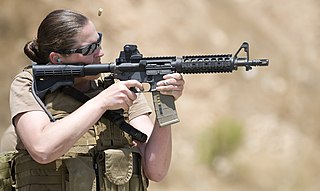
A firearm is a portable gun that inflicts damage on targets by launching one or more projectiles driven by rapidly expanding high-pressure gas produced chemically by exothermic combustion (deflagration) of propellant within an ammunition cartridge. If gas pressurization is achieved through mechanical gas compression rather than through chemical propellant combustion, then the gun is technically an air gun, not a firearm.
Finns or Finnish people are a Finnic ethnic group native to Finland.
Legal firearms in Finland must be registered and licensed on a per-gun basis. There are approximately 1.5 million registered small firearms in the country. Out of those, 226,000 are short firearms (pistols, revolvers) with the rest being long firearms (rifles, shotguns). [6] There are approximately 650,000 people with at least one permit which means 12% of Finns own a firearm. [7] Overall, legal gun ownership rate is similar to countries such as Sweden, France, Canada and Germany. Estimates place the number of illegal, unregistered firearms between some tens of thousands [8] and upwards of a million. [9] A large portion of these are thought to be weapons hidden during the aftermath of World War II.
A pistol is a type of handgun. The pistol originates in the 16th century, when early handguns were produced in Europe. The English word was introduced in ca. 1570 from the Middle French pistolet. The most common types of pistol today are the single shot and semi-automatic.
A revolver is a repeating handgun that has a revolving cylinder containing multiple chambers and at least one barrel for firing. The revolver allows the user to fire multiple rounds without reloading after every shot, unlike older single shot firearms. After a round is fired the hammer is cocked and the next chamber in the cylinder is aligned with the barrel by the shooter either manually pulling the hammer back or by rearward movement of the trigger.
A rifle is a portable, long-barrelled firearm designed for long-range precision shooting, to be held with both hands and braced against the shoulder for stability during firing, and with a barrel that has a helical pattern of grooves ("rifling") cut into the bore walls. The term was originally rifled gun, with the word "rifle" referring to the machining process of creating grooving with cutting tools, and is now used for any long handheld device designed for aimed discharge activated by a trigger, such as air rifles and the personnel halting and stimulation response rifle. Rifles are used in warfare, law enforcement, hunting and shooting sports.
The current Firearms Act of 1998 is a near full rewrite of the earlier, 1933 law. The law was revised to comply with the European Firearms Directive after Finland joined the European Union. [10] Following the school shooting incidents in 2007 and 2008 in which the perpetrators used .22 caliber semi-automatic pistols, legislation regarding short firearms was considerably tightened in 2011. Nevertheless, no types of firearms are outright banned, and in principle a person can apply for a licence for any type of gun.
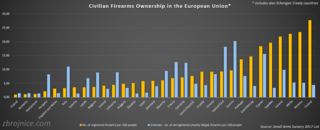
The European Firearms Directive is a law of the European Union which sets minimum standards regarding civilian firearms acquisition and possession that EU Member States must implement into their national legal systems.

The European Union (EU) is a political and economic union of 28 member states that are located primarily in Europe. It has an area of 4,475,757 km2 (1,728,099 sq mi) and an estimated population of about 513 million. The EU has developed an internal single market through a standardised system of laws that apply in all member states in those matters, and only those matters, where members have agreed to act as one. EU policies aim to ensure the free movement of people, goods, services and capital within the internal market, enact legislation in justice and home affairs and maintain common policies on trade, agriculture, fisheries and regional development. For travel within the Schengen Area, passport controls have been abolished. A monetary union was established in 1999 and came into full force in 2002 and is composed of 19 EU member states which use the euro currency.
The ownership and use of firearms is regulated by the Firearms Act of 1998. A license is always needed for possession of a firearm and all firearms are registered. Firearms may only be carried while they are being used for a specific purpose (e.g. hunting, shooting at the range). When transporting a firearm to or from such activity, the firearm must be unloaded and stored in a case or pouch. The owner of a firearm is responsible for making sure that firearms and ammunition do not end up in unauthorized hands. The exact requirements regarding storage of firearms depends on their type and quantity. [11]
Air guns up to 6.35 mm (0.25 inch) in caliber are not regulated regardless of their muzzle energy. Larger bore air weapons need a permit, unless the person already holds a firearms licence. Bows and crossbows are not regulated items in Finland, while pepper spray is. Suppressors are considered firearm components, but can be used with without requiring any separate licensing. Magazine capacity is not restricted nor is there regulation regarding other firearm accessories. [12]
An air gun is any kind of gun that launches projectiles pneumatically with compressed air or other gases that are pressurized mechanically without involving any chemical reactions, in contrast to a firearm, which pressurizes gases chemically via an exothermic oxidation (deflagration) of combustible propellants which generates propulsive energy by breaking molecular bonds. Both the long gun and handgun forms typically propel metallic projectiles, that are either diabolo-shaped pellets, or spherical shots called BBs. Certain types of air guns may also propel darts or arrows.
An unlicensed person may use firearms only under direct supervision. [13] Simple unlawful possession of a firearm is punishable by fine or up to two years in prison, although more severe punishments may apply e.g. in the case of fully automatic weapons or when used to commit other crime. However, an unlicensed firearm may always be turned in without repercussions, provided this happens at the initiative of the person in possession of the firearm. [14]
Certain types of ammunition, such as expanding pistol rounds or incendiary rounds, require special authorization (in addition to a firearms licence) to purchase. The amount of ammunition a person may possess is not limited by the Firearms Act. However, legislation related to the safe storage of explosive materials does apply. Ordinarily, this means a maximum of 20,000 rounds of ammunition (including loose primers) and 2 kg of gunpowder per household, with larger quantities requiring separate storage. [15]
Currently, work is underway to streamline the license application process in straightforward cases. An applicant who already has existing permits and has a proven track-record with responsible ownership would be able to apply for further permits more easily. [16]
In 2017, the EU adopted changes to the Firearms Directive that became known as the " EU Gun Ban ". In local implementation, the major change to firearms users will be that rifle and pistol magazines with a capacity of more than 10 and 20 respectively will become more strictly controlled. Under the new law, they will only be available to sports shooters and reservists, but not hunters. Being knowingly in (unlicensed) possession of such a magazine will cause any firearms licenses to be revoked. [17]
When applying for a licence to purchase a firearm, the applicant must fill in a form with information such as the type and mode of operation of firearm, and the intended purpose of use (although one can use any firearm for any legal purpose regardless of the original application, e.g. a range gun for hunting or vice versa). According to the law, the firearm must be appropriate for the stated purpose, but evaluating this is largely left to the discretion of the police. For example, while an AR-15 is suitable for practical shooting, the police may consider one inappropriate for hunting. [18]
Valid reasons for obtaining a firearms license are:
| Reason | Description | |
|---|---|---|
| 1 | Hunting | A valid hunting permit is expected. Minimum muzzle energy for different game, magazine capacity restrictions etc. defined in separate legislation. |
| 2 | Sports and hobby | Type of firearm needs to be appropriate for the discipline. Proof that the hobby exists is expected. For pistols and revolvers further requirements apply. |
| 3 | Work | The need for a firearm must be justified. Appropriate training is expected. |
| 4 | Film and theater | |
| 5 | Museum or collection | Person or organization the Ministry of the Interior has approved as a weapons collector. |
| 6 | Memento | Item is of significant importance to the person or family. |
| 7 | Signaling | Flare guns for e.g. boating. |
| 8 | Proxy ownership | 15-17 year olds may participate in sports shooting or hunting on their own but a licensed adult is responsible for the transportation and storage of the firearm. |
The application process includes a check of criminal records, the police interviewing the applicant and in some cases a computer-based personality test or a medical health certificate. Any significant history with violence or other crime, substance abuse or mental health issues will cause the application to be rejected. Membership in a hunting or shooting club or other appropriate organization is considered a positive, though membership can not be legally required as the Constitution of Finland guarantees freedom of association. [19]
If the application is approved, an acquisition permit is mailed to the applicant. A dealer (or private person) may only sell a firearm if the buyer has the appropriate paperwork to show. There is no waiting period as such, but in practice processing an application takes a minimum of several days, usually a few weeks. Licences can be valid either until further notice or for a fixed term, which is sometimes the case for a people applying for their first license, and always with the first pistol license. A licence-holder may also borrow other firearms from the same or lesser category (e.g. a rifle licence is valid for borrowing shotguns and small-caliber rifles, but not pistols) and purchase ammunition for any firearm he owns or is permitted to borrow.
Classification of firearms
For legal purposes, firearms are divided into 12 different types: [20]
| Type | Description | |
|---|---|---|
| 1 | Shotgun | Smooth-bored firearm with a minimum barrel length of 400 mm and a minimum overall length of 840 mm, designed to be supported against the shoulder. |
| 2 | Rifle | Rifled firearm with a minimum barrel length of 400 mm and a minimum overall length of 840 mm, designed to be supported against the shoulder. |
| 3 | Small-caliber rifle | Rifle chambered for a .22 rimfire cartridge. |
| 4 | Pistol | Firearm with a barrel length less than 400 mm and overall length less than 840 mm. |
| 5 | Small-caliber pistol | Pistol chambered for a .22 rimfire cartridge. |
| 6 | Revolver | Firearm with a barrel length less than 400 mm and overall length less than 840 mm and uses a revolving cartridge cylinder. |
| 7 | Small-caliber revolver | Revolver chambered for a .22 rimfire cartridge. |
| 8 | Combination weapon | Long firearm with two or more barrels, with at least one being rifled and one smooth-bore. |
| 9 | Gas weapon | Firearm capable of firing only gas cartridges. |
| 10 | Signaling pistol | Firearm capable of firing only signal cartridges. |
| 11 | Black-powder weapon | Firearm designed and manufactured to only be used with black powder. |
| 12 | Any other firearm | Catch-all category for firearms that do not fit into the above categories based on their dimensions or other characteristics. |
Firearms are further divided into four modes of operation: [21]
| Mode | Description | |
|---|---|---|
| 1 | Single-shot | The firearm needs to be cycled and cocked by an external force and a new cartridge must be fed manually to the weapon after every shot |
| 2 | Single-shot with magazine | The firearm needs to be cycled and cocked by an external force and a new cartridge is taken directly from a magazine. Revolvers are also in this category. |
| 3 | Self-loading single shot | The firearm loads and cocks itself by the use of the energy produced by the firing of the previous cartridge or another power source. One shot is fired with each pull of the trigger. |
| 4 | Automatic fire | The firearm loads and cocks itself by the use of the energy produced by the firing of the previous cartridge or another power source. Multiple shots can be fired with one pull of the trigger. |
Sub-compact pistols
A pistol is considered sub-compact or a "pocket gun" if it fits in a rectangular box of 180 x 130 mm, as is a revolver that fits in a box of 190 x 140 mm. Special legislation applies to these easily concealed firearms and they are not licensed for sporting purposes. Some common pistols such as Glock 19 fall under this description, and are therefore generally unavailable to e.g. IPSC shooters in Finland. [22]
Specially dangerous weapons
Some types of weapons are considered "specially dangerous". Licences for such weapons can only be granted on a very limited basis and are essentially for recognized collectors and filming purposes only. A weapon is considered specially dangerous if: [23]
Short-barreled rifles and carbines
Short-barreled rifles and pistol carbines fall under the any other firearm category and, while not restricted by law, are more difficult to get a licence for. The primary concern is again that, being easy to conceal, they are particularly dangerous should they be stolen and fall into criminal hands. [24]
In the 1980s and 1990s roughly 7% of firearm licenses were granted for the purpose of personal protection. Since 1998 new licences have not been granted on that basis, although existing permits remain valid. [25] It is still possible to obtain a licence for pepper spray for the purpose of self-defense if a concrete threat exists. Carrying a firearm licensed for hunting or sporting use outside of that specific activity is not allowed. One can nevertheless legally defend himself by any means available, including firearms. Any use of force must always be proportional to the threat. [26]
Between 2010 and 2015, firearms were used in 15% of all homicides. In 73% of these the firearm was illegally possessed by the perpetrator. [27]
The two school shootings in Jokela in 2007 and Kauhajoki in 2008 are by far the worst mass murders in Finland, with 8 and 10 victims, respectively. In both cases the perpetrator was armed with a .22 rimfire pistol licensed only shortly before. In the case of Pekka-Eric Auvinen, the original application was for a 9 mm pistol, but this was rejected. In the aftermath police were blamed for being too lax in issuing licences, as neither perpetrator had any significant history with sports shooting. Police defended their decision, stating that nothing suspicious had come up with the information available, so there was no reason to reject the application. [28] Legislation was revised in 2011 and now pistol licenses can only be issued following a two-year period of documented, active pistol shooting hobby, and only to persons 20 years old or older. [29]
In 2013, firearms (both legally and illegally held) were used in 18% of suicides. Some consider this a problem and would like to see stricter firearms legislation. [30] Others point out that the number of suicides is already steadily going down, while the number of firearms has remained constant. [31] [32]
Military service guns are stored by the Finnish Defence Forces, and are only given out during reservist training or mobilization. At present, a strong political consensus exists that military weapons should not be stored by individuals, even if they are reservists in first-line, quick response units. [33]
Gun laws and policies regulate the manufacture, sale, transfer, possession, modification and use of small arms by civilians. Many countries have restrictive firearm policies, while a few have permissive ones. The only countries with permissive gun legislation are: Albania, Austria, Chad, Republic of Congo, Honduras, Micronesia, Namibia, Nigeria, Pakistan, Philippines, Senegal, South Africa, Switzerland, Tanzania, the United States, Yemen and Zambia, although several other countries like Canada and the Czech Republic, despite theoretically being restrictive, are shall-issue countries. Countries with a strong gun culture may afford civilians a right to keep and bear arms, and have more-liberal gun laws than neighboring jurisdictions. Countries which regulate access to firearms will typically restrict access to certain categories of firearms and then restrict the categories of persons who may be granted a license for access to such firearms. There may be separate licenses for hunting, sport shooting, self-defense, collecting, and concealed carry, with different sets of requirements, permissions, and responsibilities.
Gun legislation in Canada is largely about licensing and registration of firearms. Handgun registration became law in 1934, and automatic firearms registration was added in 1951. In 1969, laws classified firearms as "non-restricted", "restricted" and "prohibited". Starting in 1979, individuals who wished to acquire firearms were required to obtain a firearms acquisition certificate (FAC) from their local police agency. From 1995 to 2012, all firearms owners were required to possess a firearms licence and all firearms were required to be registered. In April 2012, the requirement to register non-restricted firearms was dropped in every province and territory, except for Quebec, with Bill C-19, the Ending the Long-gun Registry Act coming into force. The bill also required the destruction of all records related to the registration of non-restricted firearms. The requirement for all firearms owners to possess a valid firearms licence remains law. In 2015, the Supreme Court of Canada ruled against Quebec, entirely eliminating non-restricted registry records. However, the government of Quebec received a partial copy of the deleted federal firearms registry, and passed Bill 64 to create a Quebec firearms registry. Residents have until January 2019 to register all non-restricted firearms within Quebec.
In the United Kingdom, access by the general public to firearms is tightly controlled by laws which are much more restrictive than the minimum rules required by the European Firearms Directive. It is less restrictive in Northern Ireland. There is some concern over the availability of illegal firearms.
In South Africa, the Firearms Control Act 60 of 2000 regulates the ownership of firearms by civilians. Ownership of a firearm is conditional on a competency test and several other factors, including background checking of the applicant, inspection of an owner's premises, and licensing of the weapon by the police introduced in July 2004. The process is currently undergoing review, as the police are at present, not able to adequately or within reasonable time, process either competency certification, new licences or renewal of existing licences. Minimum waiting period used to exceed 2 years from date of application. The Central Firearms Registry implemented a turnaround strategy that has significantly improved the processing period of new licences. The maximum time allowed to process a licence application is now 90 days.
Airsoft is considered to be a modern shooting sport. Airsoft guns themselves are legal in many parts of the world, although some countries, states, and cities have specific restrictions against the items. For example, California State Law states that peoples of all age can use these items, classing the hi¡m as both tools, and toys. Safety regulations in many areas require bright markings on the items. They are officially classed as "soft air devices" or "air compressed toys," depending on the location.
Concealed carry, refers to the practice of carrying a handgun or other weapon in public in a concealed or hidden manner, either on one's person or in close proximity. While most law enforcement officers carry their handguns in a visible holster, some officers, such as plainclothes detectives or undercover agents, carry weapons in concealed holsters. In some countries and jurisdictions, civilians are legally permitted to carry concealed handguns; in some, this may be the only legal way for a civilian to carry a handgun.
The crossbow often has a complicated legal status due to its potential use for lethal purposes, and its similarities with both firearms and other archery weapons. The crossbow is, for technical purposes, often categorized as a firearm by various legal jurisdictions, despite the fact that no combustion is required to propel the projectile.
The gun laws of New Zealand are contained in the Arms Act 1983, with amendments that were passed subsequent to the 1990 Aramoana massacre. Nearly 300,000 licensed firearm owners own and use New Zealand's estimated 1.5 million firearms. Gun licenses are issued at the discretion of the police in New Zealand provided the police consider the person to be of good standing and without criminal, psychiatric or drug issues as well as meeting other conditions such as having suitable storage facilities. Several different categories of licenses are permitted, with the lowest one permitting access to restricted semi-automatic rifles and shotguns, with limited capacity, while the higher levels which permit fully automatic weaponry and pistols are rarely issued to civilians.
Military-style semi-automatic firearms in New Zealand are those semi-automatic firearms known in the United States as "assault weapons". The phrase is often abbreviated as military-style semi-automatic (MSSA). A New Zealand firearms licence-holder requires an E Category endorsement on their licence before they can possess this type of firearm, and a police-issued permit to procure each firearm is required. Arriving at a clear definition and common understanding of which semi-automatic firearms have a military-style configuration has dominated debate about gun-control legislation in New Zealand since 1992.
A New Zealand firearms licence is personal to the licence holder and is issued by New Zealand Police to people aged over 16 who are considered to be fit and proper to possess firearms. Endorsements on the licence identify which categories of firearms a licence holder can lawfully possess. Firearms dealers and their employees each also require a personal dealers licence for their place of business. Firearms licence holders can lawfully only procure and own the categories of firearms their licence carries endorsements for. However some firearms, such as pistols and military style semi-automatic firearms also need a Police permit to procure each specific firearm and these arms need to be registered with Police. Rifles, shotguns, and airguns can be lawfully owned by anyone who holds a standard, or A-Category, firearms licence and do not need to be registered.
Gun laws in Norway incorporates the political and regulatory aspects of firearms usage in the country. Citizens are allowed to keep firearms. The acquisition and storage of guns is regulated by the state.
Gun legislation in Germany is regulated by the German Weapons Act which adheres to the European Firearms Directive, first enacted in 1972, and superseded by the law of 2003, in force as of 2016. This federal statute regulates the handling of knives, firearms and ammunition as well as acquisition, storage, commerce and maintenance of weapons. It also defines certain forbidden items, including nunchucks, switchblade knives and brass knuckles, and bans their possession and distribution.
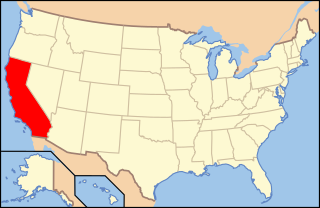
Gun laws in California regulate the sale, possession, and use of firearms and ammunition in the state of California in the United States.
This is a list of laws concerning air guns by country.
Gun laws in Italy incorporates the political and regulatory aspects of firearms usage in the country within the framework of the European Firearms Directive. Different types of gun licenses can be obtained from the national police authorities. According to a 2007 study by The Small Arms Survey Project, the per capita gun ownership rate in Italy is around 12% with an estimated 7 million registered firearms in circulation.
Gun laws in New York regulate the sale, possession, and use of firearms and ammunition in the U.S. state of New York, outside of New York City which has separate licensing regulations.
Gun laws in Oklahoma regulate the sale, possession, and use of firearms and ammunition in the state of Oklahoma in the United States.
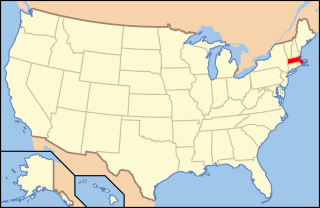
Gun laws in Massachusetts regulate the sale, possession, and use of firearms and ammunition in the Commonwealth of Massachusetts in the United States.
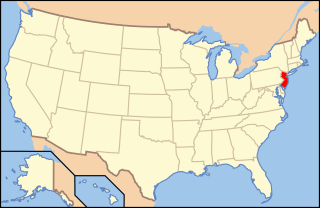
Gun laws in New Jersey regulate the sale, possession, and use of firearms and ammunition in the U.S. state of New Jersey. New Jersey's firearms laws are among the most restrictive in the country.
Firearms in Ireland are strictly controlled, both with strict legislation governing licensing and very conservative application of that legislation by the Gardaí. The legislation is quite difficult to follow because of the multiple overlapping Firearms Acts that define it, however the core principles are reasonably straightforward, requiring all firearms to be licensed individually and each applicant to have a good reason for having the firearm, a safe place in which to use it, a secure place in which to store it and to be of sound mind and temperate habits.