Gun laws in Switzerland

Last updated

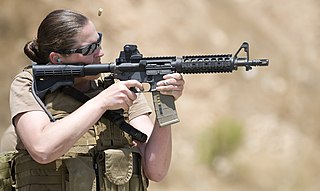
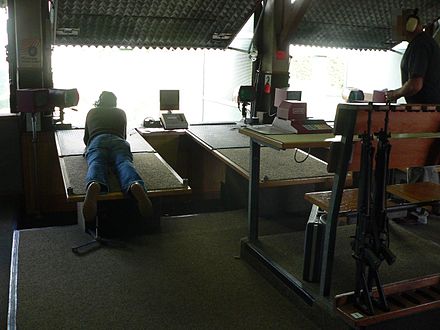
Shooter with SIG 550 ordnance rifle at a Swiss firing range (2007 photograph) Firing range HDR.jpg
Shooter with SIG 550 ordnance rifle at a Swiss firing range (2007 photograph)

Firearms legislation in Switzerland allows the free acquisition of semi-automatic, but not fully automatic firearms by Swiss citizens and foreigners with permanent residence. [note 1] [1] Permits for concealed carrying in public are issued sparingly. [note 2] [2] The acquisition of fully automatic weapons, suppressors and target lasers requires special permits issued by the cantonal firearms office. [3] Use of hollow-point and soft-point ammunition is limited to hunting. [4]

Switzerland federal republic in Central Europe

Switzerland, officially the Swiss Confederation, is a sovereign state situated in the confluence of western, central, and southern Europe. It is a federal republic composed of 26 cantons, with federal authorities seated in Bern. Switzerland is a landlocked country bordered by Italy to the south, France to the west, Germany to the north, and Austria and Liechtenstein to the east. It is geographically divided between the Alps, the Swiss Plateau and the Jura, spanning a total area of 41,285 km2 (15,940 sq mi), and land area of 39,997 km2 (15,443 sq mi). While the Alps occupy the greater part of the territory, the Swiss population of approximately 8.5 million is concentrated mostly on the plateau, where the largest cities are located, among them the two global cities and economic centres of Zürich and Geneva.

A semi-automatic firearm, also called self-loading firearm or autoloading firearm, is one that not only fires a bullet each time the trigger is pulled, but also performs all steps necessary to prepare it to discharge again—assuming cartridges remain in the firearm's feed device. Typically, this includes extracting and ejecting the spent cartridge case from the firing chamber, re-cocking the firing mechanism, and loading a new cartridge into the firing chamber. To fire again, the trigger is released and re-pressed.

Automatic firearm firearm that will continue to fire so long as the trigger is pressed and held

An automatic firearm continuously fires rounds as long as the trigger is pressed or held and there is ammunition in the magazine/chamber. In contrast, a semi-automatic firearm fires one round with each individual trigger-pull.

Contents

The applicable federal legislations are SR 514.54 Federal Law on Weapons, Weapon Equipment and Ammunition (German : Waffengesetz, WG, French : Loi sur les armes, LArm, Italian : Legge sulle armi, LArm) of 20 June 1997 (current edition of 1. July 2016, revised 01.01.1999), [2] and SR 514.541 Ordinance on Weapons, Armament Accessories and Ammunition (German : Waffenverordnung, WV, French : Ordonnance sur les armes, OArm, Italian : Ordinanza sulle armi, OArm) of 2 July 2008 (current edition of 1. July 2016, revised 12.12.2008). [1] The Weapons Law recognises a qualified "right to acquire, possess and carry arms". [note 3] [2]

The Systematic Compilation of Federal Legislation is the official compilation of all Swiss federal laws, ordinances, international and intercantonal treaties that are in force. However, some very voluminous parts of laws, such as the customs code, are not published in their entirety, but only by way of reference; they are usually made available on the websites of the government agencies responsible.

German language West Germanic language

German is a West Germanic language that is mainly spoken in Central Europe. It is the most widely spoken and official or co-official language in Germany, Austria, Switzerland, South Tyrol in Italy, the German-speaking Community of Belgium, and Liechtenstein. It is also one of the three official languages of Luxembourg and a co-official language in the Opole Voivodeship in Poland. The languages which are most similar to German are the other members of the West Germanic language branch: Afrikaans, Dutch, English, the Frisian languages, Low German/Low Saxon, Luxembourgish, and Yiddish. There are also strong similarities in vocabulary with Danish, Norwegian and Swedish, although those belong to the North Germanic group. German is the second most widely spoken Germanic language, after English.

French language Romance language

French is a Romance language of the Indo-European family. It descended from the Vulgar Latin of the Roman Empire, as did all Romance languages. French evolved from Gallo-Romance, the spoken Latin in Gaul, and more specifically in Northern Gaul. Its closest relatives are the other langues d'oïl—languages historically spoken in northern France and in southern Belgium, which French (Francien) has largely supplanted. French was also influenced by native Celtic languages of Northern Roman Gaul like Gallia Belgica and by the (Germanic) Frankish language of the post-Roman Frankish invaders. Today, owing to France's past overseas expansion, there are numerous French-based creole languages, most notably Haitian Creole. A French-speaking person or nation may be referred to as Francophone in both English and French.

Swiss gun culture has emerged from a long tradition of shooting (tirs), which served as a formative element of national identity in the post-Napoleonic Restoration of the Confederacy, [5] and the long-standing practice of a militia organization of the Swiss Army in which soldiers' service rifles are stored privately at their homes. In addition to this, many cantons (notably the alpine cantons of Grisons and Valais) have strong traditions of hunting, accounting for a large but unknown number of privately held hunting rifles, as only weapons acquired since 2008 are registered. [6] However, in a 2019 referendum voters opted to conform with European Union regulations which restrict the acquisition of semi-automatic firearms with high-capacity magazines. [7]

National identity is a person's identity or sense of belonging to one state or to one nation. It is the sense of a nation as a cohesive whole, as represented by distinctive traditions, culture, language and politics. National identity may refer to the subjective feeling one shares with a group of people about a nation, regardless of one's legal citizenship status. National identity is viewed in psychological terms as "an awareness of difference", a "feeling and recognition of 'we' and 'they'".
Restoration and Regeneration in Switzerland aspect of history

The periods of Restoration and Regeneration in Swiss history last from 1814 to 1847. "Restoration" refers to the period of 1814 to 1830, the restoration of the Ancien Régime (federalism), reverting the changes imposed by Napoleon Bonaparte on the centralist Helvetic Republic from 1798 and the partial reversion to the old system with the Act of Mediation of 1803. "Regeneration" refers to the period of 1830 to 1848, when in the wake of the July Revolution the "restored" Ancien Régime was countered by the liberal movement. In the Protestant cantons, the rural population enforced liberal cantonal constitutions, partly in armed marches on the cities. This resulted in a conservative backlash in the Catholic cantons in the 1830s, raising the conflict to the point of civil war by 1847.

Militia generally refers to an army or other fighting force that is composed of non-professional fighters

A militia is generally an army or some other fighting organization of non-professional soldiers, citizens of a nation, or subjects of a state, who can be called upon for military service during a time of need, as opposed to a professional force of regular, full-time military personnel, or historically, members of a warrior nobility class. Generally unable to hold ground against regular forces, it is common for militias to be used for aiding regular troops by skirmishing, holding fortifications, or irregular warfare, instead of being used in offensive campaigns by themselves. Militia are often limited by local civilian laws to serve only in their home region, and to serve only for a limited time; this further reduces their use in long military campaigns.
Number of guns in circulation

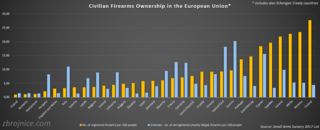
Switzerland thus has a relatively high gun ownership rate. There are no official statistics, and estimates vary considerably.

The 2017 report from Small Arms Survey has estimated that the number of civilian-held firearms in Switzerland is of 2.332 million, which given a population of 8.4 million corresponds to a gun ownership of around 27.6 guns per 100 residents. [8] [9] Other estimates place the number of privately-held firearms upwards to 3.400 million, giving the nation an estimate of 41.2 guns per 100 people. [10]

The Small Arms Survey is an independent research project located at the Graduate Institute of International and Development Studies in Geneva, Switzerland. It provides information on all aspects of small arms and armed violence, as a resource for governments, policy-makers, researchers, and activists, as well as research on small arms issues.

When Switzerland joined the Schengen Information System in 2008, it was forced to introduce a central registry for firearms. Only firearms which changed hands since 2008 are registered. The number of registered firearms in this database was reported as 876,000 as of August 2017. [11]

Schengen Information System governmental database used by European countries

The Schengen Information System (SIS) is a governmental database maintained by the European Commission. The SIS is used by 31 European countries to find information about individuals and entities for the purposes of national security, border control and law enforcement. A second technical version of this system, SIS II, went live on 9 April 2013.

Regulation

Switzerland's Weapons Law (WG, LArm) [2] and Weapons Act (WV, OArm) [1] has been revised to accede to the Schengen Treaty effective 12 December 2008. The Act on Personal Military Equipment (VPAA, OEPM) governs the handling of military equipment, and in particular the handling of personal weapons by military personnel. [12]

The law is applied to the following weapons:

The federal shooting range of Versoix, Switzerland; people come to such ranges to complete mandatory training ("Obligatorischschiessen") with service arms, or to shoot for sport and competition. Stand-tir-p1000495.jpg
The federal shooting range of Versoix, Switzerland; people come to such ranges to complete mandatory training ("Obligatorischschiessen") with service arms, or to shoot for sport and competition.

Generally prohibited arms are:

Acquisition

Buying guns

In order to purchase most weapons, the purchaser must obtain a weapon acquisition permit (art. 8 WG/LArm). Swiss citizens and foreigners with a C permit over the age of 18 who are not under a curator nor identified as being a danger for themselves or others, and who don't have a criminal record with a conviction for a violent crime or of several convictions as long as they haven't been written out can request such a permit. Foreigners with citizenship to the following countries are explicitly excluded from the right to possess weapons: Serbia, Bosnia and Herzegovina, Kosovo, Macedonia, Turkey, Sri Lanka, Algeria and Albania. [note 1] The following information must be provided to the cantonal weapon bureau together with the weapon application form:

  • valid official identification or passport copy.
  • residence address.
  • criminal record copy not older than 3 months.

For each transfer of a weapon or an essential weapon component without weapons acquisition permit (art. 10 WG/LArm), a written contract must be concluded. Each Party shall keep them at least ten years. The contract must include the following information (art. 11 WG/LArm):

  • Family name, first name, birth date, residence address and signature of the person who sells the weapon or essential weapon component.
  • Family name, first name, birth date, residence address and signature of the person who purchases the weapon or an essential weapon component.
  • Kind of weapon, manufacturer or producer, label, caliber, weapon number, and date and place of transfer.
  • Type and number of the official identification of the person who acquires the weapon or the essential weapon component.
  • and an indication of the processing of personal data in connection with the contract in accordance with the privacy policy of the Federation or the cantons, if firearms are transmitted.

This information must be sent within 30 days to the cantonal weapon registration bureau, where the weapon holders are registered (art. 9 WG/LArm).

Some weapons do not need a weapon acquisition permit (art. 10 WG/LArm):

  • Single-shot and multi-barreled hunting rifles and replicas of single-shot muzzle loaders.
  • Hand bolt-action rifles, which are commonly used in off-duty and sporting gunnery recognized by the military law of 3 February 1952 and shooting clubs for hunting purposes in Switzerland.
  • Single-shot rabbit slayer.
  • Compressed air and CO2 weapons that develop a muzzle energy of at least 7.5 joules, or their appearance may be mistaken for real firearms.

Buying ammunition

Ready ammunition of the Swiss Army. Soldiers equipped with the Sig 550 assault rifle used to be issued 50 rounds of ammunition in a sealed can, to be opened only upon alert and for use while en route to join their unit. This practice was stopped in 2007. Cartouches-Fass90-p1000785.jpg
Ready ammunition of the Swiss Army. Soldiers equipped with the Sig 550 assault rifle used to be issued 50 rounds of ammunition in a sealed can, to be opened only upon alert and for use while en route to join their unit. This practice was stopped in 2007.

In order to purchase ammunition, the buyer must follow the same legal rules that apply when buying guns. The buyer must provide the following information to the seller (art. 15, 16 WG/LArm; art. 24 WV/OArm): [2] [1]

  • a passport or other valid official identification (the holder must be over 18 years of age) with valid address.
  • a copy of their criminal record not older than 3 months, or a weapons acquisition permit which isn't older than 2 years (art. 24 § 3 WV/OArm).
  • The seller must verify that the buyer is not psychiatrically disqualified nor identified as posing security problems (art. 8 § 2 WG/LArm).
  • Further, they must not be a citizen of the following countries (art. 12 WV/OArm): Serbia, Bosnia and Herzegovina, Kosovo, Macedonia, Turkey, Sri Lanka, Algeria and Albania).
A Swiss 100 gram black powder container. Schwarzpulver behaelter.jpg
A Swiss 100 gram black powder container.

The possession of the following ammunition is generally prohibited:

  • Armor-piercing bullets.
  • Ammunition with projectile containing an explosive or incendiary device.
  • Ammunition with one or more projectiles releasing substances which damage the health of people in the long run, particularly those mentioned in annex 2 of the WV/OArm.
  • Ammunition, missiles and missile launchers for military explosive.
  • Ammunition with projectiles for transmitting electric shocks.
  • Ammunition for handguns which may cause deformations.

Carrying guns

To carry a firearm in public or outdoors (and for a militia member to carry a firearm other than his issued weapons while off-duty), a person must have a gun carrying permit (German : Waffentragbewilligung, French : permis de port d'armes, Italian : permesso di porto di armi; art. 27 WG/LArm), which in most cases is issued only to private citizens working in occupations such as security. [2] It is, however, quite common to see a person in military service to be en route with his rifle, albeit unloaded. The issue of such exceptional permits are extremely selective (see #Conditions_for_obtaining_a_Carrying_Permit).

However, it is permissible to carry firearms in public or outdoors if the holder (art. 27 § 4 WG/LArm):

Furthermore, any licensed holder of a gun may transport an unloaded firearm for special situations (see #Transporting guns).

Conditions for obtaining a Carrying Permit

There are three conditions (art. 27 § 2 WG/LArm):

  • fulfilling the conditions for a buying permit (see section above).
  • stating plausibly the need to carry firearms to protect oneself, other people, or real property from a specified danger.
  • passing an examination proving both weapon handling skills and knowledge regarding lawful use of the weapon.

The carrying permit remains valid for a term of five years (unless otherwise surrendered or revoked), and applies only to the type of firearm for which the permit was issued. Additional constraints may be invoked to modify any specific permit. (art. 27 § 3 WG/LArm).

Transporting guns

Guns may be transported in public as long as an appropriate justification is present. This means to transport a gun in public, the following requirements apply (art. 28 WG/LArm):

EU firearm ban

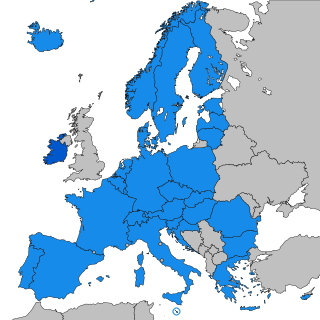
A 2017 amendment to the European Firearms Directive, known as the "EU Gun Ban", [14] [15] [16] [17] introduces new restrictions on firearms possession and acquisition, especially on semi-automatic firearms, personal defense weapons, magazine capacity, blank firing guns and historical firearms. The restrictions must be introduced into the Swiss legal system by August 2018 due to its membership of the Schengen area.

The Directive also includes an exemption covering a specific Swiss issue – it allows possession to a target shooter of one firearm used during the mandatory military period after leaving the army, provided it was converted to semi-automatic only (art. 6(6) of the Amendment Directive). [18] This part of the Directive specifically was however challenged by the Czech Republic before the European Court of Justice due to its discriminatory nature. The Czech Republic seeks nullification of the "Swiss exemption" as well as of other parts of the Directive. [19]

Civil rights organizations planned to hold a referendum to reject the amended EU directive. [20] [21] According to Swiss People's Party vice-president Christoph Blocher, Switzerland should consider abandoning EU's borderless Schengen Area if the Swiss people reject the proposed measures in a referendum. [22]

In a referendum held on 19 May 2019, voters supported the stricter EU restrictions on semi-automatic and automatic weapons, as recommended by the government. [23]

Army-issued arms and ammunition collection

The Swiss army has long been a militia trained and structured to rapidly respond against foreign aggression. Swiss males grow up expecting to undergo basic military training, usually at age 20 in the recruit school, the basic-training camp, after which Swiss men remain part of the "militia" in reserve capacity until age 30 (age 34 for officers).

Prior to 2007, members of the Swiss Militia were supplied with 50 rounds of ammunition for their military weapon in a sealed ammo box that was regularly audited by the government. This was so that, in the case of an emergency, the militia could respond quickly.

The federal shooting range of Versoix, Switzerland; people come to such ranges to complete mandatory training (Obligatorischeschiessen) with service arms, or to shoot for sport and competition. Stand-tir-p1000496.jpg
The federal shooting range of Versoix, Switzerland; people come to such ranges to complete mandatory training (Obligatorischeschiessen) with service arms, or to shoot for sport and competition.

In December 2007, the Swiss Federal Council decided that the distribution of ammunition to soldiers would stop and that previously issued ammo would be returned. By March 2011, more than 99% of the ammo has been received. Only 2,000 specialist militia members (who protect airports and other sites of particular sensitivity) are permitted to keep their military-issued ammunition at home. The rest of the militia get their ammunition from their military armory in the event of an emergency. [2] [24] [25]

When their period of service has ended, militia men have the choice of keeping their personal weapon and other selected items of their equipment. However, keeping the weapon after end of service requires a weapon acquisition permit (art. 11-15 VPAA/OEPM). [12]

The government sponsors training with rifles and shooting in competitions for interested adolescents, both male and female. The sale of military-issued ammunition including Gw Pat.90 rounds for army-issued assault rifles  is subsidized by the Swiss government and made available at the many Federal Council licensed shooting ranges. That ammunition sold at ranges must be immediately used there under supervision (art. 16 WG/LArm).

The Swiss Army maintains tightened adherence to high standards of lawful military conduct. In 2005, for example, when the Swiss prosecuted recruits who had reenacted the torture scenes of Abu Ghraib, one of the charges was improper use of service weapons. [26]

Recreational shooting

Recreational shooting is widespread in Switzerland. Practice with guns is a popular form of recreation, and is encouraged by the government, particularly for the members of the militia.

Prior to the turn of the century, about 200,000 people used to attend the annual Eidgenössisches Feldschiessen , which is the largest rifle shooting competition in the world. In 2012 they counted 130,000 participants. [27] For the 2015 Federal Shooting (Eidg. Schützenfest) 37,000 shooters are registered. [28] In addition, there are several private shooting ranges which rent guns.

Gun culture in Switzerland

Switzerland has a strong gun culture compared to other countries in the world. [29] [30] Groups like ProTell lobby for the preservation of Switzerland's gun rights. Additionally, the Schweizerischer Schützenverein, a Swiss shooting association, organizes the Eidgenössische Schützenfeste , every five years and the Eidgenössisches Feldschiessen is held annually. Every person with a swiss citizenship, aged 10 years or older, can take part at any federal ranges and will be able to shoot for free with the ordinance rifle. [31]

Another possibility for the kids to shoot is the Young Shooters: the SAT (lit. shooting and off-duty activities) oversees lessons in which Swiss children can learn how to shoot using the SIG SG 550 starting at 15 years old for the regular course. [32] This activity is free and the Young Shooters are able to take home the rifle in-between the lessons if they are 17. [33] For security reasons however, the breech has to stay at the range in which they attend the lesson. This training takes place over a span of 6 years within a 3-4 month period each year and, if wanted, they can become instructors for the new generation of Young Shooters.

Traditionally liberal Swiss gun legislation has, however, been somewhat tightened in 2008, when Switzerland has complied with European Firearms Directive. [34] Throughout the modern political history of Switzerland, there have been advocates for tighter gun control. [35]

The most recent suggestion for tighter gun control was rejected in a popular referendum in February 2011. [36]

The vast majority of firearm-related deaths in Switzerland are suicides. The suicide method of shooting oneself with a firearm accounted for 21.5% of suicides in Switzerland in the period of 2001–2012 (with significant gender imbalance: 29.7% of male suicides vs. 3.0% of female suicides). [37]

By contrast, gun crime is comparatively limited. In 2016, there were 187 attempted and 45 completed homicides, for a homicide rate of 0.50 per 100,000 population. Of the recorded homicides (attempted or completed), 20.3% were committed with a gun (47 cases, compared to an average of 41 cases in the period of 2009–2015). In addition, there were 7 cases of bodily harm and 233 cases of robbery committed with firearms. [38]

There were 16 completed homicides with a firearm in 2016. Of these, 14 were committed with a handgun, one with a long gun and one case marked "other/unspecified". None of the involved weapons were ordinance weapons issued by the Swiss Armed Forces. Similarly, out of 31 attempted homicides with firearms, 25 were committed with handguns, two with long guns and four "other/unspecified", with no use of ordinance weapons on record. For the period of 2009–2016, on average 16.5 out of 49.4 completed homicides were committed with a firearm, 13.8 with handguns, 1.9 with long guns and 0.9 "other/unspecified"; an average 0.75 cases per year (6 cases in eight years) involved ordinance weapons. [39]

See also

Notes and references

Notes

  1. 1 2 The law of 1997 (SR 514.54) made explicit provision for the Federal Council to restrict gun ownership by nationality (art. 7 WG/LArm). SR 514.541 art. 12, passed in 2008, amended in 2014, explicitly prohibits the purchase or ownership of weapons to nationals of eight states: Serbia, Bosnia and Herzegovina, Kosovo, Macedonia, Turkey, Sri Lanka, Algeria and Albania.
  2. SR 514.54 art. 27 § 4. No carry permit is necessary for hunting rifles carried by registered hunters with a hunting licence in the context of hunting or game-keeping, and historical firearms carried in the context of re-enactment or memorial events. Justifiable transport of unloaded firearms is regulated in art. 28.
  3. "Art. 3 Recht auf Waffenerwerb, Waffenbesitz und Waffentragen: Das Recht auf Waffenerwerb, Waffenbesitz und Waffentragen ist im Rahmen dieses Gesetzes gewährleistet." (The right to acquire, possess and carry arms is guaranteed in the framework of this law.)

Related Research Articles

Firearm Man portable weapon that launches a projectile at high velocity using the confined burning of a propellant

A firearm is a portable gun that inflicts damage on targets by launching one or more projectiles driven by rapidly expanding high-pressure gas produced chemically by exothermic combustion (deflagration) of propellant within an ammunition cartridge. If gas pressurization is achieved through mechanical gas compression rather than through chemical propellant combustion, then the gun is technically an air gun, not a firearm.

Gun laws and policies regulate the manufacture, sale, transfer, possession, modification and use of small arms by civilians. Many countries have restrictive firearm policies, while a few have permissive ones. According to GunPolicy.org, the only countries with permissive gun legislation are: Austria, Azerbaijan, Chad, Republic of Congo, Honduras, Micronesia, Namibia, Nigeria, Pakistan, Senegal, Switzerland, Tanzania, the United States, Yemen and Zambia, although several other countries including Canada and the Czech Republic, despite theoretically being restrictive, are shall-issue countries. Countries with a strong gun culture may afford civilians a right to keep and bear arms, and have more-liberal gun laws than neighboring jurisdictions. Countries which regulate access to firearms will typically restrict access to certain categories of firearms and then restrict the categories of persons who may be granted a license for access to such firearms. There may be separate licenses for hunting, sport shooting, self-defense, collecting, and concealed carry, with different sets of requirements, permissions, and responsibilities.

Gun legislation in Canada is largely about licensing and registration of firearms. Handgun registration became law in 1934, and automatic firearms registration was added in 1951. In 1969, laws classified firearms as "non-restricted", "restricted" and "prohibited". Starting in 1979, individuals who wished to acquire firearms were required to obtain a firearms acquisition certificate (FAC) from their local police agency. From 1995 to 2012, all firearms owners were required to possess a firearms licence and all firearms were required to be registered. In April 2012, the requirement to register non-restricted firearms was dropped in every province and territory, except for Quebec, with Bill C-19, the Ending the Long-gun Registry Act coming into force. The legislation also required the destruction of all records related to the registration of non-restricted firearms. The requirement for all firearms owners to possess a valid firearms licence remains law. In 2015, the Supreme Court of Canada ruled against Quebec, entirely eliminating non-restricted registry records. However, the government of Quebec received a partial copy of the deleted federal firearms registry, and passed Bill 64 to create a Quebec firearms registry. Residents have until January 2019 to register all non-restricted firearms within Quebec.

In the United Kingdom, access by the general public to firearms is tightly controlled by laws which are much more restrictive than the minimum rules required by the European Firearms Directive. It is less restrictive in Northern Ireland. There is some concern over the availability of illegal firearms.

Gun laws in Finland incorporates the political and regulatory aspects of firearms usage in the country. Both hunting and shooting sports are common hobbies among Finns. There are approximately 300,000 people with hunting permits and 34,000 people belong to sport shooting clubs. Over 1500 people are licensed weapons collectors. Additionally, many reservists practice their skills using their own semi-automatic rifles and pistols after the military service.

Shooting ranges in Switzerland

Shooting ranges in Switzerland are unique in Europe, in keeping with the strong shooting traditions and liberal gun laws that exist in Switzerland.

Gun politics and laws in Mexico covers the role firearms play as part of society within the limits of the United Mexican States. Current legislation sets the legality by which members of the armed forces, law enforcement and private citizens may acquire, own, possess and carry firearms; covering rights and limitations to individuals—including hunting and shooting sport participants, property and personal protection personnel such as bodyguards, security officers, private security, and extending to VIPs.

Gun laws in Norway incorporates the political and regulatory aspects of firearms usage in the country. Citizens are allowed to keep firearms. The acquisition and storage of guns is regulated by the state.

Gun legislation in Germany is regulated by the German Weapons Act which adheres to the European Firearms Directive, first enacted in 1972, and superseded by the law of 2003, in force as of 2016. This federal statute regulates the handling of knives, firearms and ammunition as well as acquisition, storage, commerce and maintenance of weapons. It also defines certain forbidden items, including nunchucks, switchblade knives and brass knuckles, and bans their possession and distribution.

Gun laws in California

Gun laws in California regulate the sale, possession, and use of firearms and ammunition in the state of California in the United States.

Gun laws in the Czech Republic

Gun laws in the Czech Republic in many respects differ from those in other Member states of the European Union (see Gun laws in the European Union). A gun in the Czech Republic is available to anybody subject to acquiring a shall issue firearms license. Gun licenses may be obtained in a way similar to a driving license – by passing a gun proficiency exam, medical examination and having a clean criminal record. Unlike in most other European countries, the Czech gun legislation also permits a citizen to carry a concealed weapon for self-defense – 246,715 out of some 303,936 legal gun owners have a concealed carry permit. The vast majority of Czech gun owners possess their firearms for protection, with hunting and sport shooting being less common.

Gun laws in Italy incorporates the political and regulatory aspects of firearms usage in the country within the framework of the European Firearms Directive. Different types of gun licenses can be obtained from the national police authorities. According to a 2007 study by The Small Arms Survey Project, the per capita gun ownership rate in Italy is around 12% with an estimated 7 million registered firearms in circulation.

Gun laws in New York

Gun laws in New York regulate the sale, possession, and use of firearms and ammunition in the U.S. state of New York, outside of New York City which has separate licensing regulations.

Gun laws in Honduras refers to the regulation of the commerce, ownership, possession and use of firearms by the citizens and residents of Honduras. Hondurans have remained passive on the control of proliferation of firearms in the country. Escalation in crime and the use of firearms in the commission of crimes and homicides has brought political and public discourse to consider regulation of arms.

Gun laws in Massachusetts

Gun laws in Massachusetts regulate the sale, possession, and use of firearms and ammunition in the Commonwealth of Massachusetts in the United States.

Gun laws in New Jersey

Gun laws in New Jersey regulate the sale, possession, and use of firearms and ammunition in the U.S. state of New Jersey. New Jersey's firearms laws are among the most restrictive in the country.

In France, to buy a weapon, in line with the European Firearms Directive, a hunting license or a shooting sport license is necessary depending on the type, function and magazine capacity of the weapon.

Gun cultures are found around the world, and attitudes toward guns vary greatly among places such as the United States, Canada, Israel, United Kingdom, Switzerland, Yemen, and Pakistan. Among the most studied and discussed global gun cultures is that of the gun culture in the United States.

According to the database of the National Police of Ukraine 878,739 persons were owners of firearms in 2016. For 2016 the increase was 10,158 people.

European Firearms Directive

The European Firearms Directive is a law of the European Union which sets minimum standards regarding civilian firearms acquisition and possession that EU Member States must implement into their national legal systems.

References

  1. 1 2 3 4 "SR 514.541 Verordnung über Waffen, Waffenzubehör und Munition (Waffenverordnung WV)" (official site) (in German, Italian, and French). Berne, Switzerland: The Swiss Federal Council. 1 July 2016. Retrieved 10 June 2017.
  2. 1 2 3 4 5 6 7 "SR 514.54 Bundesgesetz über Waffen, Waffenzubehör und Munition (Waffengesetz WG)" (official site) (in German, Italian, and French). Berne, Switzerland: The Swiss Federal Council. 1 July 2016. Retrieved 10 June 2015.
  3. "Banned weapons, ammunition and weapon components" (official site) (in German, Italian, French, and English). Berne, Switzerland: Federal Office of Police, fedpol. 15 May 2018. Retrieved 2 June 2018.
  4. https://www.admin.ch/opc/de/official-compilation/2002/258.pdf Verordnung des EJPD über verbotene Munition SR 514.541.1] (2002). Police use of hollow point ammunition is limited to special situations. 01.1054 Einfache Anfrage Rechsteiner Paul (2001)
  5. Julie Hartley-Moore, "The Song of Gryon: Political Ritual, Local Identity, and the Consolidation of Nationalism in Multiethnic Switzerland", Journal of American Folklore 120.476 (2007) 204–229, citing Kohn Hans Kohn, Nationalism and Liberty: The Swiss Example. London: George Allen and Unwin, 1956, p. 78.
  6. https://www.nzz.ch/schweiz/waffen-datenbank-in-der-schweiz-sind-876000-pistolen-und-gewehre-registriert-ld.1311250
  7. "19th May 2019 popular vote's result" (in German, French, and Italian). Federal Statistical Office. 19 May 2019. Retrieved 19 May 2019.
  8. "Global Firearms Holdings Dynamic Map". smallarmssurvey.org. Geneva, Switzerland: Institut de hautes études internationales et du développement. June 2018. Retrieved 9 July 2018.
  9. "Infographics on Global Firearms Holdings" (PDF). smallarmssurvey.org. Geneva, Switzerland: Institut de hautes études internationales et du développement. June 2018. Retrieved 9 July 2018.
  10. https://www.gunpolicy.org/firearms/region/switzerland
  11. Erich Aschwanden, In der Schweiz gibt es mehr Pistolen und Gewehre als geschätzt, NZZ, 17 August 2017.
  12. 1 2 "SR 514.10 Verordnung über die persönliche Ausrüstung der Armeeangehörigen (VPAA)" (in German, French, and Italian). The Swiss Federal Council. 5 December 2003. Retrieved 19 January 2014.
  13. "Soldiers can keep guns at home but not ammo". SWI Swissinfo.ch, a branch of the Swiss Broadcasting Corporation (SBC). 27 September 2007. Retrieved 16 March 2015.
  14. "Finland seeks exception from EU gun ban". Reuters. Retrieved 9 March 2017.
  15. "EU Gun Ban : Intervention Suisse à Bruxelles". ASEAA. Retrieved 9 March 2017.
  16. "Trilog schließt die Verhandlungen zum "EU-Gun ban"". Firearms United. Retrieved 9 March 2017.
  17. "Gun lobby stirs to life in Europe". Politico. Retrieved 9 March 2017.
  18. "Position of the European Parliament adopted at first reading on 14 March 2017 with a view to the adoption of Directive (EU) 2017/... of the European Parliament and of the Council amending Council Directive 91/477/EEC on control of the acquisition and possession of weapons" (Parliamentary decision). Strasbourg: European Parliament. 14 March 2017. P8_TC1-COD(2015)0269. Retrieved 24 April 2017.
  19. "Czechs take legal action over EU rules on gun control". Ministry of Interior of the Czech Republic. Retrieved 30 September 2017.
  20. https://www.finger-weg-vom-schweizer-waffenrecht.ch/2017/04/offener-brief-an-den-bundesrat-nationalrat-staenderat/
  21. https://www.nzz.ch/schweiz/waffenrecht-schiessen-schweizer-schuetzen-schengen-ab-ld.1085409
  22. "Swiss tell EU: Hands off veterans' assault rifles". Reuters. Retrieved 12 March 2017.
  23. "19th May 2019 popular vote's result" (in German, French, and Italian). Federal Statistical Office. 19 May 2019. Retrieved 19 May 2019.
  24. "SR 514.101 Verordnung des VBS über die persönliche Ausrüstung der Armeeangehörigen (VPAA-VBS) vom 9. Dezember 2003 (Stand am 1. Januar 2015): art. 7 Taschenmunition Ziff 1" (official site) (in German, French, and Italian). Berne, Switzerland: The Swiss Federal Council. 21 December 2007. Retrieved 6 December 2016.
  25. "Taschenmunition fast vollständig eingezogen". Neue Zürcher Zeitung (in German). Zurich, Switzerland. 2 May 2011. Retrieved 16 March 2015.
  26. Patrick Marbach (15 August 2005). "Schweizer Rekruten spielen Irak-Folterer". 20 Minuten (in German). Zurich, Switzerland. Retrieved 16 March 2015.
  27. "Feldschiessen". Lebendige Traditionen. Retrieved 6 July 2015.
  28. Giannis Mavris (4 July 2015). "Familienausflug mit dem Sturmgewehr". Neuste Zürcher Zeitung (NZZ) (in German). Zurich, Switzerland. Retrieved 6 July 2015.
  29. Bachmann, Helena (20 December 2012). "The Swiss Difference: A Gun Culture That Works". TIME . Retrieved 19 March 2016.
  30. Nelson, Soraya Sarhaddi (19 March 2013). "What's Worked, And What Hasn't, In Gun-Loving Switzerland". NPR . Retrieved 19 March 2016.
  31. "Reglement über das Eidgenössische Feldschiessen" (PDF). SCHWEIZER SCHIESSSPORTVERBAND SSV. 2016. Retrieved 3 June 2016.
  32. "SR 512.31 Verordnung über das Schiesswesen ausser Dienst (Schiessverordnung)" (official site) (in German, French, and Italian). Berne, Switzerland: The Swiss Federal Council. 1 January 2018. Retrieved 4 June 2018.
  33. "SR 514.541 Verordnung über Waffen, Waffenzubehör und Munition (Waffenverordnung, WV)" (official site) (in German, French, and Italian). Berne, Switzerland: The Swiss Federal Council. 1 July 2016. Retrieved 4 June 2018.
  34. https://www.loc.gov/law/help/firearms-control/switzerland.php
  35. "De-Quilling the Porcupine: Swiss Mull Tighter Gun Laws". Der Spiegel. Hamburg, Germany. 2 May 2007. Retrieved 12 January 2011.
  36. "Switzerland rejects tighter gun controls". BBC News. 13 February 2011. Retrieved 26 August 2015.. "Abstimmungen – Indikatoren: Eidgenössische Volksabstimmung vom 13. Februar 2011 – Volksinitiative «Für den Schutz vor Waffengewalt»" (official site). Neuchâtel, Switzerland: Swiss Federal Statistical Office (FSO). 13 February 2011. Retrieved 26 August 2015.
  37. Elvira Keller-Guglielmetti, Esther Walter, eds. (April 2015). "Epidemiologie von Suiziden, Suizidversuchen und assistierten Suiziden in der Schweiz, April 2015" (PDF). Federal Office of Public Health. Retrieved 10 June 2017.CS1 maint: Uses editors parameter (link)
  38. "Polizeiliche Kriminalstatistik (PKS) – Jahresbericht 2016" (PDF) (official federal site) (in French, German, and Italian). Neuchâtel, Switzerland: Swiss Federal Statistical Office (SFO). 23 March 2015. pp. 13, 36–38. ISBN   978-3-303-19065-4 . Retrieved 10 June 2017.
  39. Tötungsdelikt: Aufklärung und Vorjahresvergleich (vollendet und versucht) nach Tatmittel, Beschuldigte und Geschädigte 2016 27 March 2017.