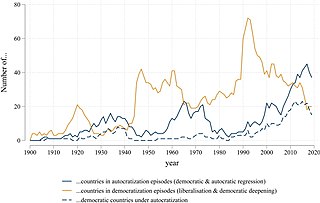
Democratization, or democratisation, is the structural government transition from an authoritarian government to a more democratic political regime, including substantive political changes moving in a democratic direction.
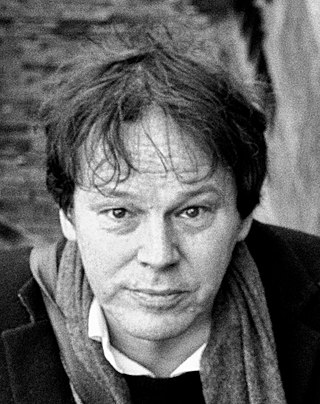
David Rolfe Graeber was an American anthropologist and anarchist activist. His influential work in economic anthropology, particularly his books Debt: The First 5,000 Years (2011), Bullshit Jobs (2018), and The Dawn of Everything (2021), and his leading role in the Occupy movement, earned him recognition as one of the foremost anthropologists and left-wing thinkers of his time.
Sir Mark Edward Welland, is a British physicist who is a professor of nanotechnology at the University of Cambridge and head of the Nanoscience Centre. He has been a fellow of St John's College, Cambridge, since 1986 and started his career in nanotechnology at IBM Research, where he was part of the team that developed one of the first scanning tunnelling microscopes. He was served as the Master of St Catharine's College, Cambridge and took up office from 2016 to 2023.
David Schmidtz is a Canadian-American philosopher. He is Presidential Chair of Moral Science at West Virginia University's Chambers College of Business and Economics. He is also editor-in-chief of the journal Social Philosophy & Policy. Previously, he was Kendrick Professor of Philosophy and Eller Chair of Service-Dominant Logic at the University of Arizona. While at Arizona, he founded and served as inaugural head of the Department of Political Economy and Moral Science.
David Jonathan Andrew Held was a British political scientist who specialised in political theory and international relations. He held a joint appointment as Professor of Politics and International Relations, and was Master of University College, at Durham University until his death. He was also a visiting Professor of Political Science at Libera Università Internazionale degli Studi Sociali Guido Carli. Previously he was the Graham Wallas chair of Political Science and the co-director of the Centre for the Study of Global Governance at the London School of Economics.

Richard Sakwa is a British political scientist and a former professor of Russian and European politics at the University of Kent, a senior research fellow at the National Research University-Higher School of Economics in Moscow, and an honorary professor in the Faculty of Political Science at Moscow State University. He has written books about Russian, Central and Eastern European communist and post-communist politics.
David Walter Runciman, 4th Viscount Runciman of Doxford, is an English academic and podcaster who until 2024 taught politics and history at the University of Cambridge, where he was Professor of Politics. From October 2014 to October 2018 he was also head of the Department of Politics and International Studies. In April 2024 he decided to resign his position at the university to focus on his podcast full-time. He was subsequently made Honorary Professor of Politics.
Communism is a sociopolitical, philosophical, and economic ideology within the socialist movement, whose goal is the creation of a communist society, a socioeconomic order centered around common ownership of the means of production, distribution, and exchange that allocates products to everyone in society based on need. A communist society would entail the absence of private property and social classes, and ultimately money and the state.
Johan 'Hans' van de Ven is an authority on the history of 19th and 20th century China. He holds several positions at the University of Cambridge, where he is Professor of Modern Chinese History, Director in Asian and Middle Eastern Studies at St Catharine's College and previously served as Chair of the Faculty of Asian and Middle Eastern Studies. He studied sinology at Leiden University. Then, after studying with Susan Naquin at the University of Pennsylvania for a period of time, he moved to Harvard University, where he studied modern Chinese history under Philip Kuhn and received his PhD.

Timothy James Brook is a Canadian historian, sinologist, and writer specializing in the study of China (sinology). He holds the Republic of China Chair, Department of History, University of British Columbia.
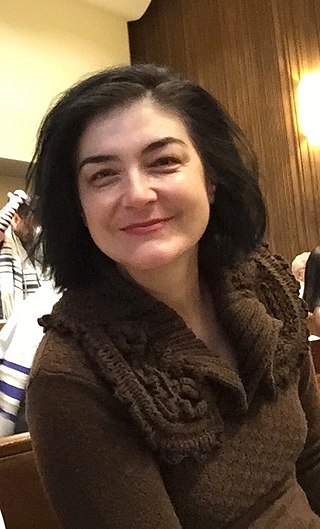
Lavinia Stan is a professor of political science at St. Francis Xavier University in Canada. She currently lives in Montreal.

Kristen Rogheh Ghodsee is an American ethnographer and Professor of Russian and East European Studies at the University of Pennsylvania. She is primarily known for her ethnographic work on post-Communist Bulgaria as well as being a contributor to the field of postsocialist gender studies. She was critical of the role of Western feminist nongovernmental organizations doing work among East European women in the 1990s. She has also examined the shifting gender relations of Muslim minorities after Communist rule, the intersections of Islamic beliefs and practices with the ideological remains of Marxism–Leninism, communist nostalgia, the legacies of Marxist feminism, and the intellectual history of utopianism.

Dru Curtis Gladney was an American anthropologist who was president of the Pacific Basin Institute at Pomona College and a professor of anthropology there. Gladney authored four books and more than 100 academic articles and book chapters on topics spanning the Asian continent.
Primitive communism is an attempt to describe the gift economies of hunter-gatherers throughout history, where resources and property hunted or gathered are shared within the group as communism. In political sociology and anthropology, it is also a concept, that describes hunter-gatherer societies as traditionally being based on egalitarian social relations and common ownership. A primary inspiration for both Marx and Engels were Lewis H. Morgan's descriptions of "communism in living" as practised by the Haudenosaunee of North America. In Marx's model of socioeconomic structures, societies with primitive communism had no social class structures or capital accumulation.
Sabrina Petra Ramet is an American academic, educator, editor and journalist. She specializes in Eastern European history and politics and is a Professor of Political Science at the Norwegian University of Science and Technology (NTNU) in Trondheim.
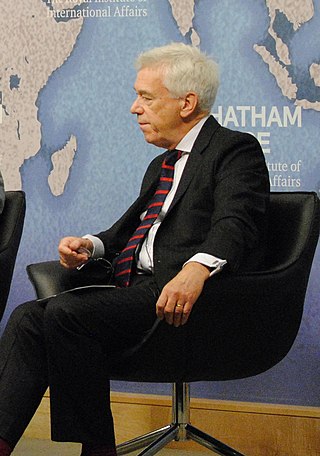
Robert Paul Tombs is a British historian of France. He is professor emeritus of French history at the University of Cambridge and a fellow of St John's College, Cambridge. Prior to this, he was a reader in the subject until 2007. Tombs is the recipient of the Ordre des Palmes académiques awarded by the French government.
Yaprak Gürsoy is a Professor of European Politics and the Chair of Contemporary Turkish Studies at the London School of Economics. Prior to joining the LSE she was a Senior Lecturer and the Undergraduate Programme Director of Politics and International Relations at Aston University, Birmingham. She previously worked as an associate professor in the Department of International Relations at the Istanbul Bilgi University and a senior member of the St Antony's College, Oxford University. Professor Gürsoy is also co-founder and co-convenor of T he Turkish Politics Specialist Group of PSA.
Duncan Bell is Professor of Political Thought and International Relations at the University of Cambridge, and a Fellow of Christ's College, Cambridge.

Below is a list of post World War II scholarly books and journal articles written in or translated into English about communism. Items on this list should be considered a non-exhaustive list of reliable sources related to the theory and practice of communism in its different forms.

Jane Salvage(born 6 August 1953) is a British nursing policy activist, teacher, and writer. She has been described as "a hugely influential nurse leader who has contributed to advancing nursing in a wide number of roles throughout her career".
