
Seasat was the first Earth-orbiting satellite designed for remote sensing of the Earth's oceans and had on board one of the first spaceborne synthetic-aperture radar (SAR). The mission was designed to demonstrate the feasibility of global satellite monitoring of oceanographic phenomena and to help determine the requirements for an operational ocean remote sensing satellite system. Specific objectives were to collect data on sea-surface winds, sea-surface temperatures, wave heights, internal waves, atmospheric water, sea ice features and ocean topography. Seasat was managed by NASA's Jet Propulsion Laboratory and was launched on 27 June 1978 into a nearly circular 800 km (500 mi) orbit with an inclination of 108°. Seasat operated until 10 October 1978 (UTC), when a massive short circuit in the Agena-D bus electrical system ended the mission.

Charles Elachi is a Lebanese-American professor (emeritus) of electrical engineering and planetary science at the California Institute of Technology (Caltech). From 2001 to 2016 he was the 8th director of the Jet Propulsion Laboratory and vice president of Caltech.
Fawwaz T. Ulaby is Arthur F. Thurnau Professor of Electrical Engineering and Computer Science at the University of Michigan in Ann Arbor and formerly the Founding Provost and Executive Vice President of the King Abdullah University of Science and Technology (KAUST) and R. Jamieson and Betty Williams Professor of Electrical Engineering and Computer Science at the University of Michigan.

Koppillil Radhakrishnan is an Indian space scientist who headed the Indian Space Research Organisation (ISRO) between November 2009 and December 2014 as Chairman of Space Commission, Secretary of the Department of Space and Chairman of ISRO. Prior to this, he was the Director of Vikram Sarabhai Space Centre (2007–2009) and Director of National Remote Sensing Agency (2005–2008) of the Department of Space. He had a brief stint of five years (2000–2005) in the Ministry of Earth Sciences as Director of Indian National Centre for Ocean Information Services (INCOIS). Under his leadership of ISRO, India became the first country to reach Mars in its first attempt.
Simon Haykin is an electrical engineer noted for his pioneering work in Adaptive Signal Processing with emphasis on applications to Radar Engineering and Telecom Technology. He is currently Distinguished University Professor at McMaster University in Hamilton, Ontario, Canada.

George Joseph is an Indian space scientist, best known for his contributions to the development of remote sensing technology in India, especially in the field of Earth observation sensors. He is a former chairman of the Lunar Mission Study Task Force of the Indian Space Research Organization and an elected fellow of the National Academy of Sciences, India, Indian Academy of Sciences and Indian National Academy of Engineering. The Government of India awarded him the Padma Bhushan, the third highest civilian award, in 1999.
Prof. em. Dr. Armin Gruen is, since 1984, professor and head of the Chair of photogrammetry at the Institute of Geodesy and Photogrammetry (IGP), Federal Institute of Technology (ETH) Zurich, Switzerland. Since 1 August 2009, he is retired and is now with the Chair of Information Architecture, ETH Zurich Faculty of Architecture. He is currently acting as a principal investigator on the Simulation Platform of the SEC-FCL in Singapore.
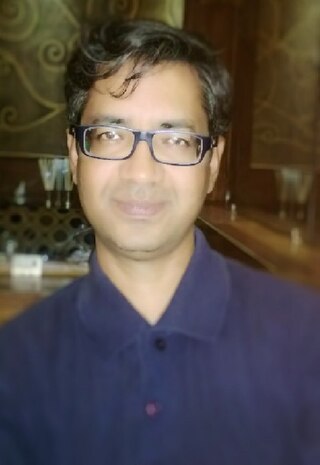
Behara Seshadri Daya Sagar also known as B. S. Daya Sagar is an Indian mathematical geoscientist specializing in mathematical morphology. He is a professor of computer science at the Indian Statistical Institute, Bangalore. He is known as a specialist in mathematical morphology, fractal geometry. chaos theory, and their applications in geophysics, geographical information science, and computational geography. The Indian Geophysical Union awarded him the Krishnan Medal in 2002. He is the first Asian to receive the Georges Matheron Lectureship in 2011. In 2018, he received the IAMG Certificate of Appreciation by the International Association for Mathematical Geosciences for his work on the Handbook of Mathematical Geosciences. In 2020, Sagar was selected as an IEEE Distinguished Lecturer (DL) to represent the IEEE Geoscience and Remote Sensing Society. He, with Frits Agterberg, Qiuming Cheng, and Jennifer McKinley, led the monumental project on the Encyclopedia of Mathematical Geosciences to the completion. The first edition of two-volume 1756-page Encyclopedia of Mathematical Geosciences was published on 21 June 2023 by Springer International Publishers.

Jón Atli Benediktsson is the rector and president of the University of Iceland and professor in electrical and computer engineering at the university. His research fields are remote sensing, image analysis, pattern recognition, machine learning, data fusion, analysis of biomedical signals and signal processing. He has published over 400 scientific articles in these fields and is one of the most influential scientists in the world according to Publons’ lists in 2018 and 2019.

Kamal Sarabandi is an Iranian-American scientist and the Fawwaz T. Ulaby Distinguished University Professor of EECS and the Rufus S. Teesdale endowed Professor of Engineering at the University of Michigan, where he teaches and conducts research on the science and technology of microwave and millimeter wave radar remote sensing, wireless technology, electromagnetic wave propagation and scattering, metamaterials, antenna miniaturization, and nano antennas.
JoBea Way Holt is an American planetary scientist who has worked for NASA. Holt studied the carbon cycle in Earth's atmosphere. She is also a member of the Climate Project, and is the author of several books and research papers.
Heather McNairn, is a federal research scientist at the Ottawa Research and Development Centre, Agriculture and Agri-Food Canada. She specializes in remote sensing technology, and her research focuses on the use of Synthetic Aperture Radar satellites (SARs) to monitor the condition of crops and soils.
Jocelyn Chanussot is a Professor of signal and image processing at the Grenoble Institute of Technology in Grenoble, France. Chanussot was named a Fellow of the Institute of Electrical and Electronics Engineers (IEEE) in 2012 for his contributions to data fusion and image processing for remote sensing. Since January 2011, he serves as Editor-in-Chief of the IEEE Journal of Selected Topics in Applied Earth Observations and Remote Sensing and is a former member of the Institut Universitaire de France.
Diane L. Evans is a geologist and the former Director of Earth Science and Technology Directorate at NASA's Jet Propulsion Laboratory. Her research areas have included sea-level rise, climate change, and tectonics. In 2019, she was recognized by Congressman Adam Schiff for her contributions in his district.
Fauzia Ahmad is an associate professor of electrical engineering at Temple University. Her research considers statistical signal processing and ultrasonic guided wave structural health monitoring. She serves as associate editor of the IEEE Transactions on Aerospace and Electronic Systems and Geoscience and Remote Sensing Society. She is a Fellow of the Institute of Electrical and Electronics Engineers and SPIE.
Dr. Nahid Khazenie is a mechanical engineer who served as president of the IEEE Geoscience and Remote Sensing Society from 1998 to 1999.
Mahta Moghaddam is an Iranian-American electrical and computer engineer and William M. Hogue Professor of Electrical Engineering in the Ming Hsieh Department of Electrical and Computer Engineering at the University of Southern California Viterbi School of Engineering. Moghaddam is also the president of the IEEE Antennas and Propagation Society and is known for developing sensor systems and algorithms for high-resolution characterization of the environment to quantify the effects of climate change. She also has developed innovative tools using microwave technology to visualize biological structures and target them in real-time with high-power focused microwave ablation.

Avik Bhattacharya is a professor at the Centre of Studies in Resources Engineering, Indian Institute of Technology Bombay, Mumbai, India. He has been working in the field of radar polarimetry theory and applications for more than a decade. His main focuses on the use of synthetic aperture radar (SAR) data for land use classification, change detection and qualitative and quantitative biophysical and geophysical information estimation.
Nacer E. Chahat is a French Algerian-American engineer and researcher at the National Aeronautics and Space Administration (NASA) Jet Propulsion Laboratory.

Ralph Bernstein is a German–born American engineer known for his contributions to digital imaging, image processing, and geosciences. He is a member of the American Society for Photogrammetry and Remote Sensing (ASPRS).


