
The cell is the basic structural, functional, and biological unit of all known living organisms. A cell is the smallest unit of life. Cells are often called the "building blocks of life". The study of cells is called cell biology or cellular biology.
A provirus is a virus genome that is integrated into the DNA of a host cell. In the case of bacterial viruses (bacteriophages), proviruses are often referred to as prophages.

The Firmicutes are a phylum of bacteria, most of which have gram-positive cell wall structure. A few, however, such as Megasphaera, Pectinatus, Selenomonas and Zymophilus, have a porous pseudo-outer membrane that causes them to stain gram-negative. Scientists once classified the Firmicutes to include all gram-positive bacteria, but have recently defined them to be of a core group of related forms called the low-G+C group, in contrast to the Actinobacteria. They have round cells, called cocci, or rod-like forms (bacillus).
Bacilli is a taxonomic class of bacteria that includes two orders, Bacillales and Lactobacillales, which contain several well-known pathogens such as Bacillus anthracis. Bacilli are almost exclusively gram-positive bacteria.

Fusobacteria are obligately anaerobic non-sporeforming Gram-negative bacilli. Since the first reports in the late nineteenth century, various names have been applied to these organisms, sometimes with the same name being applied to different species. More recently, not only have there been changes to the nomenclature, but also attempts to differentiate between species which are believed to be either pathogenic or commensal or both. Because of their asaccharolytic nature, and a general paucity of positive results in routine biochemical tests, laboratory identification of the fusobacteria has been difficult. However, the application of novel molecular biological techniques to taxonomy has established a number of new species, together with the subspeciation of Fusobacterium necrophorum and F. nucleatum, and provided new methods for identification. The involvement of fusobacteria in a wide spectrum of human infections causing tissue necrosis and septicaemia has long been recognised, and, more recently, their importance in intra-amniotic infections, premature labour and tropical ulcers has been reported.

In genetic engineering, a gene gun or a biolistic particle delivery system, originally designed for plant transformation, is a device for delivering exogenous DNA (transgenes) to cells. The payload is an elemental particle of a heavy metal coated with DNA. This technique is often simply referred to as biolistics.

In molecular biology and genetics, GC-content is the percentage of nitrogenous bases on a DNA or RNA molecule that are either guanine or cytosine. This may refer to a certain fragment of DNA or RNA, or that of the whole genome. When it refers to a fragment of the genetic material, it may denote the GC-content of section of a gene (domain), single gene, group of genes, or even a non-coding region.

Melanesians are the predominant inhabitants of Melanesia, in a wide area from New Guinea to as far east as the islands of Vanuatu and Fiji. Most speak either one of the many languages of the Austronesian language family, especially ones in the Oceanic branch, or from one of the many unrelated families of Papuan languages. Other languages are the several creoles of the region, such as Tok Pisin, Hiri Motu, Solomon Islands Pijin, Bislama, and Papuan Malay.

The Clostridia are a highly polyphyletic class of Firmicutes, including Clostridium and other similar genera. They are distinguished from the Bacilli by lacking aerobic respiration. They are obligate anaerobes and oxygen is toxic to them. Species of the class Clostridia are often but not always Gram-positive and have the ability to form spores. Studies show they are not a monophyletic group, and their relationships are not entirely certain. Currently, most are placed in a single order called Clostridiales, but this is not a natural group and is likely to be redefined in the future.

KEGG is a collection of databases dealing with genomes, biological pathways, diseases, drugs, and chemical substances. KEGG is utilized for bioinformatics research and education, including data analysis in genomics, metagenomics, metabolomics and other omics studies, modeling and simulation in systems biology, and translational research in drug development.

Alphaproteobacteria is a class of bacteria in the phylum Proteobacteria. Its members are highly diverse and possess few commonalities, but nevertheless share a common ancestor. Like all Proteobacteria, its members are gram-negative and some of its intracellular parasitic members lack peptidoglycan and are consequently gram variable.
Mouse Genome Informatics (MGI) is a free, online database and bioinformatics resource hosted by The Jackson Laboratory, with funding by the National Human Genome Research Institute (NHGRI), the National Cancer Institute (NCI), and the Eunice Kennedy Shriver National Institute of Child Health and Human Development (NICHD). MGI provides access to data on the genetics, genomics and biology of the laboratory mouse to facilitate the study of human health and disease. The database integrates multiple projects, with the two largest contributions coming from the Mouse Genome Database and Gene Expression Database (GXD).
GeneMark is a generic name for a family of ab initio gene prediction programs developed at the Georgia Institute of Technology in Atlanta. Developed in 1993, original GeneMark was used in 1995 as a primary gene prediction tool for annotation of the first completely sequenced bacterial genome of Haemophilus influenzae, and in 1996 for the first archaeal genome of Methanococcus jannaschii. The algorithm introduced inhomogeneous three-periodic Markov chain models of protein-coding DNA sequence that became standard in gene prediction as well as Bayesian approach to gene prediction in two DNA strands simultaneously. Species specific parameters of the models were estimated from training sets of sequences of known type. The major step of the algorithm computes for a given DNA fragment posterior probabilities of either being "protein-coding" in each of six possible reading frames or being "non-coding". Original GeneMark is an HMM-like algorithm; it can be viewed as approximation to known in the HMM theory posterior decoding algorithm for appropriately defined HMM.

39S ribosomal protein L15, mitochondrial is a protein that in humans is encoded by the MRPL15 gene.
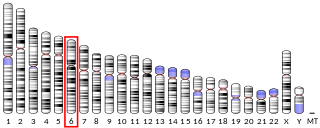
39S ribosomal protein L18, mitochondrial is a protein that in humans is encoded by the MRPL18 gene.
MICdb is a database of non-redundant microsatellites from prokaryotic genomes.
ExtraTrain is a database of regulatory DNA signals located in the extragenic regions of the prokaryotic genome.
The genomic epidemiological database for global identification of microorganisms or global microbial identifier (GMI) is a platform for storing whole genome sequencing (WGS) data of microorganisms, for the identification of relevant genes and for the comparison of genomes to detect and track-and-trace infectious disease outbreaks and emerging pathogens. The database holds two types of information: 1) genomic information of microorganisms, linked to, 2) metadata of those microorganism such as epidemiological details. The database includes all genera of microorganisms: bacteria, viruses, parasites and fungi.
A linear chromosome is a type of chromosome, found in most eukaryotic cells, in which the DNA is arranged in multiple linear molecules of DNA. In contrast, most prokaryotic cells contain circular chromosomes, where the DNA is arranged in one large circular molecule. However, linear chromosomes are not limited to eukaryotic organisms; some prokaryotic organisms do have linear chromosomes as well, such as Borrelia burgdorferi. It is possible to take a prokaryotic cell with a circular chromosome, linearize the chromosome, and still have a viable organism.


