 | Look up jati in Wiktionary, the free dictionary. |
Jati or JATI may refer to:
| Look up jati in Wiktionary, the free dictionary. |
Jati or JATI may refer to:


Punjab is one of the four provinces of Pakistan, with a population of about 110,000,000 as of 2021. Forming the bulk of the transnational Punjab region of Pakistan and India, it is bordered by the Pakistani provinces of Sindh, Balochistan, and Khyber Pakhtunkhwa, the enclave of Islamabad, and Pakistan-administered Azad Kashmir. It also shares borders with the Indian territories of Punjab, Rajasthan, and Jammu and Kashmir. The capital is Lahore, a cultural, historical, economic and cosmopolitan centre of Pakistan where the country's cinema industry, and much of its fashion industry, are based. Other major cities include Gujranwala, Faisalabad, Multan, Rawalpindi, and Sialkot. Punjab is also the world's fifth-most populous subnational entity, and the most populous outside China or India.
GU, Gu, or gu may refer to:
The Punjabis or the Punjabi people, are an ethnic group associated with the Punjab region of the Indian subcontinent presently divided between Pakistan and India. They speak Punjabi, a language from the Indo-Aryan language family. The term Punjab means the five waters from Persian: panj ("five") and āb ("waters"). The name of the region was introduced by the Turko-Persian conquerors of the Indian subcontinent.
Bhatia is a group of people and a caste found in Punjab, Rajasthan, Sindh and Gujarat. The Bhatias primarily live in Northwestern India and Pakistan.

The Radcliffe Line was the boundary demarcated between the Indian and Pakistani portions of the Punjab Province and Bengal Presidency of British India. It was named after its architect, Cyril Radcliffe, who, as the joint chairman of the two boundary commissions for the two provinces, received the responsibility to equitably divide 175,000 square miles (450,000 km2) of territory with 88 million people.

Arain are a large Punjabi agricultural tribe with strong political identity and organisation, found mainly in the Pakistani provinces of Punjab and Sindh with a small population in parts of Indian Punjab, Uttar Pradesh and Uttarakhand.
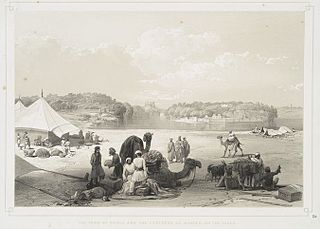
Arora is a community of Punjab, comprising both Hindus and Sikhs. The name is derived from their native place Aror.
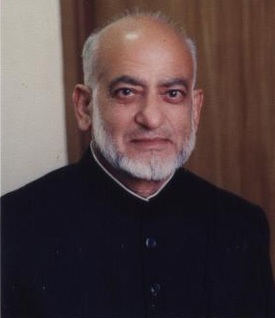
Mian Muhammad Sharif was a Kashmiri businessman who is known as the co-founder of Ittefaq Group and founder of Sharif Group. Two of his three sons, Nawaz and Shehbaz became Prime Ministers of Pakistan.

Sikhism in Pakistan has an extensive heritage and history, although Sikhs form a small community in Pakistan today. Most Sikhs live in the province of Punjab, a part of the larger Punjab region where the religion originated in the Middle Ages, with some also residing in Peshawar in the Khyber-Pakhtunkhwa province. Nankana Sahib, the birthplace of Guru Nanak Sahib Ji, the founder of Sikhism, is located in Pakistan's Punjab province. Moreover, the place where Guru Nanak is believed to have died, the Gurdwara Kartarpur Sahib is also located in the same province.
Jati Umra is a neighbourhood located within union council 124 (Sultanke) in Iqbal Tehsil of Lahore, Punjab, Pakistan.

Begum Kulsoom Nawaz Sharif was a Pakistani politician who had been the first lady of Pakistan for three non-consecutive terms; from 1990 to 1993, 1997 to 1999 and then from 2013 to 2017. She was the President of Pakistan Muslim League (Nawaz) from 1999 to 2002.
Chak Umra is a village and union council, an administrative subdivision, of Chakwal District in the Punjab Province of Pakistan. It is part of Chakwal Tehsil. There is a Girls' High school in the village, a Maktab Primary and a Primary Schools for boys. Local agriculture involves cultivation of peanuts and different types of vegetables.
Lodhi may refer to:
Multani may refer to:
Sarang may refer to:
Jati Umra is a small village in Tarn Taran district of Punjab, India.
Jati Umra may refer to:
The Sharif family is from Pakistan, based in the city of Lahore in province of Punjab, Pakistan. The belong to a Bhat Kashmiri tribe which is a large community living in many districts of Punjab, they are settled in Lahore, Punjab, Pakistan and uses the title of Mian. Muhammad Sharif, the father of former Prime Minister of Pakistan Nawaz Sharif, migrated from Jati Umra, Amritsar District. He was a businessman who founded the Ittefaq Group in 1939 in Lahore. Muhammad's other son Shehbaz Sharif is the current Prime Minister of Pakistan.
Sharif College of Engineering and Technology (SCET) was founded in 2010 as a project of Sharif Trust, which is a Not-for-Profit organization formed in 1995 under the Societies Registration Act of 1860. The College is located in Sharif Medical City, in front of Sharif family farm houses, Jati Umra, Lahore. The College is affiliated with University of Engineering and Technology, Lahore. Currently three degree programs are functional at the campus. 1. B.Sc Chemical Engineering 2. B.Sc Electrical Engineering 3. B.Sc Computer Sciences
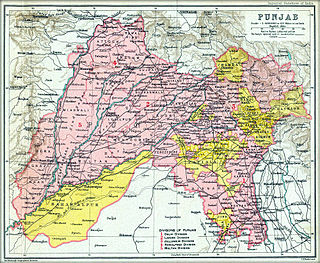
Punjabi nationalism or Punjabiyat is a point of view that asserts that Punjabi speakers are a nation and promotes the cultural unity of Punjabis and the diverse ethnic people who inhabit the ethno-linguistic region of the Punjab region. Baba Sheikh Farid is considered as the Father of Punjabi nationalism. Baba Bulleh Shah, Waris Shah and Bhai Vir Singh have immense contribution to Punjabi Boli. Punjabiyat or Punjabi nationalism is the name of a cultural and language revitalization movement of the Punjabi language. It also focuses on the political, social and literary movement for preservation of Punjabi literature, Punjabi language and Punjabi culture by unity of Greater Punjab. In Pakistan, the goal of the movement is to stop the state-sponsored suppression of Punjabi in favor of Urdu, while in India the goal is to bring together the Sikh and Punjabi Hindu communities and promote the Punjabi language in regions of Northern India. Supporters in the Punjabi diaspora focus on the promotion of a shared cultural heritage.