Related Research Articles

Carthage College is a private college in Kenosha, Wisconsin, United States. Founded in 1847, it is affiliated with the Evangelical Lutheran Church in America. Carthage awards bachelor's degrees with majors in more than 40 subject areas and master's degrees in three areas. Carthage has 150 faculty and enrolls approximately 2,600 students. It is an affiliate of the Wisconsin Space Grant Consortium.
The University of Illinois Urbana-Champaign is a public land-grant research university in the Champaign–Urbana metropolitan area, Illinois, United States. Established in 1867, it is the flagship institution of the University of Illinois system. With over 59,000 students, the University of Illinois is one of the largest public universities by enrollment in the United States.
Zar may refer to:

Northern Illinois University (NIU) is a public research university in DeKalb, Illinois, United States. It was founded as Northern Illinois State Normal School in 1895 by Illinois Governor John P. Altgeld, initially to provide the state with college-educated teachers. In addition to the main campus in DeKalb, it has satellite centers in Chicago, Naperville, Rockford, and Oregon, Illinois.
Rush Medical College is the medical school of Rush University, located in the Illinois Medical District, about 3 km west of the Loop in Chicago. Offering a full-time Doctor of Medicine program, the school was chartered in 1837, and today is affiliated primarily with Rush University Medical Center, and nearby John H. Stroger Jr. Hospital of Cook County. In 2021, Rush Medical College was ranked 64th among research institutions in the U.S. by U.S. News & World Report.
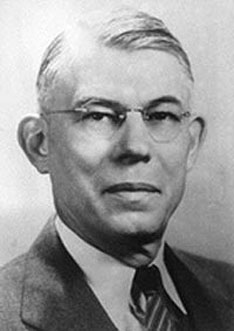
Edward Adelbert Doisy was an American biochemist. He received the Nobel Prize in Physiology or Medicine in 1943 with Henrik Dam for their discovery of vitamin K and its chemical structure.
Governors State University is a public university in University Park, Illinois, United States. The 750 acres (3.0 km2) campus is located 30 miles (48 km) south of Chicago, Illinois. GSU was founded in 1969. It is a public university offering degree programs at the undergraduate, master's, and doctoral levels. GSU has four colleges: the College of Arts and Sciences, the College of Business, the College of Education, and the College of Health and Human Services.
Herbert Edmund Carter was an American biochemist and educator. He grew up in central Indiana and received his bachelor's degree from DePauw University. He received a Ph.D. in 1934 in organic chemistry from University of Illinois Urbana-Champaign. Was elected to the National Academy of Sciences and the American Academy of Arts and Sciences.

Jerrold Eldon Marsden was a Canadian mathematician. He was the Carl F. Braun Professor of Engineering and Control & Dynamical Systems at the California Institute of Technology. Marsden is listed as an ISI highly cited researcher.
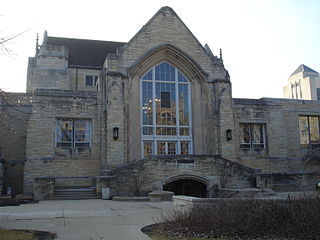
Northern Illinois University College of Law is one of four public law schools in the U.S. state of Illinois. It is one of two public law schools in the Chicago area. The College of Law was founded as the Lewis University College of Law in Glen Ellyn, Illinois, in 1975. It became part of Northern Illinois University in August 1979, and in 1982 moved to the DeKalb, Illinois, campus, taking up residence in Swen Parson Hall, the former NIU main library. The College of Law offers the Juris Doctor degree.

Jim Bittermann is Senior European correspondent for CNN since 1996.
Peggy Sullivan was an American librarian and educator. She was elected president of the American Library Association and was a scholar of the history of librarianship.

Peter John Stang is an American chemist and Distinguished Professor of chemistry at the University of Utah. He was the editor-in-chief of the Journal of the American Chemical Society from 2002 to 2020.

Harold Vincent Poor is the Michael Henry Strater University Professor of Electrical Engineering at Princeton University, where he is also the Interim Dean of the School of Engineering and Applied Science. He is a specialist in wireless telecommunications, signal processing and information theory. He has received many honorary degrees and election to national academies. He was also President of IEEE Information Theory Society (1990). He is on the board of directors of the IEEE Foundation.

Jerrold Meinwald was an American chemist known for his work on chemical ecology, a field he co-founded with his colleague and friend Thomas Eisner. He was a Goldwin Smith Professor Emeritus of Chemistry at Cornell University. He was author or co-author of well over 400 scientific articles. His interest in chemistry was sparked by fireworks done with his friend Michael Cava when they were still in junior high school. Meinwald was also a music aficionado and studied flute with Marcel Moyse – the world's greatest flutist of his time.
John W. Berry is an American librarian. Berry served as president of the American Library Association from 2001 to 2002, leading the profession's response to the Children's Internet Protection Act.
Paul Gassman was an American chemist. He is best known for his research in the field of organic chemistry and his service as president of the American Chemical Society and is listed among notable alumni by the Cornell University Graduate School.
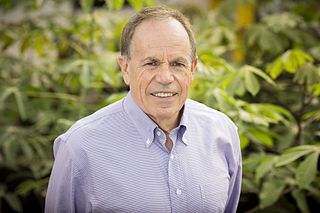
Stephen Patrick Long is a British-born American environmental plant physiologist and member of the National Academy of Sciences studying how to improve photosynthesis to increase the yield of food and biofuel crops. He is the Stanley O. Ikenberry Chair Professor of Plant Biology and Crop Sciences at the University of Illinois and visiting professor in Plant Sciences at Lancaster University and at Oxford University, UK. His work, published in Science, proved that photosynthesis can be manipulated to increase plant productivity—an idea once considered the holy grail of plant biology. Long has added to our understanding of the long-term impacts of climate change, such as rising levels of carbon dioxide and ozone on plants. He has briefed former President George W. Bush and the Vatican, as well as Bill Gates and Anne, Princess Royal, on food security and bioenergy.
Lyn Ragsdale was an American political scientist. She was the Radoslav A. Tsanoff professor of public affairs, professor of political science, and Dean of Social Sciences at Rice University. She specialized in the American presidency, the United States Congress, and electoral behavior. Ragsdale died suddenly at the age of 66 on December 13, 2020.
"Candidate for a Pullet Surprise" is a poem by Jerrold H. Zar, based on an earlier short poem by Mark Eckman. It was first published in 1994 in the humour magazine Journal of Irreproducible Results. The poem uses homophones to illustrate the problem of relying on a spell checker. It was widely circulated as a viral email, often in altered form without attribution, and has been reproduced in numerous works on writing, editing, and publishing ethics.
References
- ↑ "Zar, Jerrold H." aaas.org. Retrieved April 22, 2017.
- ↑ "Jerrold H. Zar". niu.edu. Retrieved April 22, 2017.
- ↑ "Faculty website for Jerrold H. Zar, Department of Biological Sciences". Faculty and Instructors. Northern Illinois University. Retrieved 9 November 2023.
| International | |
|---|---|
| National | |
| Other | |

  | This article about a biologist from the United States is a stub. You can help Wikipedia by expanding it. |