Related Research Articles

The Hohenstaufen dynasty, also known as the Staufer, was a noble family of unclear origin that rose to rule the Duchy of Swabia from 1079, and to royal rule in the Holy Roman Empire during the Middle Ages from 1138 until 1254. The dynasty's most prominent rulers – Frederick I (1155), Henry VI (1191) and Frederick II (1220) – ascended the imperial throne and also reigned over Italy and Burgundy. The non-contemporary name of 'Hohenstaufen' is derived from the family's Hohenstaufen Castle on Hohenstaufen mountain at the northern fringes of the Swabian Jura, near the town of Göppingen. Under Hohenstaufen rule, the Holy Roman Empire reached its greatest territorial extent from 1155 to 1268.

Pope Innocent IV, born Sinibaldo Fieschi, was head of the Catholic Church and ruler of the Papal States from 25 June 1243 to his death in 1254.

The term Moor is an exonym first used by Christian Europeans to designate the Muslim populations of the Maghreb, al-Andalus, Sicily and Malta during the Middle Ages. Moors are not a single, distinct or self-defined people. The 1911 Encyclopædia Britannica observed that the term had "no real ethnological value." Europeans of the Middle Ages and the early modern period variously applied the name to Arabs, Berbers, and Muslim Europeans.

Frederick II was King of Sicily from 1198, King of Germany from 1212, King of Italy and Holy Roman Emperor from 1220 and King of Jerusalem from 1225. He was the son of Emperor Henry VI of the Hohenstaufen dynasty and Queen Constance of Sicily of the Hauteville dynasty.

The Battle of Benevento was a major medieval battle fought on 26 February 1266, near Benevento in present-day Southern Italy, between the forces of Charles I of Anjou and those of King Manfred of Sicily. Manfred's defeat and death resulted in Charles' conquest of the Kingdom of Sicily, effectively ending the rule of the Hohenstaufen dynasty in the Italian Peninsula and marking the rise of the royal Capetian House of Anjou. The engagement was part of the conflict which pitted Guelphs against Ghibellines.
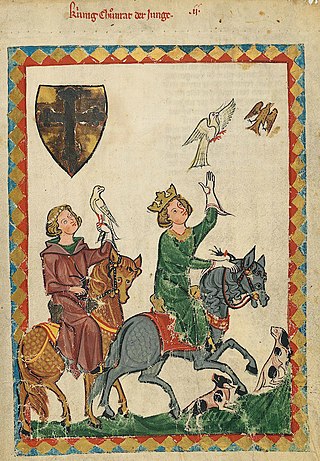
Conrad III, called the Younger or the Boy, but usually known by the diminutive Conradin, was the last direct heir of the House of Hohenstaufen. He was Duke of Swabia (1254–1268) and nominal King of Jerusalem (1254–1268) and Sicily (1254–1258). After his attempt to reclaim the Kingdom of Sicily for the Hohenstaufen dynasty failed, he was captured and beheaded.

Conrad, a member of the Hohenstaufen dynasty, was the only son of Emperor Frederick II from his second marriage with Queen Isabella II of Jerusalem. He inherited the title of King of Jerusalem upon the death of his mother in childbed. Appointed Duke of Swabia in 1235, his father had him elected King of Germany and crowned King of Italy in 1237. After the emperor was deposed and died in 1250, he ruled as King of Sicily until his death.

Manfred was the last King of Sicily from the Hohenstaufen dynasty, reigning from 1258 until his death. The natural son of the Holy Roman Emperor Frederick II, Manfred became regent over the kingdom of Sicily on behalf of his nephew Conradin in 1254. As regent he subdued rebellions in the kingdom, until in 1258 he usurped Conradin's rule. After an initial attempt to appease Pope Innocent IV he took up the ongoing conflict between the Hohenstaufens and the papacy through combat and political alliances. He defeated the papal army at Foggia on 2 December 1254. Excommunicated by three successive popes, Manfred was the target of a Crusade (1255–66) called first by Pope Alexander IV and then by Urban IV. Nothing came of Alexander's call, but Urban enlisted the aid of Charles of Anjou in overthrowing Manfred. Manfred was killed during his defeat by Charles at the Battle of Benevento, and Charles assumed kingship of Sicily.

The Kingdom of Sicily was a state that existed in Sicily and the south of the Italian Peninsula plus, for a time, in Northern Africa from its founding by Roger II of Sicily in 1130 until 1816. It was a successor state of the County of Sicily, which had been founded in 1071 during the Norman conquest of the southern peninsula. The island was divided into three regions: Val di Mazara, Val Demone and Val di Noto.

Slavery in medieval Europe was widespread. Europe and North Africa were part of a highly interconnected trade network across the Mediterranean Sea, and this included slave trading. During the medieval period (500–1500), wartime captives were commonly forced into slavery. As European kingdoms transitioned to feudal societies, a different legal category of unfree persons—serfdom—began to replace slavery as the main economic and agricultural engine. Throughout medieval Europe, the perspectives and societal roles of enslaved peoples differed greatly, from some being restricted to agricultural labor to others being positioned as trusted political advisors.

Lucera is an Italian city of 34,243 inhabitants in the province of Foggia in the region of Apulia, and the seat of the Diocese of Lucera-Troia.
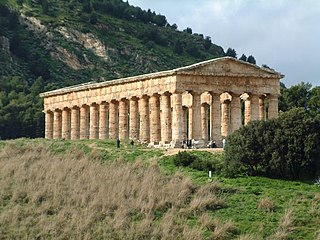
The history of Sicily has been influenced by numerous ethnic groups. It has seen Sicily controlled by powers, including Phoenician and Carthaginian, Greek, Roman, Vandal and Ostrogoth, Byzantine, Arab, Norman, Aragonese, Spanish, Austrians, British, but also experiencing important periods of independence, as under the indigenous Sicanians, Elymians, Sicels, the Greek-Siceliotes, and later as County of Sicily, and Kingdom of Sicily. The Kingdom was founded in 1130 by Roger II, belonging to the Siculo-Norman family of Hauteville. During this period, Sicily was prosperous and politically powerful, becoming one of the wealthiest states in all of Europe. As a result of the dynastic succession, the Kingdom passed into the hands of the Hohenstaufen. At the end of the 13th century, with the War of the Sicilian Vespers between the crowns of Anjou and Aragon, the island passed to the latter. In the following centuries the Kingdom entered into the personal union with the Spaniard and Bourbon crowns, while preserving effective independence until 1816. Sicily was merged with the Kingdom of Italy in 1861. Although today an Autonomous Region, with special statute, of the Republic of Italy, it has its own distinct culture.
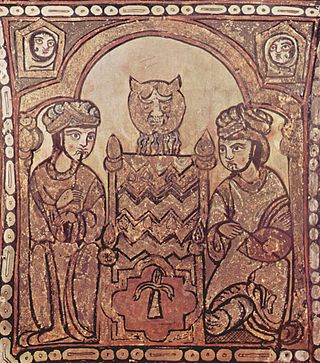
The history of Islam in Sicily and southern Italy began with Arab colonization in Sicily, at Mazara, which was captured in 827. The subsequent rule of Sicily and Malta started in the 10th century. The Emirate of Sicily lasted from 831 until 1061, and controlled the whole island by 902. Though Sicily was the primary Muslim stronghold in Italy, some temporary footholds, the most substantial of which was the port city of Bari, were established on the mainland peninsula, especially in mainland southern Italy, though Arab raids, mainly those of Muhammad I ibn al-Aghlab, reached as far north as Naples, Rome and the northern region of Piedmont. The Arab raids were part of a larger struggle for power in Italy and Europe, with Christian Byzantine, Frankish, Norman and indigenous Italian forces also competing for control. Arabs were sometimes allied with various Christian factions against other factions.

The term Norman–Arab–Byzantine culture, Norman–Sicilian culture or, less inclusively, Norman–Arab culture, refers to the interaction of the Norman, Byzantine Greek, Latin, and Arab cultures following the Norman conquest of the former Emirate of Sicily and North Africa from 1061 to around 1250. The civilization resulted from numerous exchanges in the cultural and scientific fields, based on the tolerance shown by the Normans towards the Latin- and Greek-speaking Christian populations and the former Arab Muslim settlers. As a result, Sicily under the Normans became a crossroad for the interaction between the Norman and Latin Catholic, Byzantine–Orthodox, and Arab–Islamic cultures.

The Muslim settlement of Lucera was the result of the decision of the King of Sicily Frederick II of the Hohenstaufen dynasty (1194–1250) to move 20,000 Sicilian Muslims to Lucera, a settlement in Apulia in southern Italy. The settlement thrived for about 75 years. In 1300, it was captured by the Christian forces of Charles II of Naples and its Muslim inhabitants were exiled.
The castle of Lucera is a castle located in the municipality of Lucera, in the province of Foggia, southern Italy, dating back to the 13th century. Currently only remnants of the castle and its walls are left.
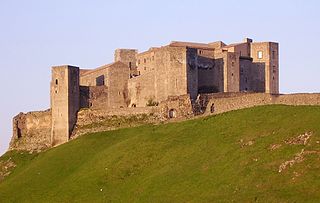
The Castle of Melfi in Basilicata is a monument owned by the Italian State and one of the most important medieval castles in Southern Italy. Its construction, at least the components still visible, dates back to the Norman conquest and has undergone significant changes over time, especially under the House of Anjou and the Crown of Aragon.
The 1254 papal election took place following the death of Pope Innocent IV and ended with the choice of Raynaldus de' Conti, who took the name Pope Alexander IV. The election was held in Naples, in the former palazzo of Pietro della Vigna, and required only one day.
Swabian Sicily denotes the period in the history of Sicily during which it was ruled by the Hohenstaufen dynasty, lasting from Henry VI's's accession to the island's throne in 1194 until Manfred of Sicily's defeat by Charles I of Anjou in 1266. It has been particularly researched by German scholars such as Ernst Kantorowicz and Willy Cohn.

Andrew of Hungary was a Hungarian priest, diplomat and writer. He wrote an account in Latin of Charles of Anjou's conquest of the Kingdom of Sicily, conventionally known as the Descriptio victoriae a Karolo Provinciae comite reportate.
References
- ↑ Bowersox, Jeff; Khoo, Astrid (7 April 2016). "Johannes dictus Morus, d. 1254". Black Central Europe. Black Central European Studies Network. Retrieved 10 May 2023.
- ↑ Hubert Houben, Federico II. Imperatore, uomo, mito, Il Mulino, 2009 ISBN 978-88-15-13338-0, p. 111
- ↑ Julie Anne Taylor, Muslims in Medieval Italy. The Colony at Lucera, 2005 (p. 20)
- ↑ Julie Anne Taylor, Muslims in Medieval Italy. The Colony at Lucera, 2005 (p. 128)
- ↑ Walter Koller, «Manfredi, re di Sicilia», Enciclopedia Federiciana, Vol. 2, Istituto dell'Enciclopedia italiana Treccani)
  | This Italian biographical article is a stub. You can help Wikipedia by expanding it. |