John Allenson

Last updated

John Allenson (born c. 1558) was an English puritan divine.

Allenson, a native of Durham, matriculated as a sizar of Trinity College, Cambridge, in 1576; but in November of the same year he migrated to St. John's College, where he obtained a scholarship on Mr. Ashton's foundation, and became a pupil of the Puritan Dr. William Whitaker, whose religious principles he adopted. He became B.A. in 1579–80, M.A. in 1583, and B.D. in 1590. [1]

In 1583 he was suspended from the curacy of Barnwell near Cambridge for refusing to subscribe to the articles. On 20 March 1583–4 he was elected a fellow of St. John's College on the Lady Margaret's foundation. In 1589 he was suspended from the curacy of Horningsea, Cambridgeshire, but he nevertheless continued to preach. He held in succession various offices of trust in his college, becoming senior dean and sacrist in 1602–3, and senior bursar in 1603–4.

Works

Allenson edited the following works of his old tutor Dr. Whitaker: Prælectiones (1599), Prælectiones, in quibus tractatur controversia de conciliis contra pontificios, imprimis Rob. Bellarminum (1600), and De Peccato Originali contra Stapletonum (1600). It appears that Allenson took notes of Whitaker's lectures and prepared them for the press.

In 1624 John Ward edited at Frankfort Whitaker's Prælectiones de Sacramentis in Genere et in Specie de SS. Baptismo et Eucharistia, and in the dedication to Dr. Tobie Mathew, Archbishop of York, informed him that Dr. Whitaker had not himself published these lectures: quæ tamen de Sacramentis adversus Bellarminum in Scholis Academiæ publicis prælegit, vir diligentissimus D. Allensonius, collegii D. Joannis Evangelistæ socius, fideli calamo ex ore dictantis excepit et post authoris mortem, cum ipsius D. Whitakeri concisis annotiunculis in memoriæ subsidium scriptis, accurate contulit præloque destinabat. Sed ex rerum humanarum vicissitudine, ipse etiam, antequam prælo mandarentur, fatis concessit, exemplar prælo destinatum post ejus obitum ad manus meas pervenit. Thomas Baker, in his History of St. John's College,’ asserts that the life of Whitaker was written by Allenson; but this is certainly a mistake, as the author of the biography was Abdias Assheton.

Related Research Articles

<span class="mw-page-title-main">John Pearson (bishop)</span> 17th century English theologian and scholar

John Pearson was an English theologian and scholar.

Peter Baro (1534–1599) was a French Huguenot minister, ordained by John Calvin, but later in England a critic of some Calvinist theological positions. His views in relation to the Lambeth Articles cost him his position as Lady Margaret's Professor of Divinity at the University of Cambridge. He was a forerunner of views, to be called Arminian or Laudian, more common a generation later in England.

<span class="mw-page-title-main">William Whitaker (theologian)</span> English theologian (1548–1595)

William Whitaker was a prominent Protestant Calvinistic Anglican churchman, academic, and theologian. He was Master of St. John's College, Cambridge, and a leading divine in the university in the latter half of the sixteenth century. His uncle was Alexander Nowell, the Dean of St. Paul's Cathedral and catechist.

Thomas Bainbrigg (Bainbridge) was an English college head.

Jeremiah Whitaker (1599–1654) was an English Puritan clergyman, and important member of the Westminster Assembly.

Theodore Goulston M.D. (1572–1632) was an English physician, scholar, and founder of the Goulstonian Lectures.

Anthony Wotton was an English clergyman and controversialist, of Puritan views. He was the first Gresham Professor of Divinity. Christopher Hill describes him as a Modernist and Ramist.

Roger Drake (1608–1669) was an English physician, and a minister of strong Presbyterian convictions.
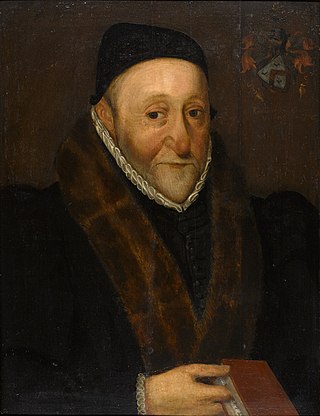
<span class="mw-page-title-main">Richard Rogers (theologian)</span>

Richard Rogers (1550?–1618) was an English clergyman, a nonconformist under both Elizabeth I and James I.

John Knewstub (1544–1624) was an English clergyman and one of the participants in the Hampton Court Conference of 1604 representing the Puritan side. Patrick Collinson calls him presbyterian by conviction, but moderate in his views.

Nicholas Carr (1524–1568) was an English classical scholar, regius professor of Greek at Cambridge in 1547, and a physician.

Nicholas Bownde, Bownd or Bound was an English clergyman, known for his Christian Sabbatarian writings.

Henry Bullock was an English clergyman, academic and humanist, a friend of Erasmus and a correspondent of his in the period 1516 to 1518.

Thomas Playfere was an English churchman and theologian, Lady Margaret's Professor of Divinity at Cambridge from 1596.

Laurence Arthur Faunt was an English Jesuit theologian and missionary to Poland.

John Walker D.D. was an English churchman, archdeacon of Essex from 1571.
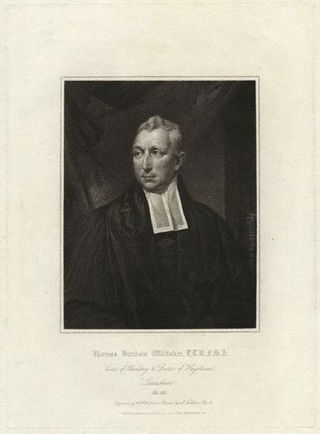
<span class="mw-page-title-main">Thomas Dunham Whitaker</span>

Thomas Dunham Whitaker (1759–1821) was an English clergyman and topographer.

John Garbrand or Herks (1542–1589) was an English cleric, a prebendary of Salisbury Cathedral and friend of Bishop Jewell.
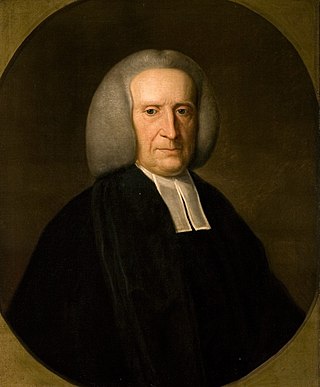
<span class="mw-page-title-main">William Richardson (antiquary)</span>

William Richardson (1698–1775) was an English academic and antiquary, Master of Emmanuel College, Cambridge from 1736.

Thomas Lawrence (1711–1783) was an English physician and biographer, who became President of the Royal College of Physicians in 1767.

References

  1. "Allenson, John (ALN576J)". A Cambridge Alumni Database. University of Cambridge.
Attribution

Wikisource-logo.svg This article incorporates text from a publication now in the public domain : "Allenson, John". Dictionary of National Biography . London: Smith, Elder & Co. 1885–1900.