Related Research Articles

The Panchatantra is an ancient Indian collection of interrelated animal fables in Sanskrit verse and prose, arranged within a frame story. The surviving work is dated to about 200 BCE, but the fables are likely much more ancient. The text's author is unknown, but it has been attributed to Vishnu Sharma in some recensions and Vasubhaga in others, both of which may be fictitious pen names. It is likely a Hindu text, and based on older oral traditions with "animal fables that are as old as we are able to imagine".

Friedrich Max Müller was a German-born philologist and orientalist, who lived and studied in Britain for most of his life. He was one of the founders of the western academic disciplines of Indian studies and religious studies. Müller wrote both scholarly and popular works on the subject of Indology. The Sacred Books of the East, a 50-volume set of English translations, was prepared under his direction. He also promoted the idea of a Turanian family of languages.

Sir Richard Stafford Cripps was a British Labour Party politician, barrister, and diplomat.

Horace Hayman Wilson was an English orientalist who was elected the first Boden Professor of Sanskrit at Oxford University.

William Dwight Whitney was an American linguist, philologist, and lexicographer known for his work on Sanskrit grammar and Vedic philology as well as his influential view of language as a social institution. He was the first president of the American Philological Association and editor-in-chief of The Century Dictionary.

Charles Rockwell Lanman was an American scholar of the Sanskrit language.

Fitzedward Hall was an American Orientalist, and philologist. He was the first American to edit a Sanskrit text, and was an early collaborator in the Oxford English Dictionary (OED) project.

Moriz Winternitz was a scholar from Austria who began his Indology contributions working with Max Müller at the Oxford University. An eminent Sanskrit scholar, he worked as a professor in Prague in the German part of Karl-Ferdinands-Universität after 1902, for nearly thirty years. His Geschichte der indischen Literatur, published 1908–1922, offered a comprehensive literary history of Sanskrit texts. The contributions on a wide range of Sanskrit texts by Winternitz have been an influential resource for modern era studies on Hinduism, Buddhism and Jainism.

Edward Byles Cowell, was a noted translator of Persian poetry and the first professor of Sanskrit at Cambridge University.
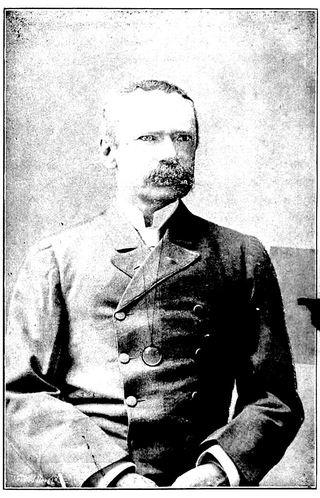
Arthur Anthony Macdonell, FBA was a Sanskrit scholar.
Lionel David Barnett CB FBA was an English orientalist.

Sir Harold Walter Bailey,, who published as H. W. Bailey, was an English scholar of Khotanese, Sanskrit, and the comparative study of Iranian languages.
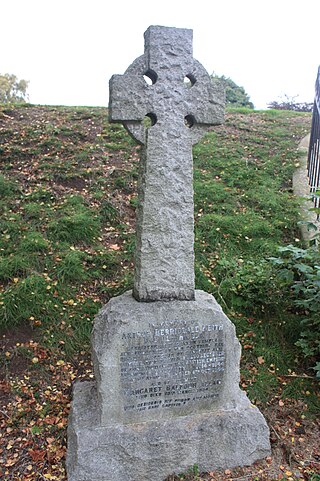
Arthur Berriedale Keith was a Scottish constitutional lawyer, scholar of Sanskrit and Indologist. He became Regius Professor of Sanskrit and Comparative Philology and Lecturer on the Constitution of the British Empire in the University of Edinburgh. He served in this role from 1914 to 1944.

Marcus Seymour Pembrey FRS, was a British physiologist who held important posts in several British hospitals and other organisations. He was also the author of several well known medical books. Although he worked primarily as a lecturer in physiology he spent time in the laboratory of Walther Flemming at Kiel in Germany, where pioneer work in cytological technique was going on, and then at Würzburg where he carried out research under Adolf Eugen Fick and Eduard von Rindfleisch. In Oxford, where he then worked as a demonstrator in physiology, he collaborated with Professor J.S. Haldane in determining the composition of air. He was elected a Fellow of the Royal Society, (FRS) in 1922. Many of his hundreds of old students from Guy's Hospital went on to become eminent physicians, surgeons, clinical chemists, haematologists and gynaecologists of their day. For some 30 years until his retirement in 1933, he was chairman and Treasurer of the Guy's Hospital Physiological Debating Society.
Francis Whyte Ellis (1777–1819) was a British civil servant in the Madras Presidency and a scholar of Tamil and Sanskrit.
Sir Arthur Ernest Cowley, was a British librarian who was Bodley's Librarian from 1919 until a couple of months before his death. He was also a leading Semitic scholar.
Edward Gordon Duff, known as Gordon Duff, was a British bibliographer and librarian known for his works on early English printing.

Sir Benjamin John Fuller was an English-born Australian theatrical entrepreneur.
Ludo Rocher (1926–2016) was an eminent Sanskrit scholar, and the W. Norman Brown Professor Emeritus of South Asia Studies at the University of Pennsylvania.
John Brough, FBA was a Scottish scholar of Sanskrit, Indologist, Buddhologist and Sinologist. He was Professor of Sanskrit at the University of London (1948–67) and at the University of Cambridge (1967–84).
References
- ↑ "University intelligence". The Times. No. 36805. London. 27 June 1902. p. 10.
  | This biography of a British linguist is a stub. You can help Wikipedia by expanding it. |