Sforno is the name of a prominent Jewish Italian family, many members of which distinguished themselves as rabbis and scholars. The most prominent of these were the following:
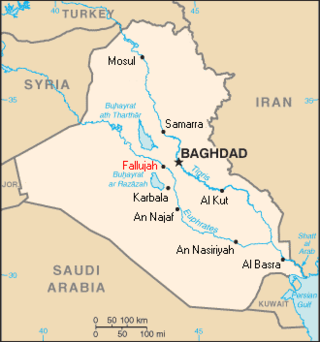
Hai ben Sherira better known as Hai Gaon, was a medieval Jewish theologian, rabbi and scholar who served as Gaon of the Talmudic academy of Pumbedita during the early 11th century. He was born in 939 and died on March 28, 1038. He received his Talmudic education from his father, Sherira ben Hanina, and in early life acted as his assistant in teaching. In his forty-fourth year he became associated with his father as "av bet din," and with him delivered many joint decisions. According to Sefer HaKabbalah of Rabbi Abraham ben David (Ravad), he was the last of the Geonim.
Zedekiah ben Abraham Anaw was an author of halakhic works and younger brother of Benjamin ben Abraham Anaw. He lived at Rome and received his Talmudic training not only in Rome but also in Germany where he was the pupil of Jacob of Würzburg and possibly also of Abigdor Cohen of Vienna.
Nathan ben Jehiel of Rome was a Jewish Italian lexicographer. He authored the Arukh, a notable dictionary of Talmudic and Midrashic words, and consequently he himself is often referred to as "the Arukh".
Benjamin ben Abraham Anaw was a Roman Jewish liturgical poet, Talmudist, and commentator of the thirteenth century, and older brother of Zedekiah ben Abraham Anaw.
David ben Solomon ibn (Abi) Zimra (1479–1573) also called Radbaz (רַדְבָּ"ז) after the initials of his name, Rabbi David iBn Zimra, was an early Acharon of the fifteenth and sixteenth centuries who was a leading posek, rosh yeshiva, chief rabbi, and author of more than 3,000 responsa as well as several scholarly works.
Yerucham ben Meshullam, often called Rabbenu Yerucham, was a prominent rabbi and posek during the period of the Rishonim.
Samuel ben Isaac Ha-Sardi was a Spanish rabbi who flourished in the first half of the 13th century. In his youth he attended the school of Rabbi Nathan ben Meir of Trinquetaille, Provence, and later he returned to Spain, his native country. David Conforte derives the name "Sardi" from the city of Sardinia. Zacuto calls Samuel "Ha-Sefaradi"; so does Heilprin in Seder ha-Dorot, i.216b, 292a in the Warsaw edition of 1883, but in iii.108b of the Warsaw edition of 1882 he designates him "Ha-Sardi."
Shem Tov ben Abraham ibn Gaon was a Spanish Talmudist and kabbalist.
Jacob ben Judah Landau was a German-Italian rabbi and halakhic codifier, who wrote the halakhic digest The Agur (האגור).
Nathan Nata ben Moses Hannover was a Ruthenian Jewish historian, Talmudist, and kabbalist.

Judah ben Eliezer ha-Levi Minz, also known as Mahari Minz, was the most prominent Italian rabbi of his time. As his surname suggests, he immigrated around 1462 from Mainz to Italy. He officiated as rabbi of Padua for forty-seven years, during which time he had a great number of pupils, among whom were his son Abraham Minz, and the latter's son-in-law Meir Katzenellenbogen. In a dispute he had with Elia del Medigo, he was supported by Elijah Mizrachi.
Moses ben Mordecai Zacuto, also known by the Hebrew acronym RaMa"Z, was a rabbi, Kabbalist, and poet. Zacuto, who was born into a Portuguese Marrano family in Amsterdam, studied Jewish subjects under Saul Levi Morteira. He also studied secular subjects, such as the Latin language. As a pupil of Morteira, he may also have been, as a youth still in Amsterdam, a fellow student of Baruch Spinoza.
Abraham ben Judah ha-Levi Minz was an Italian rabbi who flourished at Padua in the first half of the 16th century. Minz studied chiefly under his father, Judah Minz, whom he succeeded as rabbi and head of the yeshiva of Padua. According to Gedaliah ibn Yahya ben Joseph, it was with Abraham Minz that Jacob Pollak had the quarrel which ended in their excommunicating each other; according to most other authorities, the quarrel was with Judah Minz. Ibn Yahya further says that the Italian rabbis believe that Polak and Abraham Minz died on the same day. Minz was the author of a number of decisions that were printed with those of R. Lewa of Ferrara. He was the author also of Seder Gittin ve-Chalitzah, a treatise on divorce and Chalitzah, printed with the responsa of his father and of his son-in-law Meir Katzenellenbogen.
Abraham Yagel was an Italian Jewish catechist, philosopher, and cabalist. He lived successively at Luzzara, Venice, Ferrara, and Sassuolo.
Abraham ben Solomon Conat was an Italian Jewish printer, Talmudist, and physician.
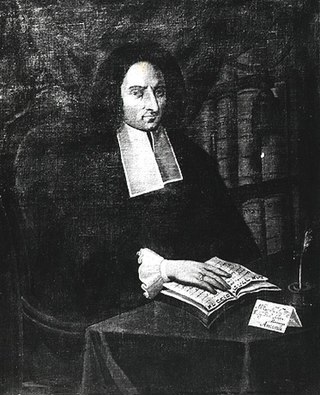
Samson Morpurgo ben Joshua Moses was an Italian rabbi, physician, and liturgist.
Jacob ben Joab Elijah da Fano was an Italian rabbi and Hebrew poet; he lived at Ferrara and Ancona about the middle of the sixteenth century. He was the teacher of Abraham Portaleone.

Abraham Cohen was a Jewish physician, rabbi, religious philosopher and poet on Zante (Zakynthos), an Ionian Island, and an overseas colony of the Venetian Republic.
Abraham Joseph ben Simon Wolf Menz was an eighteenth century rabbi and mathematician at Frankfurt.


