
Itchan Kala is the walled inner town of the city of Khiva, Uzbekistan. Since 1990, it has been protected as a World Heritage Site.

Nurullabai Palace is an architectural monument in Khiva, Uzbekistan. It was formerly the official reception hall of Asfandiyar Khan. This palace-garden was built by Khan of Khiva Muhammad Rahim Khan II for his son Asfandiyar Khan.

The Pahlavon Mahmud complex, Pahlavon Mahmud mausoleum or Polvon ota mausoleum is a memorial monument in Khiva, Khorezm. The mausoleum complex has a total area of 50x30m, and was originally built in 1664 as a miraculous dome over the grave of Pahlavon Mahmud. Pahlavon Mahmud (1247-1326) was a local poet who emerged from humble craftsmen, and was also famous for his heroic strength as an unbeatable wrestler, and his ability to heal people. His tomb has been and is still considered a sacred place by representatives of Uzbeks, Turkmens, Karakalpaks and other peoples. This complex is also known in Khiva as “Hazrati Pahlavon Pir”.
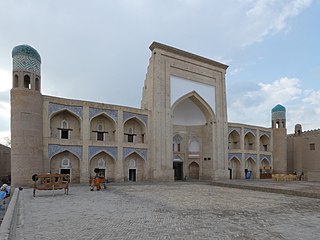
Kutlugmurad Inak madrasah - an architectural monument in Khiva (1804–1812); it is a part of Itchan Kala. Madrasah was built by Allah Kuli Khan's uncle Kutlugmurad Inak; he was buried under the floor of the miyonsaroy (corridor) according to his will.

The Olloqulixon Madrasa or Alla Kouli Khan Madrasa is an architectural monument in Khiva (1834–35). The construction of the madrasa is related to the historical development of the ensemble near the Itchan Kala. The madrasa is located in the eastern part of the Itchan Kala. It is built in the style of a double madrasa, connected with the Ollo-qulixon Tim, the Khojamberdibiy Madrasa, and the Polvon Gate. The Olloqulixon Madrasa is built on an artificial hill, which makes it look taller than the neighboring buildings.
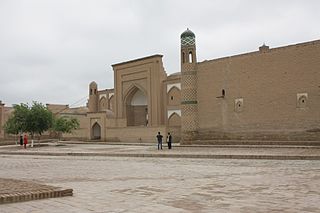
Arab Muhammadhan Madrasah is an architectural monument, part of Itchan Kala, in Khiva, Khorazm Region, Uzbekistan. Today, the monument is located at 27 Zargarlar Street, Itchan-Kala neighborhood.
Yusuf Yasovulboshi Madrasah is an architectural monument in Khiva, Khorezm region. The madrasa was built in 1906, and today it is located at 30, Zargarlar Street, Itchan Kala neighborhood.
Shergazikhan Madrasah is an architectural monument in Khiva (1719-1726). It is one of the many buildings in the Itchan Kala. According to the sources, it was built in 1719–1726 with the funds and decree of the Uzbek ruler Shergazikhan (Shir Ghazi Khan). It is located in the center of Itchan Kala, at the entrance to the Pahlavon Mahmud complex. The construction of the structure began during Shergozikhan's campaign to Khurasan. Khan's body was buried in a small room built in the west of the madrasah.
Matniyoz Devonbegi Madrasah is an architectural monument in the city of Khiva, Khorazm Region. The madrasah was built in 1871, and today it is located at 19, Pahlavon Mahmud Street, "Itchan Kala" neighborhood of Khiva. The historical object "Itchan Kala" state museum-reserve belongs to the state property based on the right of operational management.

Muhammad Aminkhan Madrasah is an architectural monument in Khiva (1852–1855). Built by Muhammad Amin Bahadur Khan. The Madrasah is located in the western part of the Itchan Kala. It was built in 1852–1855 with the funds and decree of the Uzbek ruler Muhammad Aminkhan. Muhammad Aminkhan Madrasah is the largest and most tiled in comparison to other Khiva madrasahs.
Abdurasulboy Madrasah is a former madrasa in Khiva, Uzbekistan. It was built according to the order of Mirzabashi Abdurasulboy in 1906. In 1990, it was included in the list of UNESCO World Heritage Sites as a part of Itchan Kala. Currently, it is used as a sozana embroidery workshop and exhibition space.
Talib Makhsum Madrasah is an architectural monument in Khiva, Khorazm Region, Republic of Uzbekistan. The madrasa was built in 1910 at the expense of Talib Makhsum (Makhdum), a member of khan family of Khiva Khanate. Today, the monument is located at 22 Islam Khoja Street, "Itchan Kala" neighborhood.
Sheikh Kalandar Bobo Complex is an architectural monument in Khiva, Khorazm Region, Republic of Uzbekistan. The construction of the complex began in the 16th century and was completed in 1894. Today the complex is located at 36, Ismailov Street, "New Life" neighborhood.
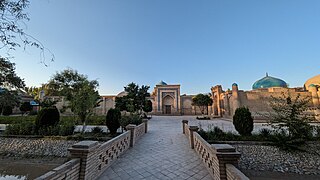
Said Mahruyjan Complex is an architectural monument in the Khiva city, Khorazm Region of the Republic of Uzbekistan. The complex consists of a madrasa, a monastery, etc. built in 1884 around the tomb of Said Muhammad Mahruyjan. Today it is located at 84, Amir Temur Street, "Mevaston" neighborhood.

Kazi Kalyan madrasah is an architectural monument (1905) in Khiva, Uzbekistan. The madrasah is part of the Itchan Kala. The Kazi Kalyan Madrasah is part of the monuments of the Itchan Kala Museum-Reserve. The structure is located between Juma Mosque (Khiva) and Matniyoz Devonbegi Madrasah. It was built in 1905 by the chief judge of Khorezm, Mohammad Salih Okhund.
Otajonboy Madrasah is an architectural monument in Khiva, Khorazm Region of the Republic of Uzbekistan. The madrasa was built in 1884 at the expense of Otajonboy, a rich man from Khiva. Today it is located at 23, Pahlavon Mahmud street, "Itchan Kala" neighborhood.
Musa Tora Madrasah is an architectural monument in the city of Khiva, Khorazm Region of the Republic of Uzbekistan. Today, the madrasa is located at 8, Boyochchilar Street, "Itchan Kala" neighborhood, in the central part of Itchan Kala. The monument was built in 1841 at the expense of funds of Musa Tora, the grandson of Olloquli Khan.

Matpanoboy Madrasah is an architectural monument in the city of Khiva, Khorazm Region of the Republic of Uzbekistan. The madrasa was built in 1905 with the funds of Matpanoboy, a rich merchant from Khiva. Khudoibergan Haji and Qalandar Kochim, the masters from Khiva, took part in its construction. Today, the madrasah is located at 25 Zargarlar street, "Itchan Kala" neighborhood.

Abdullakhan madrasah is an architectural monument located in the north of the Koshmadrasa ensemble in Bukhara, Uzbekistan. This madrasah, which is a perfect example of the architecture of the Uzbek ruler Abdullah II, demonstrates all the creative achievements of Bukhara architecture in the 16th century.
The Mozori Sharif Madrasa is an architectural monument in Khiva city of Khorezm region of the Republic of Uzbekistan. Currently, the madrasa is located in the Pahlavon Mahmud street, house 20. It was built in 1882 by the order of Muhammad Rahim Khan II (Feruz) and the funds of his son and ruler of Toshhovuz - Iso To’ra - by the master Qalandar Kochim.
