
Itchan Kala is the walled inner town of the city of Khiva, Uzbekistan. Since 1990, it has been protected as a World Heritage Site.

The Abdolbobo Mausoleum is an architectural monument in Khiva city, Khorazm region, Uzbekistan. The mausoleum dates back to the 18th-19th centuries and is located in the “Qumyasqa” neighborhood, outside the eastern gate of Itchan Kala. Abdolbobo mausoleum was included in Uzbekistan's National Register of Immovable Cultural Heritage Objects on October 4, 2019 and put under state protection. It is state property entrusted to the "Vaqf" charity foundation on the basis of a free use agreement.
The Shohimardon complex is an architectural monument in Khiva city of Khorazm Region of Uzbekistan. The construction of the complex was completed in the 19th century, and currently it is located in the “Shixlar” neighborhood.
Shergazikhan Madrasah is an architectural monument in Khiva (1719-1726). It is one of the many buildings in the Itchan Kala. According to the sources, it was built in 1719–1726 with the funds and decree of the Uzbek ruler Shergazikhan (Shir Ghazi Khan). It is located in the center of Itchan Kala, at the entrance to the Pahlavon Mahmud complex. The construction of the structure began during Shergozikhan's campaign to Khurasan. Khan's body was buried in a small room built in the west of the madrasah.
Matniyoz Devonbegi Madrasah is an architectural monument in the city of Khiva, Khorazm Region. The madrasah was built in 1871, and today it is located at 19, Pahlavon Mahmud Street, "Itchan Kala" neighborhood of Khiva. The historical object "Itchan Kala" state museum-reserve belongs to the state property based on the right of operational management.

Muhammad Aminkhan Madrasah is an architectural monument in Khiva (1852–1855). Built by Muhammad Amin Bahadur Khan. The Madrasah is located in the western part of the Itchan Kala. It was built in 1852–1855 with the funds and decree of the Uzbek ruler Muhammad Aminkhan. Muhammad Aminkhan Madrasah is the largest and most tiled in comparison to other Khiva madrasahs.
Abdurasulboy Madrasah is a former madrasa in Khiva, Uzbekistan. It was built according to the order of Mirzabashi Abdurasulboy in 1906. In 1990, it was included in the list of UNESCO World Heritage Sites as a part of Itchan Kala. Currently, it is used as a sozana embroidery workshop and exhibition space.
Khojash Mahram Madrasah is an architectural monument in the city of Khiva, Khorazm Region of the Republic of Uzbekistan. The madrasah was built in 1839 by Khojash Mahram. Today, the madrasah is located at 11, Pahlavon Mahmud street, Itchan Kala, next to the Pahlavon Mahmud complex.

Khojamberdibi Madrasah is an architectural monument in the city of Khiva, Khorazm Region of the Republic of Uzbekistan. The monument, was originally built in 1688; it was rebuilt in 1834 and got its present appearance. Today, the madrasah is located at 22, Zargarlar street, Itchan Kala neighborhood.
Talib Makhsum Madrasah is an architectural monument in Khiva, Khorazm Region, Republic of Uzbekistan. The madrasa was built in 1910 at the expense of Talib Makhsum (Makhdum), a member of khan family of Khiva Khanate. Today, the monument is located at 22 Islam Khoja Street, "Itchan Kala" neighborhood.
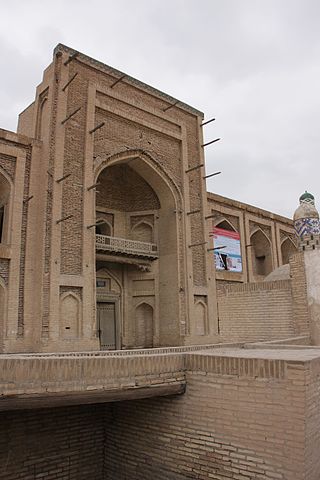
Amir Tora madrasah is a cultural heritage object located in the historical center of Khiva region in Uzbekistan. It was taken under state protection as an architectural monument. It is located in the northern part of the Itchan Kala.
Sheikh Kalandar Bobo Complex is an architectural monument in Khiva, Khorazm Region, Republic of Uzbekistan. The construction of the complex began in the 16th century and was completed in 1894. Today the complex is located at 36, Ismailov Street, "New Life" neighborhood.
Dost Alam madrasah is an architectural monument in Khiva, Khorezm region of the Republic of Uzbekistan. This historical object, located within the architectural monument of Itchan Kala, was built in 1882. Today, it is located at "Itchan Kala" MFY, Zargarlar Street,26.

Kazi Kalyan madrasah is an architectural monument (1905) in Khiva, Uzbekistan. The madrasah is part of the Itchan Kala. The Kazi Kalyan Madrasah is part of the monuments of the Itchan Kala Museum-Reserve. The structure is located between Juma Mosque (Khiva) and Matniyoz Devonbegi Madrasah. It was built in 1905 by the chief judge of Khorezm, Mohammad Salih Okhund.
Polvonqori madrasah is an architectural monument in Khiva, Khorazm Region of the Republic of Uzbekistan. The madrasa was built in 1905 with the funds of Khiva merchant Polvonqori. Today, the monument is located at 24, Polvonqori street, "Kumyaska" neighborhood.
Otajonboy Madrasah is an architectural monument in Khiva, Khorazm Region of the Republic of Uzbekistan. The madrasa was built in 1884 at the expense of Otajonboy, a rich man from Khiva. Today it is located at 23, Pahlavon Mahmud street, "Itchan Kala" neighborhood.
Musa Tora Madrasah is an architectural monument in the city of Khiva, Khorazm Region of the Republic of Uzbekistan. Today, the madrasa is located at 8, Boyochchilar Street, "Itchan Kala" neighborhood, in the central part of Itchan Kala. The monument was built in 1841 at the expense of funds of Musa Tora, the grandson of Olloquli Khan.

Matpanoboy Madrasah is an architectural monument in the city of Khiva, Khorazm Region of the Republic of Uzbekistan. The madrasa was built in 1905 with the funds of Matpanoboy, a rich merchant from Khiva. Khudoibergan Haji and Qalandar Kochim, the masters from Khiva, took part in its construction. Today, the madrasah is located at 25 Zargarlar street, "Itchan Kala" neighborhood.
The Muhammad Amin Inoq Madrasa is an architectural monument in Khiva city of Khorezm region of the Republic of Uzbekistan. The madrasa dates back to the 18th century (1785) and is currently located in the “Ichan qal’a” quarter, Zargarlar street, house 34. It was built by Muhammad Amin inoq and stood out in the center of Ichan qal’a.
The Mozori Sharif Madrasa is an architectural monument in Khiva city of Khorezm region of the Republic of Uzbekistan. Currently, the madrasa is located in the Pahlavon Mahmud street, house 20. It was built in 1882 by the order of Muhammad Rahim Khan II (Feruz) and the funds of his son and ruler of Toshhovuz - Iso To’ra - by the master Qalandar Kochim.

