Related Research Articles

Rodney Glen King was an African American man who was a victim of police brutality. On March 3, 1991, he was beaten by Los Angeles Police Department (LAPD) officers during his arrest after a pursuit for driving while intoxicated on the I-210. An uninvolved individual, George Holliday, filmed the incident from his nearby balcony and sent the footage to local news station KTLA. The footage showed an unarmed King on the ground being beaten after initially evading arrest. The incident was covered by news media around the world and caused a public furor.
The Los Angeles Police Department (LAPD), officially known as the City of Los Angeles Police Department, is the municipal law enforcement agency of Los Angeles, California, United States. With 9,974 officers and 3,000 civilian staff, it is the third-largest municipal police department in the United States, after the New York City Police Department and the Chicago Police Department.
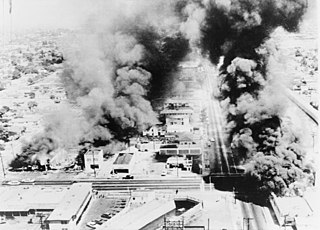
The Watts riots, sometimes referred to as the Watts Rebellion or Watts Uprising, took place in the Watts neighborhood and its surrounding areas of Los Angeles from August 11 to 16, 1965.

Daryl Francis Gates was the Chief of the Los Angeles Police Department (LAPD) from 1978 to 1992. His length of tenure in this position was second only to that of William H. Parker. Gates is co-credited with the creation of SWAT teams with LAPD's John Nelson, who others claim was the originator of SWAT in 1965. Gates also co-founded D.A.R.E.
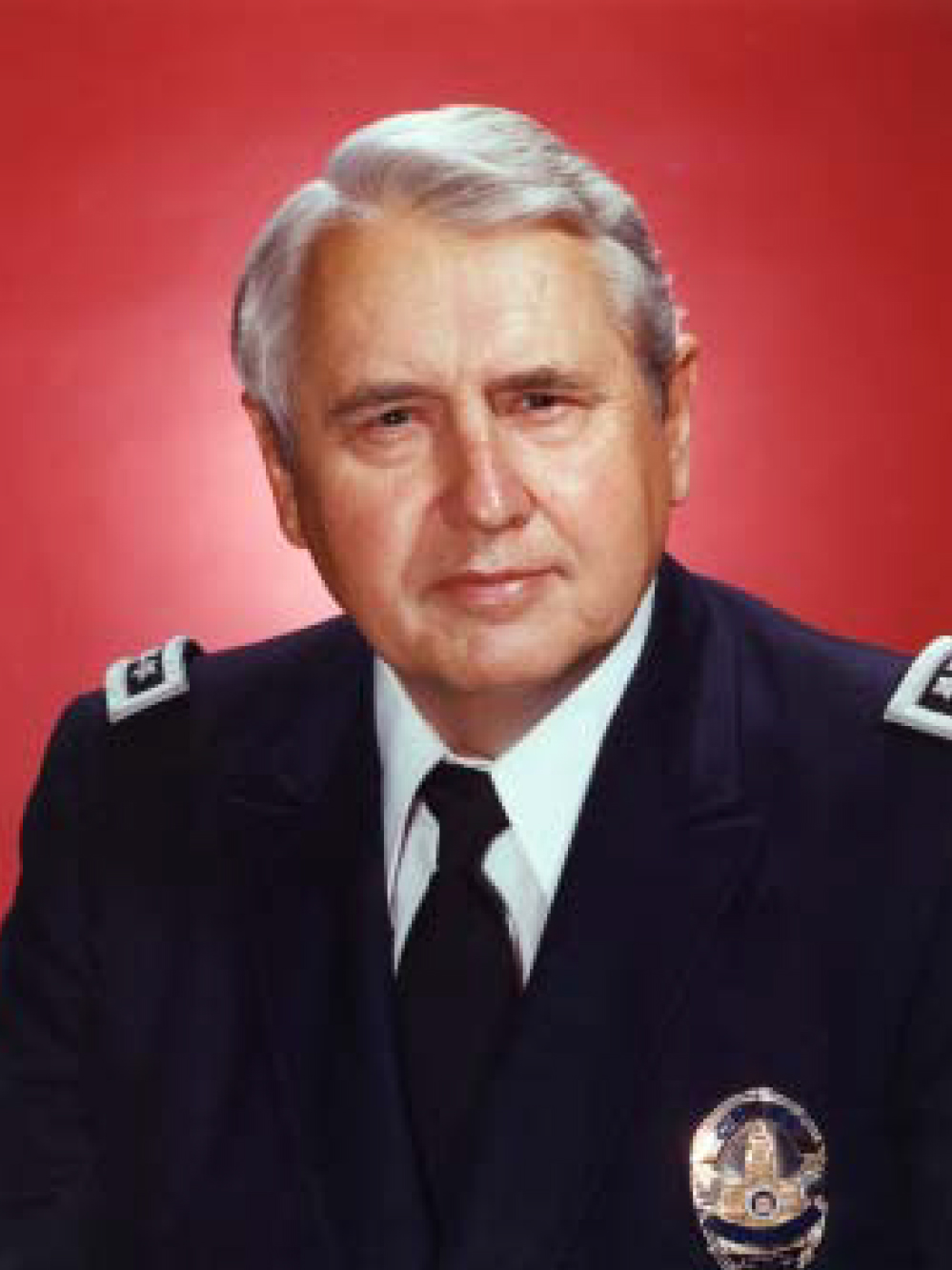
Edward Michael Davis was the chief of the Los Angeles Police Department from 1969 to 1978, and later a California state senator from 1980 to 1992 and an unsuccessful Republican candidate for the United States Senate in 1986. Davis' name was familiar to a generation of Americans since it appeared on its own card for "technical advice" in the closing credits of the popular television programs Dragnet (1967–70) and Adam-12 (1968–75).
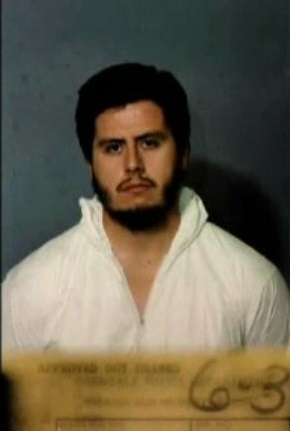
The North Hollywood shootout was a confrontation between two heavily armed and armored bank robbers, Larry Phillips Jr. and Emil Mătăsăreanu, and members of the Los Angeles Police Department (LAPD) in the North Hollywood district of Los Angeles, California, United States on February 28, 1997. Both robbers were killed, twelve police officers and eight civilians were injured, and numerous vehicles and other property were damaged or destroyed by the nearly 2,000 rounds of ammunition fired by the robbers and police.

The 1992 Los Angeles riots, sometimes called the Rodney King riots or the 1992 Los Angeles uprising, were a series of riots and civil disturbances that occurred in Los Angeles County, California, in April and May 1992. Unrest began in South Central Los Angeles on April 29, after a jury acquitted four officers of the Los Angeles Police Department (LAPD) charged with using excessive force in the arrest and beating of Rodney King. This incident had been videotaped and widely shown in television broadcasts.

The Rampart scandal was a police corruption scandal which unfolded in Los Angeles, California, United States, during the late 1990s and early 2000s. The scandal concerned widespread criminal activity within the Community Resources Against Street Hoodlums (CRASH) anti-gang unit of the Los Angeles Police Department's Rampart Division. More than 70 police officers either were initially implicated in various forms of misconduct, including unprovoked shootings and beatings, planting of false evidence, stealing and dealing narcotics, bank robbery, perjury, and cover-ups thereof.

The Onion Field is a 1973 nonfiction book by Joseph Wambaugh, a sergeant for the Los Angeles Police Department, chronicling the kidnapping of two plainclothes LAPD officers by a pair of criminals during a traffic stop and the subsequent murder of one of the officers.

A chokehold, choke, stranglehold or, in Judo, shime-waza is a general term for a grappling hold that critically reduces or prevents either air (choking) or blood (strangling) from passing through the neck of an opponent. The restriction may be of one or both and depends on the hold used and the reaction of the victim. While the time it takes for the choke to render an opponent unconscious varies depending on the type of choke, the average across all has been recorded as 9 seconds.

Ray Lopez is an American former police officer with the Los Angeles Police Department (LAPD) and the central figure in the LAPD Rampart scandal. An officer with the Community Resources Against Street Hoodlums (CRASH) task force, Pérez was involved in numerous crimes and corruption, notably the shooting and framing of Javier Ovando, in addition to the theft and resale of at least $800,000 of cocaine from LAPD evidence lockers.

Metropolitan Division, commonly referred to as Metro Division or just Metro, is a division of the Los Angeles Police Department (LAPD) under its Special Operations Group. Metropolitan Division is responsible for managing the LAPD's specialized crime suppression, K-9, mounted, and SWAT units, named "platoons".
City of Los Angeles v. Lyons, 461 U.S. 95 (1983), was a United States Supreme Court decision holding that the plaintiff, Adolph Lyons, lacked standing to challenge the city police department's use of chokeholds.
Norma Jean Almodovar is an American author and sex workers' activist. Almodovar worked as a traffic officer for ten years. In 1982, she quit her job with the Los Angeles Police Department and began working as a call girl. In 1984, she may have attempted to recruit a former coworker to begin working as a prostitute. Her actions resulted in her arrest and conviction for pandering.
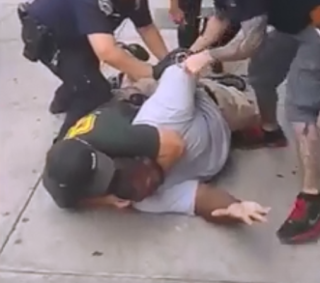
On July 17, 2014, Eric Garner, a 43-year-old African-American man, was killed in the New York City borough of Staten Island by Daniel Pantaleo, a New York City Police Department (NYPD) officer, after the latter put him in a prohibited chokehold while arresting him. Video footage of the incident generated widespread national attention and raised questions about the use of force by law enforcement.

Ezell Ford, a 25-year-old African-American man, died from multiple gunshot wounds after being shot by Los Angeles Police Department (LAPD) officers in Florence, Los Angeles, California on August 11, 2014. In the weeks and months that followed, Ford's shooting triggered multiple demonstrations and a lawsuit by Ford's family claiming $75 million in damages.

The killing of Charley Leundeu Keunang, a 43-year-old Cameroonian national, occurred in Los Angeles, California, on March 1, 2015. He was shot by three Los Angeles Police Department officers.
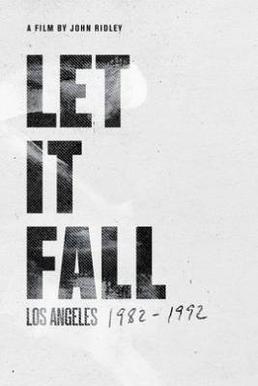
Let It Fall: Los Angeles 1982–1992 is a 2017 American documentary film directed by John Ridley about the decade preceding and including the 1992 Los Angeles riots. It was produced by Lincoln Square Productions, a subsidiary of ABC News, and was released in theaters in Los Angeles and New York on April 21, 2017. A shorter version aired on ABC on April 28, 2017. A rebroadcast of the film took place on June 16, 2020. The film has received critical acclaim.
On July 21, 2018, a hostage incident occurred at a Trader Joe's store in the Silver Lake neighborhood of Los Angeles. 28-year-old Gene Evin Atkins, armed and fleeing police, crashed into a utility pole and ran into the nearby store. He fired at two pursuing police officers during the pursuit and after the crash; the two officers returned fire in Atkins's direction, hitting and killing a store employee, Melyda Corado, and hitting Atkins in the left arm. After escaping into Trader Joe's, Atkins barricaded himself and the rest of the store's patrons and employees inside the store. By the end of the incident, Atkins was arrested for various criminal felonies.
The 1987 Tampa riots were two riots in Tampa, Florida that occurred in February and April 1987 that started after two African Americans died in encounters with the police. 1986 & 1987 would be a time of racial tension in Tampa as well.
References
- 1 2 3 Rainey, James (September 29, 1993). "Final Suit Over LAPD's Use of Chokehold Settled". Los Angeles Times. Retrieved April 30, 2021.
- 1 2 3 4 5 6 "Four decades before 'I can't breathe', ABC News Live Prime". YouTube. ABC News. Retrieved April 30, 2021.
- ↑ Raspberry, William. "The Chief and the Choke Hold". Washington Post. Retrieved April 30, 2021.
- ↑ Jacob, Richy (June 16, 2020). "James Mincey, Jr. Death: How Did He Die?". TheCinemaholic. Retrieved April 30, 2021.