
Federal Reserve Notes,also United States banknotes,are the currently issued banknotes of the United States dollar. The United States Bureau of Engraving and Printing produces the notes under the authority of the Federal Reserve Act of 1913 and issues them to the Federal Reserve Banks at the discretion of the Board of Governors of the Federal Reserve System. The Reserve Banks then circulate the notes to their member banks,at which point they become liabilities of the Reserve Banks and obligations of the United States.

The Treasurer of the United States is an officer in the United States Department of the Treasury who serves as the custodian and trustee of the federal government's collateral assets and the supervisor of the department's currency and coinage production functions. The current treasurer is Marilynn Malerba,who is the first Native American to hold the office.

The Bureau of Engraving and Printing (BEP) is a government agency within the United States Department of the Treasury that designs and produces a variety of security products for the United States government,most notable of which is Federal Reserve Notes for the Federal Reserve,the nation's central bank. In addition to paper currency,the BEP produces Treasury securities;military commissions and award certificates;invitations and admission cards;and many different types of identification cards,forms,and other special security documents for a variety of government agencies. The BEP does not produce coins;all coinage is produced by the United States Mint. With production facilities in Washington,D.C.,and Fort Worth,Texas,the Bureau of Engraving and Printing is the largest producer of government security documents in the United States.

The United States five-dollar bill ($5) is a denomination of United States currency. The current $5 bill features a portrait of Abraham Lincoln,the 16th U.S. president (1861-1865),on the front and the Lincoln Memorial on the back. All $5 bills issued today are Federal Reserve Notes.
Large denominations of United States currency greater than $100 were circulated by the United States Treasury until 1969. Since then,U.S. dollar banknotes have been issued in seven denominations:$1,$2,$5,$10,$20,$50,and $100.

The United States one-dollar bill (US$1),sometimes referred to as a single,has been the lowest value denomination of United States paper currency since the discontinuation of U.S. fractional currency notes in 1876. An image of the first U.S. president (1789–1797),George Washington,based on the Athenaeum Portrait,a 1796 painting by Gilbert Stuart,is currently featured on the obverse,and the Great Seal of the United States is featured on the reverse. The one-dollar bill has the oldest overall design of all U.S. currency currently being produced. The obverse design of the dollar bill seen today debuted in 1963 when it was first issued as a Federal Reserve Note.
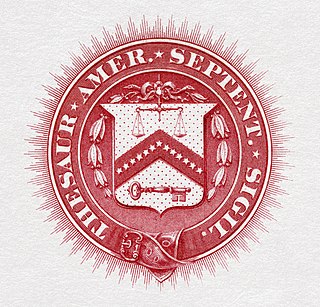
Symbols of the United States Department of the Treasury include the Flag of the Treasury Department and the U.S. Treasury Seal. The original seal actually predates the department itself,having originated with the Board of Treasury during the period of the Articles of Confederation. The seal is used on all U.S. paper currency,and on official Treasury documents.

Web notes are a type of United States currency named after the "web printing production" method of printing on continuous rolls of paper. There are several types of web printing production methods,including offset,gravure (intaglio),flexography,etc. However high-pressure web intaglio printing,front,and back of the intaglio process was a new idea.

"Educational Series" is the informal name used by numismatists to refer to a series of United States silver certificates produced by the U.S. Treasury in 1896,after its Bureau of Engraving and Printing chief Claude M. Johnson ordered a new currency design. The notes depict various allegorical motifs and are considered by some numismatists to be the most beautiful monetary designs ever produced by the United States.

Fractional currency,also referred to as shinplasters,was introduced by the United States federal government following the outbreak of the Civil War. These low-denomination banknotes of the United States dollar were in use between 21 August 1862 and 15 February 1876,and issued in denominations of 3,5,10,15,25,and 50 cents across five issuing periods. The complete type set below is part of the National Numismatic Collection,housed at the National Museum of American History,part of the Smithsonian Institution.
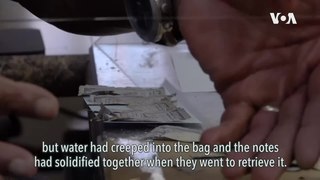
Mutilated currency is a term used by the United States Bureau of Engraving and Printing (BEP) to describe currency which is damaged to the point where it is difficult to determine the value of the currency,or where it is not clear that at least half of the note is present. Common causes of damage are fire,water damage,chemicals,explosives,damage caused by animals or damage from extended burying of the currency.
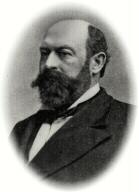
Orsamus Hylas Irish (1830–1883) was an official in the United States Department of the Treasury who served as Chief of the Bureau of Engraving and Printing from 1878 to 1883.
In the United States,some blind or otherwise visually-impaired people fold dollar bills in specific ways so that they can identify the denominations of the bills by feel. Though some people have their own idiosyncratic systems,there is a method recommended by the American Foundation for the Blind:

Uncut currency sheets are common numismatics collector's items. They are often sold as souvenirs by issuers. After cutting,usually the banknotes can be used as legal tender;however,the cost to purchase uncut currency sheets is typically higher than the aggregate face value of the cut notes.
In early 18th century Colonial America,engravers began experimenting with copper plates as an alternative medium to wood. Applied to the production of paper currency,copper-plate engraving allowed for greater detail and production during printing. It was the transition to steel engraving that enabled banknote design and printing to rapidly advance in the United States during the 19th century.

US Treasury Department Specimen books,also known as BEP presentation albums,were published by the Bureau of Engraving and Printing (BEP) from the mid-1860s through the 1910s. Prepared upon request of the United States Secretary of the Treasury,albums were generally presented to Cabinet members,select Members of Congress,diplomats and visiting dignitaries. Some extant albums still in their original binding bear the name of the recipient impressed in gold lettering on the cover. While no two presentation albums have exactly the same contents,each book usually contained portraits,vignettes,and/or images of buildings. Specimen books which contain whole proof images of currency are extremely rare.

Cuban silver certificates were banknotes issued by the Cuban government between 1934 and 1949. Prior and subsequent issues of Cuban banknotes were engraved and printed by nongovernmental private bank note companies in the United States,but the series from 1934 to 1949 were designed,engraved,and printed by the US government at the Bureau of Engraving and Printing (BEP).
A silver certificate is a certificate of ownership that silver owners hold instead of storing the actual silver. Several countries have issued silver certificates,including Cuba,the Netherlands,and the United States. Silver certificates have also been privately issued by various mints and bullion companies. One example was the Liberty Dollar issued by NORFED from 1998 to 2009.

The United States two-dollar bill ($2) is a current denomination of United States currency. A portrait of Thomas Jefferson,the third president of the United States (1801–1809),is featured on the obverse of the note. The reverse features an engraving of the circa 1818 painting Declaration of Independence by John Trumbull.

Leonard R. Olijar is an American government official who has served as the Director of the Bureau of Engraving and Printing since 2015.As director,Olijar is responsible for managing the Bureau of Engraving and Printing,an agency within the United States Department of the Treasury tasked with producing Federal Reserve Notes,paper currencies,and United States Treasury securities.
