Related Research Articles

The 1912–13 United States Senate elections were held on various dates in various states. They were the last U.S. Senate elections before the ratification of the Seventeenth Amendment in 1913,establishing direct elections for all Senate seats. Senators had been primarily chosen by state legislatures. Senators were elected over a wide range of time throughout 1912 and 1913,and a seat may have been filled months late or remained vacant due to legislative deadlock. Some states elected their senators directly even before passage of Seventeenth Amendment. Oregon pioneered direct election and experimented with different measures over several years until it succeeded in 1907. Soon after,Nebraska followed suit and laid the foundation for other states to adopt measures reflecting the people's will. By 1912,as many as 29 states elected senators either as nominees of their party's primary or in conjunction with a general election.
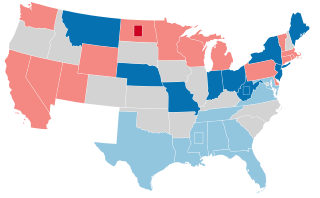
The 1910–11 United States Senate election were held on various dates in various states. As these U.S. Senate elections were prior to the ratification of the Seventeenth Amendment in 1913,senators were primarily chosen by state legislatures. Senators were elected over a wide range of time throughout 1910 and 1911,and a seat may have been filled months late or remained vacant due to legislative deadlock. However,some states had already begun direct elections during this time. Oregon pioneered direct election and experimented with different measures over several years until it succeeded in 1907. Soon after,Nebraska followed suit and laid the foundation for other states to adopt measures reflecting the people's will. By 1912,as many as 29 states elected senators either as nominees of their party's primary or in conjunction with a general election.
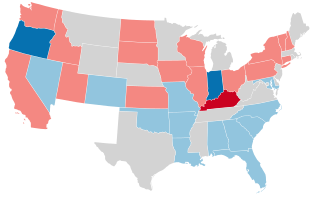
The 1908–09 United States Senate elections were held on various dates in various states. As these U.S. Senate elections were prior to the ratification of the Seventeenth Amendment in 1913,senators were primarily chosen by state legislatures. Senators were elected over a wide range of time throughout 1906 and 1907,and a seat may have been filled months late or remained vacant due to legislative deadlock. However,some states had already begun direct elections during this time. Oregon pioneered direct election and experimented with different measures over several years until it succeeded in 1907. Soon after,Nebraska followed suit and laid the foundation for other states to adopt measures reflecting the people's will. By 1912,as many as 29 states elected senators either as nominees of their party's primary or in conjunction with a general election.

George Wycliffe McBride was an American politician and businessman from the U.S. state of Oregon. An Oregon native,he served in the Oregon Legislative Assembly as Speaker of the House and as Oregon Secretary of State for two terms before election as United States Senator from Oregon. A Republican,he was the first native Oregonian to serve in the Senate. His father and two of his brothers were also politicians.
Allan Franklin Larsen was an American Republican politician from Eastern Idaho who served as a member of both chambers of the Idaho Legislature. He was the Republican nominee in the 1978 Idaho gubernatorial election.
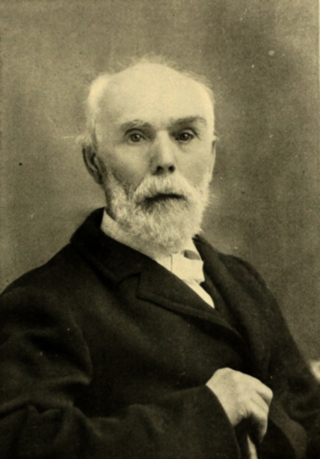
John Whiteaker was an American politician,soldier,and judge. A native of Indiana,he joined the army during the Mexican–American War and then prospected during the California Gold Rush. After moving to the Oregon Territory,he served as a judge and member of the legislature. A Democrat,Whiteaker served as the first state Governor of Oregon from 1859 until 1862 and later was Oregon's Congressman from 1879 to 1881. He also was president of the Oregon State Senate and Speaker of the Oregon House of Representatives.

Stanley Calef Wilson was an American politician,attorney,and businessman from Vermont. He served as the 57th lieutenant governor of Vermont from 1929 to 1931 and the 62nd governor of Vermont from 1931 to 1935.

Grattan Kerans was an American politician from Oregon,who served in the Oregon House of Representatives from 1974 through 1984,and in the Oregon State Senate from 1986 to 1993. He held the position of Speaker of the House during the 1983 legislative session.

Henry Allen Cooper was an American lawyer and progressive Republican politician from Racine County,Wisconsin. He was a member of the United States House of Representatives,representing Wisconsin's 1st congressional district for 18 terms,spanning from the 1890s to his death in 1931. He earlier served in the Wisconsin Senate and was district attorney of Racine County.
The following table indicates the party of elected officials in the U.S. state of Maine:

Orlando L. Martin was a Vermont farmer,teacher and politician who served as Speaker of the Vermont House of Representatives.

Kaspar Kap Kubli,Jr. was an American politician in the state of Oregon. Closely associated with the Ku Klux Klan,Kubli,a member of the Republican party,was elected Speaker of the Oregon House of Representatives in 1923. Among legislation passed under Kubli during his five terms of office include the Oregon Criminal Syndicalism Act in 1919.

William Lair Thompson,known as Lair Thompson or W. Lair Thompson,was an American politician and lawyer from the state of Oregon. He served one term in the Oregon House of Representatives followed by a four-year term in the Oregon State Senate. Thompson was a conservative Republican who represented a large rural district. He served as President of the Oregon Senate during the 1915 legislative session. Thompson was one of Oregon's most prominent trial attorneys,handling a number of high-profile cases including one,Bunting v. Oregon,that required him to present arguments before the United States Supreme Court.
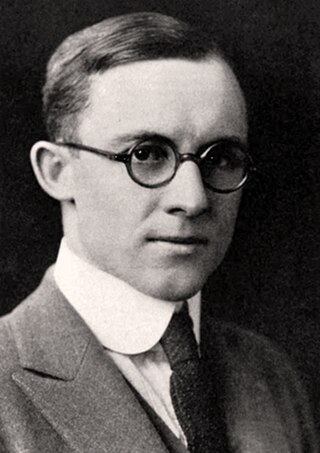
Denton Graves Burdick was an American politician and attorney from the state of Oregon. He was a Republican who served fourteen years in the Oregon House of Representatives,where he represented a large rural district in eastern Oregon. He served as Speaker of the Oregon House of Representatives during the 1925 legislative session. At the time he was elected speaker,he was the youngest person in Oregon history to serve in that position.
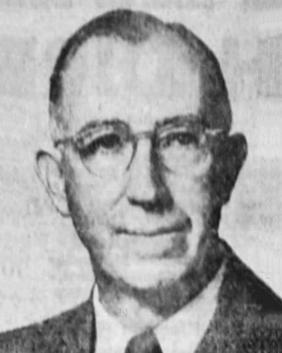
Edward Andrew Geary was an American politician and farmer from the state of Oregon. He was a Republican who served eight years in the Oregon House of Representatives. In the house,Geary represented a large rural district in southern Oregon. He served as Speaker of the Oregon House of Representatives during the 1955 legislative session. He also served as acting governor of Oregon for several brief periods in the mid-1950s.

George Harris Merryman was a country doctor,businessman,and politician from the U.S. state of Oregon. A Republican,he served two non-consecutive terms in the Oregon House of Representatives. In between those terms,he was elected to the Oregon State Senate for one term. In both the house and senate,the districts he represented were large and rural. Merryman was also a pioneer doctor who made house calls by horse and buggy for many years. He later built the first modern hospital in Klamath Falls,Oregon.

Horace Preston Belknap was an American pioneer medical doctor,businessman,and a state legislator from the state of Oregon. Belknap was one of the first physicians to establish a medical practice in Central Oregon. He also served three terms in the Oregon House of Representatives as a Republican legislator,representing a large and rural district in central and southern Oregon.

John Herbert Carkin was an American politician,attorney,public service executive,and banker from the state of Oregon. He was a Republican who served nine years in the Oregon House of Representatives,where he represented a district in southern Oregon. He served as Speaker of the Oregon House of Representatives during the 1927 legislative session,elected by a unanimous vote of House members. Later,he served as chairman of the Oregon Tax Commission and was Oregon's Public Utility Commissioner before becoming president of a savings and loan association in Salem,Oregon.

Roy Wallace Ritner was an American politician and farmer from Pendleton,Oregon. Beginning in 1915,he served two two-year terms in the Oregon House of Representatives followed by two four-year terms in the Oregon State Senate. Ritner was a conservative Republican who represented Umatilla County in both of Oregon's legislative chambers. He was President of the Oregon State Senate from 1921 through 1922. While he was senate president in 1922,he served as acting governor for 35 days while the elected governor was out of the state. Ritner was also a successful wheat farmer and served as the business manager for the Pendleton Round-Up for many years.

George Clayton Brownell was an American politician and attorney from Oregon City,Oregon. He was a conservative Republican who represented Clackamas County in both of Oregon's legislative chambers. He served three four-year terms in the Oregon State Senate and was senate president from 1903 through 1904. Brownell was defeated for re-election after he was implicated in a land fraud scheme. However,he was later exonerated when one of the convicted fraudsters admitted in court that he had forged Brownell's name on the incriminating documents without Brownell's knowledge or consent. Brownell remained very popular in Clackamas County throughout his life. He was elected mayor of Oregon City in 1910 and later served a two-year term in the Oregon House of Representatives.
References
- 1 2 3 4 Sharp, Nancy Weatherly; Sharp, James Roger; Ritter, Charles F.; Wakelyn, Jon L. (1997). American Legislative Leaders in the West, 1911-1994. p. 57. ISBN 9780313302121 . Retrieved September 20, 2020.
- 1 2 "25th Oregon State Legislature Members". Oregon State Archive. p. 1. Retrieved September 20, 2020.
- 1 2 "26th Oregon State Legislature Members". Oregon State Archive. p. 1. Retrieved September 20, 2020.
- ↑ "29th Oregon State Legislature Members". Oregon State Archive. p. 1. Retrieved September 20, 2020.
- ↑ "31st Oregon Legislature Members". Oregon State Archive. p. 1. Retrieved September 20, 2020.