
Yucatán, officially the Free and Sovereign State of Yucatán, is one of the 31 states which, along with Mexico City, constitute the 32 federal entities of Mexico. It comprises 106 separate municipalities, and its capital city is Mérida.

The Caste War of Yucatán or ba'atabil kichkelem Yúum (1847–1901) began with the revolt of native Maya people of the Yucatán Peninsula against Hispanic populations, called Yucatecos. The latter had held political and economic control of the region after the Spanish colonization of Yucatán and the submission of the Maya people in the late 16th century. It was one of the most successful modern Native American revolts. A lengthy war ensued between the Yucateco forces based in the northwest of the Yucatán and the independent Maya in the southeast.

Felipe Santiago Carrillo Puerto was a Mexican journalist, politician and revolutionary who served as the governor of Yucatán from 1922 until his assassination in 1924. He became known for his efforts at reconciliation between the Yucatec Maya and the Mexican government after the Caste War.

Bernardo Vicente de Gálvez y Madrid, 1st Count of Gálvez was a Spanish military leader and government official who served as colonial governor of Spanish Louisiana and Cuba, and later as Viceroy of New Spain.
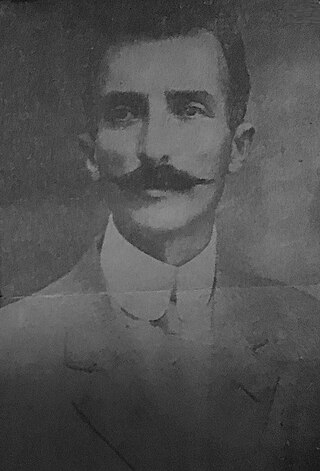
José María Pino Suárez was a lawyer, journalist, newspaper proprietor, and politician who served as the Vice President of Mexico from 1911 to 1913. However, his tenure was abruptly ended when he was assassinated alongside President Francisco I. Madero during the Ten Tragic Days, a coup that marked a pivotal moment in Mexican history. Pino Suárez also held various significant political positions, including President of the Senate, Education Secretary, Justice Secretary, and Governor of Yucatán. He was a key figure in the Mexican Revolution, advocating for democracy and social justice.
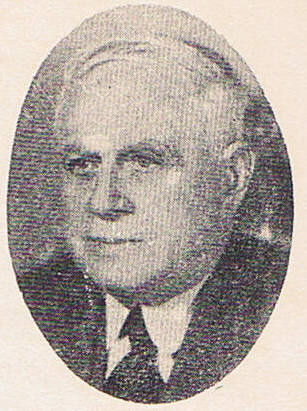
Nicolás Cámara Vales was a Mexican liberal politician, diplomat and physician who served as governor of Yucatán on two occasions between 1911 and 1913 during the early stages of the Mexican Revolution. He was also the brother-in-law of José María Pino Suárez, who held the position of vice president of Mexico during the same period.
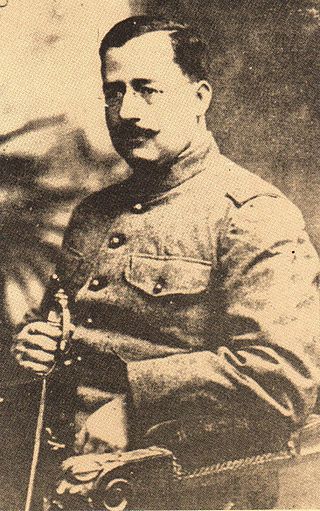
Salvador Alvarado Rubio was a general and politician during the Mexican Revolution. He served in the Constitutional Army under President Venustiano Carranza. Alvarado was the Governor of Yucatán from February 1915 to November, 1918, and Secretary of the Treasury under President de la Huerta. There is a Salvador Alvarado Municipality in the State of Sinaloa, where he was born, named in his honor.
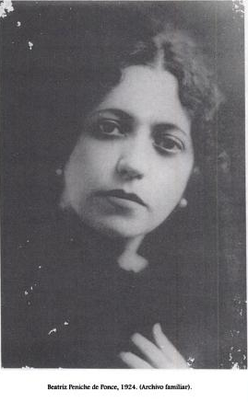
Beatriz Peniche Barrera was a writer, teacher and Mexican feminist. She was a leader of the Socialist Party of the Southeast and one of the first three women elected to a legislative body in Mexico. She collaborated with writers and poets from Mexico and Cuba, publishing numerous works.

Eligio María Ancona Castillo was a teacher, lawyer, novelist, historian, playwright, journalist, and Mexican politician who was born in Mérida, Yucatán. He was named “benemérito” of the state of Yucatán, a title given to distinguished people who have made significant achievements in their fields.
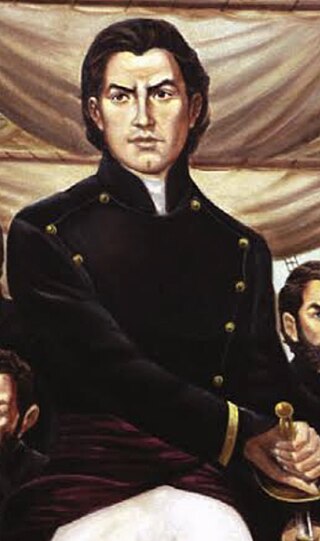
Pedro Sáinz de Baranda y Borreiro was a naval officer, industrialist, and liberal politician who founded the Mexican Navy and led the naval blockade of Veracruz, which ended with the Spanish surrendering San Juan de Ulua Fort in 1825, the last portion of Mexican territory still in Spanish hands. This event is recognized as the culmination of the Mexican War of Independence.

The House ofCámara is an aristocratic family with a rich history in Spain, Portugal and Mexico.
Rogelio Flores Curiel (1924-2008) was a Mexican army officer and politician who served as governor of the state of Nayarit, Mexico between 1976 and 1981.
Rafael Curiel Gallegos was a Mexican army officer during the Mexican Revolution and civil servant.

Olegario Molina Solís was a Mexican lawyer, businessman and politician who served as the governor of Yucatán from 1902 to 1907 and the secretary of development, colonization and industry in the government of Porfirio Díaz from 1907 to 1911. He was also a member of the Chamber of Deputies in two terms. His brothers were the journalist Audomaro Molina Solís and the historian Juan Francisco Molina Solís.

Carlos Peón Machado (1859–1923) was a Mexican lawyer, engineer, landowner, and politician who served as Governor of Yucatán between 1894 and 1897. Due to his immense wealth and political influence, he is considered one of the main figures of the nineteenth-century Yucatecan oligarchy that is known as the Divine Caste. During his administration, he was responsible for promoting the henequen boom which transformed Yucatán into the wealthiest and most industrialized state in Mexico at the beginning of the twentieth century.

The divine caste, known as "la casta divina" in Spanish, refers to a group of wealthy and influential families in the Yucatán Peninsula during the 19th and early 20th centuries. They were considered the social and intellectual elite of the region and held significant cultural, political, and economic power.

Agustín Vales Castillo was a Mexican businessman, banker, industrialist, landowner, philanthropist, and liberal politician who served as prefect of Mérida during the governorship of Olegario Molina. He emerged as a prominent figure during the heyday of the henequen industry in Yucatan due to his influence in business and political circles during the Porfiriato era.

The First Feminist Congress of Yucatán was a gathering of Mexican feminists that happened in 1916. The delegates gathered at the José Peón Contreras Theater in Mérida, Yucatán, Mexico from January 13 to 16. It was held under the auspices of the Yucatecan government. The Mexican government and historians largely consider it the first of its kind in the country. It was the second to be held in all of Latin America and the Caribbean, the first held in Argentina in 1910.
Gilbert M. Joseph is an American scholar and writer. He received his doctorate from Yale University in Latin American history in 1978, where he is presently a Farnam Professor Emeritus of History and International Studies. He has been the recipient of numerous awards, including the Sturgis Leavitt Best Article Prize (1981,1987), the Tanner Award for Inspirational Teaching of Undergraduates at the University of North Carolina, Chapel Hill (1980), and the Harwood F.Byrnes/Richard B. Sewall Prize for Teaching Excellence at Yale University (2017). Joseph presided over the Latin American Studies Association (LASA) from 2015 to 2016.
Pablo Castellanos Cámara (1917–1981) was a virtuoso pianist, conductor, and music teacher who held dual American and Mexican nationality.
 Mexico
  Mexican Army
