
Laxå Municipality is a municipality in Örebro County in central Sweden. Its seat is located in the town of Laxå.

Freesia is a genus of herbaceous perennial flowering plants in the family Iridaceae, first described as a genus in 1866 by Christian Friedrich Ecklon (1886) and named after the German botanist and medical practitioner, Friedrich Freese (1795-1876). It is native to the eastern side of southern Africa, from Kenya south to South Africa, most species being found in Cape Provinces. Species of the former genus Anomatheca are now included in Freesia. The plants commonly known as "freesias", with fragrant funnel-shaped flowers, are cultivated hybrids of a number of Freesia species. Some other species are also grown as ornamental plants.

Mývatn is a shallow lake situated in an area of active volcanism in the north of Iceland, not far from Krafla volcano. It has a high amount of biological activity. The lake and the surrounding wetlands provides a habitat for a number of waterbirds, especially ducks. The lake was created by a large basaltic lava eruption 2300 years ago, and the surrounding landscape is dominated by volcanic landforms, including lava pillars and rootless vents (pseudocraters). The effluent river Laxá is known for its rich fishing for brown trout and Atlantic salmon.

Laxå is a locality and the seat of Laxå Municipality, Örebro County, Sweden with 3,064 inhabitants in 2010.

Cutis laxa or pachydermatocele is a group of rare connective tissue disorders in which the skin becomes inelastic and hangs loosely in folds.

Freesia laxa, commonly known as flowering grass, is a small species of cormous flowering plant in the family Iridaceae, from eastern and southern Africa, from Kenya to northeastern South Africa. It is grown in gardens as an ornamental plant.
Maria Cecilia Ilanan Laxa-Pangilinan is a Filipino comedian and actress. She won Best Supporting Actress awards in the 1992 FAMAS Awards and Star Awards for her role in the 1992 film Iisa Pa Lamang.

Vladimir Laxa was a Croatian general who served in the Austro-Hungarian Army during World War I and in the Croatian Home Guard during World War II. During World War II, he was Army Chief of Staff of the Axis puppet state, the Independent State of Croatia, from June 1941 until August 1942, when he resigned his commission purportedly in protest of the atrocities committed by the Ustaše Militia.

Triteleia laxa is a triplet lily known by several common names, including Ithuriel's spear, common triteleia and grassnut. It is native to California where it is a common wildflower, and it is occasionally found in southwestern Oregon. It bears a tall, naked stem topped with a spray of smaller stalks, each ending in a purple or blue flower. The flower is tubular, opening into a sharply six-pointed star. The plant grows from a corm which is edible and similar in taste and use as the potato. The most used common name for the species, Ithuriel's spear, is a reference to the angel Ithuriel from Milton's Paradise Lost.

Mocis frugalis, the sugarcane looper, is a moth of the family Erebidae. The species was first described by Johan Christian Fabricius in 1775. It is found in several parts of the world, including India, Sri Lanka, West African countries and other Oriental regions. The adult is a fruit piercer and a major pest of crops.

Mocis is a genus of moths in the family Erebidae. The genus was erected by Jacob Hübner in 1823.

Mocis disseverans, the yellow mocis moth, is a moth of the family Erebidae. It is found in the Caribbean and parts of the southern United States, including Mississippi, Florida and Texas.

Mocis repanda, the striped grass looper, is a species of moth of the family Erebidae. It was described by Johan Christian Fabricius in 1794. It is found in Central America and the Caribbean, including Cuba, the Dominican Republic, Guadeloupe, Guatemala, Jamaica, Puerto Rico and Saint Thomas. Strays can be found in the United States, up to southern Texas as well as subtropical Africa south of the Sahara, including the islands of the Indian Ocean.
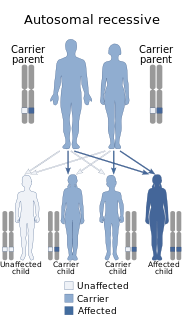
De Barsy syndrome is a rare autosomal recessive genetic disorder. Symptoms include cutis laxa as well as other eye, musculoskeletal, and neurological abnormalities. It is usually progressive, manifesting side effects that can include clouded corneas, cataracts, short stature, dystonia, or progeria.
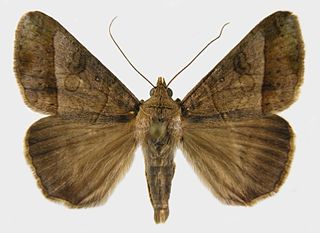
Mocis latipes, the small mocis moth or striped grass looper, is a species of moth of the family Erebidae. It is found from North America (from southern Ontario and Quebec to Florida, west to Arizona, north to Minnesota and south through Central to South America.
Mocis mayeri is a moth of the family Erebidae first described by Jean Baptiste Boisduval in 1833. It has a wide range in Africa, which includes Cameroon, Cape Verde, the Comoros, the Democratic Republic of the Congo, Eritrea, Ghana, Kenya, Réunion, Madagascar, Malawi, Mauritius, Mozambique, Nigeria, Senegal, the Seychelles, Sierra Leone, South Africa, Sudan, Tanzania, the Gambia, Uganda, Zambia and Zimbabwe. It is also found in Saudi Arabia and Yemen.
Dacryodes laxa is a tree in the family Burseraceae. The specific epithet laxa is from the Latin meaning "loose", referring to the inflorescence.
Persoonia laxa is a rare, probably extinct, shrub native to the Sydney region in eastern Australia.
Petrophile filifolia is a species of flowering plant in the family Proteaceae and is endemic to southwestern Western Australia. It is a small shrub with curved, long, needle-shaped leaves and more or less spherical heads of hairy cream-coloured to pale yellow flowers.

