Related Research Articles

Mustafa Ahmed Adam al-Hawsawi is a Saudi Arabian citizen. He is alleged to have acted as a key financial facilitator for the September 11 attacks in the United States.
Extraordinary rendition is a euphemism for state-sponsored kidnapping in another jurisdiction and transfer to a third state. The phrase usually refers to a United States-led program used during the War on Terror, which had the purpose of circumventing the source country's laws on interrogation, detention, extradition and/or torture. Extraordinary rendition is a type of extraterritorial abduction, but not all extraterritorial abductions include transfer to a third country.
Ghost detainee is a term used in the executive branch of the United States government to designate a person held in a detention center, whose identity has been hidden by keeping them unregistered and therefore anonymous. Such uses arose as the Bush administration initiated the War on Terror following the 9/11 attacks of 2001 in the United States. As documented in the 2004 Taguba Report, it was used in the same manner by United States officials and contractors of the Joint Interrogation and Debriefing Center at the Abu Ghraib prison in Iraq in 2003–2004.

The Salt Pit and Cobalt were the code names of an isolated clandestine CIA black site prison and interrogation center outside Bagram Air Base in Afghanistan. It was located north of Kabul and was the location of a brick factory prior to the Afghanistan War. The CIA adapted it for extrajudicial detention.
Ahmed Agiza and Muhammad Alzery were two Egyptian asylum-seekers who were deported to Egypt from Sweden on December 18, 2001, apparently following a request from the United States Central Intelligence Agency. The forced repatriation was criticized because of the danger of torture and ill treatment, and because the deportation decision was executed the same day without notifying the lawyers of the asylum seekers. The deportation was carried out by American and Egyptian personnel on Swedish ground, with Swedish servicemen apparently as passive onlookers.

In 2005, The New York Times obtained a 2,000-page United States Army investigatory report concerning the homicides of two unarmed civilian Afghan prisoners by U.S. military personnel in December 2002 at the Bagram Theater Internment Facility in Bagram, Afghanistan, and general treatment of prisoners. The two prisoners, Habibullah and Dilawar, were repeatedly chained to the ceiling and beaten, resulting in their deaths. Military coroners ruled that both the prisoners' deaths were homicides. Autopsies revealed severe trauma to both prisoners' legs, describing the trauma as comparable to being run over by a bus. Seven soldiers were charged in 2005.
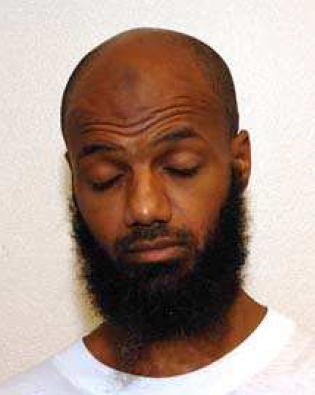
Binyam Ahmed Mohamed, also referred to as Benjamin Mohammed, Benyam Mohammed or Benyam Mohammed al-Habashi, is an Ethiopian national and United Kingdom resident, who was detained as a suspected enemy combatant by the US Government in Guantanamo Bay prison between 2004 and 2009 without charges. He was arrested in Pakistan and transported first to Morocco under the US's extraordinary rendition program, where he claimed to have been interrogated under torture.
Bisher Amin Khalil Al-Rawi is an Iraqi citizen, who became a resident of the United Kingdom in the 1980s. Arrested in Gambia on a business trip in November 2002, he was transferred to United States military custody and held until 30 March 2007, in extrajudicial detention in the United States Guantanamo Bay detention camp at its naval base in Cuba. His Guantanamo Internment Serial Number was 906. The Department of Defense reports that Al Rawi was born on 23 December 1960, in Baghdad, Iraq.
Extrajudicial prisoners of the United States, in the context of the early twenty-first century War on Terrorism, refers to foreign nationals the United States detains outside of the legal process required within United States legal jurisdiction. In this context, the U.S. government is maintaining torture centers, called black sites, operated by both known and secret intelligence agencies. Such black sites were later confirmed by reports from journalists, investigations, and from men who had been imprisoned and tortured there, and later released after being tortured until the CIA was comfortable they had done nothing wrong, and had nothing to hide.
Khaled El-Masri is a German and Lebanese citizen who was mistakenly abducted by the Macedonian police in 2003, and handed over to the U.S. Central Intelligence Agency (CIA). While in CIA custody, he was flown to Afghanistan, where he was held at a black site and routinely interrogated, beaten, strip-searched, sodomized, and subjected to other cruel forms of inhumane and degrading treatment and torture. After El-Masri held hunger strikes, and was detained for four months in the "Salt Pit", the CIA finally admitted his arrest was a mistake and released him. He is believed to be among an estimated 3,000 detainees, including several key leaders of al Qaeda, whom the CIA captured from 2001 to 2005, in its campaign to dismantle terrorist networks.
Karam Khamis Sayd Khamsan(also transliterated as Karama Khamis and Khamis Al-Mulaiki) is a citizen of Yemen who was held in extrajudicial detention in the United States Guantanamo Bay detainment camps, in Cuba. His Guantanamo Internment Serial Number was 586. American intelligence analysts estimate that Khamsan was born in 1969, in Al Mahra, Yemen. He was repatriated without ever being charged on August 19, 2005.

Sharqawi Abdu Ali al-Hajj, also known as Riyadh the Facilitator, is a Yemeni alleged Al-Qaeda associate who is currently being held in the United States' Guantanamo Bay detention camps, in Cuba. He is accused of being a "senior al-Qaida facilitator who swore an oath of allegiance to and personally recruited bodyguards for Osama Bin Laden".
"Enhanced interrogation techniques" or "enhanced interrogation" was a program of systematic torture of detainees by the Central Intelligence Agency (CIA), the Defense Intelligence Agency (DIA) and various components of the U.S. Armed Forces at remote sites around the world—including Abu Ghraib, Bagram, Bucharest, and Guantanamo Bay—authorized by officials of the George W. Bush administration. Methods used included beating, binding in contorted stress positions, hooding, subjection to deafening noise, sleep disruption, sleep deprivation to the point of hallucination, deprivation of food, drink, and medical care for wounds, as well as waterboarding, walling, sexual humiliation, rape, sexual assault, subjection to extreme heat or extreme cold, and confinement in small coffin-like boxes. A Guantanamo inmate's drawings of some of these tortures, to which he himself was subjected, were published in The New York Times. Some of these techniques fall under the category known as "white room torture". Several detainees endured medically unnecessary "rectal rehydration", "rectal fluid resuscitation", and "rectal feeding". In addition to brutalizing detainees, there were threats to their families such as threats to harm children, and threats to sexually abuse or to cut the throat of detainees' mothers.
Saud Memon was a Pakistani businessman from Karachi dealing in yarn and textiles. Memon was said to own the Al-Qaeda safe house in Karachi where American journalist Daniel Pearl was killed. Memon was wanted by law-enforcement agencies in the Pearl case for supposedly providing the place where Pearl was beheaded and subsequently buried. However, Memon was never formally charged.
Ameen Mohammad Albakri is held in extrajudicial detention in the United States Bagram Theater Internment Facility.

Mohamed et al. v. Jeppesen Dataplan, Inc., is a case brought by the American Civil Liberties Union (ACLU) on behalf of five victims of extraordinary renditions against Jeppesen Dataplan, Inc., which had provided services that the Central Intelligence Agency (CIA) used to perform renditions.
Abou Elkassim Britel is a citizen of Italy who is reported to have been transported through the United States' controversial extraordinary rendition program. Abou was first apprehended in Pakistan, in February 2002, who handed him over to American authorities. Abou was flown to Morocco in May 2002, and remains in extrajudicial detention there.
Lutfi al-Arabi al-Gharisi is a citizen of Tunisia held in detention by the United States.
Mohammed Assad was a citizen of Yemen who, according to Amnesty International, was subjected to extraordinary rendition by the CIA, and held in the CIA's network of black sites—secret interrogation centers. Assad had been living and working in Tanzania. Amnesty International reports he was captured on December 26, 2003, and held by the CIA until May 2005.
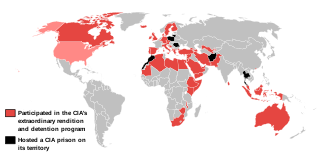
Following the September 11 attacks of 2001 and subsequent War on Terror, the United States Central Intelligence Agency (CIA) established a "Detention and Interrogation Program" that included a network of clandestine extrajudicial detention centers, officially known as "black sites", to detain, interrogate, and often torture suspected enemy combatants, usually with the acquiescence, if not direct collaboration, of the host government.
References
- ↑ Josh White (November 7, 2005). "Prisoner Accounts Suggest Detention At Secret Facilities: Rights Group Draws Link to the CIA". Washington Post . p. A11. Archived from the original on 2012-11-04. Retrieved 2008-05-13.
- 1 2 3 4 "Two More Victims of CIA's Rendition Program, Including Former Guantánamo Detainee, Join ACLU Lawsuit Against Boeing Subsidiary". American Civil Liberties Union. August 1, 2007. Archived from the original on 2007-09-29. Retrieved 2007-08-24.
- ↑ "Iraqi, Yemeni men join lawsuit over CIA flights". Reuters. August 1, 2007. Retrieved 2007-08-25.
The suit said that in October 2003 Bashmilah was taken into custody in Jordan, where he was visiting his mother, before the Jordanian government handed him over to the CIA who beat him then blindfolded him, dressed him in a diaper and flew him to Kabul.
mirror [ dead link ] - ↑ "United States of America / Yemen: Secret Detention in CIA "Black Sites"". Amnesty International. 2005-11-07. Archived from the original on 2008-01-16. Retrieved 2010-10-17.
- ↑ "Salah 'Ali Qari" (PDF). Amnesty International. Archived from the original (PDF) on 2008-12-01. Retrieved 2009-05-21.
- ↑ ""Disappearance", Secret detention and Arbitrary detention: CASE SHEET of Muhammad Abdullah Salah al-Assad". Amnesty International. November 7, 2005. Archived from the original on 2008-01-11. Retrieved 2008-05-13.
- ↑ "Secret Detention in CIA "Black Sites"". Amnesty International. November 7, 2005. Archived from the original on 2007-11-19. Retrieved 2008-05-13.
- ↑ "USA: Below the radar: Secret flights to torture and 'disappearance'". Amnesty International. 2006-04-26. Archived from the original on 2010-11-13. Retrieved 2010-10-17.
- 1 2 3 4 Mark Benjamin (2007-12-14). "Inside the CIA's notorious "black sites"". Salon magazine . Retrieved 2010-10-17.
It was enough to drive anyone crazy. Bashmilah finally tried to slash his wrists with a small piece of metal, smearing the words "I am innocent" in blood on the walls of his cell. But the CIA patched him up.
mirror [ dead link ] - ↑ Ambinder, Marc (2009-06-12). "Obama Holds On To State Secrets Privilege In Jeppesen Case". The Atlantic . Archived from the original on 2011-08-06. Retrieved 2009-06-25.
- ↑ "Italian 'Extraordinary Rendition' Victim Still Held In Morocco Based On Tortured Confession". PRNewswire. 2009-06-25. Retrieved 2009-06-25.[ permanent dead link ]
- ↑ Abate, Michael P. (June 2009). "Mohamed et al. v Jeppesen Dataplan, Inc". United States Department of Justice. Archived from the original on 2009-11-04. Retrieved 2009-06-25.
- ↑ "Mohamed et al. v Jeppesen Dataplan, Inc". ACLU. June 2009. Archived from the original on 2009-11-04. Retrieved 2009-06-25.
- 1 2 3 Scott Shane (2014-12-12). "Amid Details on Torture, Data on 26 Who Were Held in Error". New York Times . p. A1. Retrieved 2014-12-13.
The C.I.A. told the Senate in its formal response that the real number of wrongful detentions was "far fewer" than 26 but did not offer a number. Human rights advocates who have tracked the C.I.A. program believe that considerably more than 26 were wrongfully detained. Another Yemeni client of Ms. Satterthwaite, for instance, Mohammed al-Asad, was left out of the Senate's count, even though he languished for months in C.I.A. prisons without being questioned, was sent home to Yemen and was never charged with a terrorism-related crime.
- ↑ "Biography of Plaintiff Mohamed Farag Ahmad Bashmilah". ACLU. 2007-08-01. Retrieved 2014-12-13.
In April 2004 he was flown to a secret CIA "black site" where he was tortured. Trapped in horrific conditions, Bashmilah tried to commit suicide three times, once slashing his wrists and writing "I am innocent" with his blood on the walls of his cell.