Related Research Articles

Balochistan is a province of Pakistan. Located in the southwestern region of the country, Balochistan is the largest province of Pakistan by land area but is the least populated one. It is bordered by the Pakistani provinces of Khyber Pakhtunkhwa to the north-east, Punjab to the east and Sindh to the south-east; shares international borders with Iran to the west and Afghanistan to the north; and is bound by the Arabian Sea to the south. Balochistan is an extensive plateau of rough terrain divided into basins by ranges of sufficient heights and ruggedness. It has the world's largest deep sea port, the Port of Gwadar lying in the Arabian Sea.

The Baloch or Baluch are a nomadic, pastoral, ethnic group which speaks the Western Iranic Baloch language and is native to the Balochistan region of South and Western Asia, encompassing the countries of Pakistan, Iran, and Afghanistan. There are also Baloch diaspora communities in neighbouring regions, including in Central Asia, and the Arabian Peninsula.
The Kakar is a Gharghashti Pashtun tribe, based in Afghanistan, parts of Iran, northern Balochistan in Pakistan.
The Tareen is a Pashtun tribe inhabiting southern Afghanistan, and western region of Pakistan.

Ataullah Mengal was a Pakistani politician and feudal figure. He was the head of the Mengal tribe until he nominated one of his grandsons, Sardar Asad Ullah Mengal, as his tribal successor. He was also the 1st Chief Minister of Balochistan during Zulfikar Ali Bhutto's premiership from 1 May 1972 to 13 February 1973. He died on 2 September 2021 in Karachi.
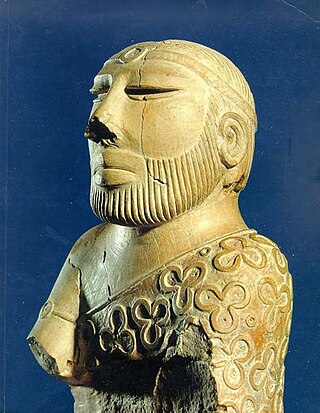
The history of Balochistan refers to the history of the Balochistan region of Pakistan, Iran and Afghanistan. Vague allusions to the region were found in Greek historical records of around 650 BCE. Prehistoric Balochistan dates to the Paleolithic.
Jogezai is a Pashtun tribe of Pakistan. It is a subtribe of Sanzarkhail, Kakar. The majority of the Jogezai tribesmen live in Killa Saifullah and Loralai. The current Nawab of Pashtuns is from Jogezai tribe namely, Nawab Muhammad Ayaz Khan Jogezai, who is the bloodline of Baiker Nika.
The Saṛbanī or Sarban Confederacy are a tribal group of Pashtuns. They are situated in Pakistan and Afghanistan. The Sarbani include many Pashtun tribes, including Yusufzai, Sherani, Tareen, Durrani (Abdali), Khalil, Kheshgi, Kasi which includes Mohmand and Shinwari, Daudzai, Muhammadzai, Chamkani and Tarkalani. According to the Pashtun legend of origins, the members of the Sarbani group all descend from Sarban, said to be the first son of the legendary founding father of the Pashtun people, Qais Abdur Rashid.
Pishin or Pshin is a city that serves as the administrative headquarter of the Pishin District of Pakistan's Balochistan province. Pishin is considered part of the Pashtun belt of Balochistan, and is the largest district of Pashtun tribes.

The Chief Commissioner's Province of British Baluchistan was a province of British India established in 1876. Upon the creation of Pakistan it acceded to the newly formed state. It was part of the Baluchistan Agency. It was dissolved to form a united province of West Pakistan in 1955 upon the creation of One Unit Scheme.

The Khanate of Kalat was a Brahui Khanate that originated in the modern-day Kalat region of Pakistan. Formed in 1666 due to the threat of Mughal expansion in the region, it controlled the wider Balochistan at its greatest extent in the mid-18th century, extending from Kerman in the west to Sindh in the east and from Helmand river in the north to the Arabian sea in the south. Khanate of Kalat lost considerable area to Qajar Iran and Emirate of Afghanistan in the early 19th century, and the city of Kalat was itself sacked by the British in 1839. Kalat became a self-governing state in a subsidiary alliance with British India after the signature of the Treaty of Kalat by the Khan of Kalat and the Baloch Sardars in 1875, and the supervision of Kalat became task of the Baluchistan Agency. Kalat was briefly independent from 12 August 1947 until 27 March 1948, when its ruler Ahmad Yar Khan acceded to Pakistan, making it one of the Princely states of Pakistan.
Mengal are a Brahui speaking clan in Balochistan, Pakistan. Mengal was originally one of the four Jat (Jadgal) tribes inhabiting Balochistan; the other three being Zehri, Bizenjo and Sajdi.

Balochistan is a historical region in Western and South Asia, located in the Iranian plateau's far southeast and bordering the Indian Plate and the Arabian Sea coastline. This arid region of desert and mountains is primarily populated by ethnic Baloch people.
Sardar Muhammad Yaqoob Khan Nasir is a Pakistani politician and current Member of the Senate of Pakistan. He was the Interim president of the Pakistan Muslim League (N) in 2017. He succeeded Nawaz Sharif after his disqualification by the Supreme Court of Pakistan.

The wildlife of Pakistan comprises a diverse flora and fauna in a wide range of habitats from sea level to high elevation areas in the mountains, including 195 mammal, 668 bird species and more than 5000 species of Invertebrates. This diverse composition of the country's fauna is associated with its location in the transitional zone between two major zoogeographical regions, the Palearctic, and the Oriental. The northern regions of Pakistan, which include Khyber Pakhtunkhwa and Gilgit Baltistan include portions of two biodiversity hotspot, Mountains of Central Asia and Himalayas.

Shahzada Rehmatullah Khan Durrani was a Pakistan Movement activist born on 10 October 1919 in the Sadozai dynasty of Durrani, the ethnic Pashtun Sadozai tribe, section of the Popalzai sub clan of Durrani Abdali Pashtun tribe in British India, Quetta.

Bārakzai is the name of a Pashtun tribe from present-day, Kandahar, Afghanistan. '"Barakzai" is a common name among the Pashtuns and it means "son of Barak" in Pashto. According to the Encyclopædia Iranica, "In the detailed Pashtun genealogies there are no fewer than seven instances of the ethnic name Bārakzī, at very different levels of tribal segmentation. Six of them designate simple lineages within six different tribes located in the Solaymān mountains or adjacent lands... The seventh instance, on the other hand, designates one of the most important Pashtun tribes in numbers and historic role, part of the Zīrak branch of the Dorrānay confederation.

The Ziarat Juniper Forest is a juniper forest in Ziarat, Balochistan, Pakistan.
The Sulaiman markhor or straight-horned markhor is a goat endemic to Asia. It is a subspecies of Capra falconeri. Scientists differ regarding whether it is the same subspecies as the Kabul markhor.
Nawab Mohammad Khan Jogezai was a Pashtun tribal elder and the only representative from Baluchistan Province to the Constituent Assembly of Pakistan.
References
- 1 2 "Sardar Naseer Tareen: The Markhor hero of Balochistan". 26 June 2020.
- ↑ Tribute by R Khan 'Sardar Naseer A Khan: Tribal Chief Paves the Way for Development', in Green Pioneers: Stories from the Grassroots in Pakistan Ed by M. Abidi, pub Karachi: City Press Ltd, 2002, pp 112-121
- ↑ Luc Bellon 'Report on the Torghar Area of Baluchistan' , Quetta, Baluchistan, Pakistan: SUSG/UNDP Publication, 2008, ISBN 978-969-8747-03-9
- ↑ About BRSP Archived 2016-01-30 at the Wayback Machine Retrieved 23rd Nov 2014
- ↑ and Torghar Wildlife Project Retrieved 22.11.2014
- ↑ BRSP award notice in public media 2013 Retrieved 23 November 2014
- ↑ Various significant wildlife and environmental projects in Pakistan Retrieved 23 November 2014