Related Research Articles
A nation is a community of people formed on the basis of a combination of shared features such as language, history, ethnicity, culture and/or territory. A nation is thus the collective identity of a group of people understood as defined by those features. A nation is generally more overtly political than an ethnic group; it has been described as "a fully mobilized or institutionalized ethnic group". Some nations are equated with ethnic groups and some are equated with an affiliation with a social and political constitution. A nation has also been defined as a cultural-political community that has become conscious of its autonomy, unity and particular interests.

In modern politics and history, a parliament is a legislative body of government. Generally, a modern parliament has three functions: representing the electorate, making laws and overseeing the government via hearings and inquiries. The term is similar to the idea of a senate, synod or congress and is commonly used in countries that are current or former monarchies. Some contexts restrict the use of the word parliament to parliamentary systems, although it is also used to describe the legislature in some presidential systems, even where it is not in the official name.
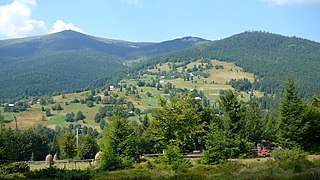
Transylvania is a historical region that is located in central Romania. Bound on the east and south by its natural borders, the Carpathian mountain range, Transylvania extends westward to the Apuseni Mountains. The broader definition of Transylvania also encompasses the western and north-western Romanian historical regions Crișana and Maramureș, and occasionally Banat.
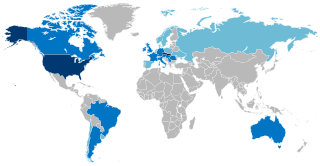
The Slovaks are a West Slavic ethnic group and nation native to Slovakia who share a common ancestry, culture, history and speak Slovak.

The Austro-Hungarian Compromise of 1867 established the dual monarchy of Austria-Hungary. The Compromise partially re-established the former pre-1848 sovereignty and status of the Kingdom of Hungary, being separate from, but no longer subject to, the Austrian Empire. The compromise put an end to the 18-year-long military dictatorship and absolutist rule over Hungary which was introduced by the Francis Joseph after the Hungarian Revolution of 1848. The territorial integrity of the Kingdom of Hungary was restored. The agreement also restored the old historic constitution of the Kingdom of Hungary.

The estates of the realm, or three estates, were the broad orders of social hierarchy used in Christendom from the Middle Ages to early modern Europe. Different systems for dividing society members into estates developed and evolved over time.

The National Assembly is the parliament of Hungary. The unicameral body consists of 199 members elected to 4-year terms. Election of members is done using a hybrid system of parallel voting and compensation via transfer votes; involving single-member districts and one list vote; parties must win at least 5% of the popular vote in order to gain list seats assembly. The Assembly includes 25 standing committees to debate and report on introduced bills and to supervise the activities of the ministers. The Constitutional Court of Hungary has the right to challenge legislation on the grounds of constitutionality. The assembly has met in the Hungarian Parliament Building in Budapest since 1902.

Georg Ritter von Schönerer was an Austrian landowner and politician of the Austro-Hungarian Monarchy active in the late 19th and early 20th centuries. A major exponent of pan-Germanism and German nationalism in Austria as well as a radical opponent of political Catholicism and a fierce antisemite, his agitation exerted much influence on the young Adolf Hitler. Schönerer was known for a generation to be the most radical pan-German nationalist in Austria.
The Hungarian nobility consisted of a privileged group of individuals, most of whom owned landed property, in the Kingdom of Hungary. Initially, a diverse body of people were described as noblemen, but from the late 12th century only high-ranking royal officials were regarded as noble. Most aristocrats claimed a late 9th century Magyar leader for their ancestor. Others were descended from foreign knights, and local Slavic chiefs were also integrated in the nobility. Less illustrious individuals, known as castle warriors, also held landed property and served in the royal army. From the 1170s, most privileged laymen called themselves royal servants to emphasize their direct connection to the monarchs. The Golden Bull of 1222 enacted their liberties, especially their tax-exemption and the limitation of their military obligations. From the 1220s, royal servants were associated with the nobility and the highest-ranking officials were known as barons of the realm. Only those who owned allods – lands free of obligations – were regarded as true noblemen, but other privileged groups of landowners, known as conditional nobles, also existed.
Unio Trium Nationum was a pact of mutual aid codified in 1438 by three Estates of Transylvania: the nobility, the Saxon (German) patrician class, and the free military Székelys. The union was directed against the whole of the peasantry, regardless of ethnicity, in response to the Transylvanian peasant revolt. In this typical feudal estate parliament, the peasants were not represented, and they did not benefit from its acts, as the commoners were not considered to be members of these feudal "nations".

The Kingdom of Hungary between 1526 and 1867 existed as a state outside the Holy Roman Empire, but part of the lands of the Habsburg Monarchy that became the Austrian Empire in 1804. After the Battle of Mohács in 1526, the country was ruled by two crowned kings. Initially, the exact territory under Habsburg rule was disputed because both rulers claimed the whole kingdom. This unsettled period lasted until 1570 when John Sigismund Zápolya abdicated as King of Hungary in Emperor Maximilian II's favor.

Magyarization, after "Magyar"—the Hungarian autonym—was an assimilation or acculturation process by which non-Hungarian nationals living in Austro-Hungarian Transleithania adopted the Hungarian national identity and language in the period between the Compromise of 1867 and Austria-Hungary's dissolution in 1918. Magyarization occurred both voluntarily and as a result of social pressure, and was mandated in certain respects by specific government policies.

Croatian nobility was a privileged social class in Croatia during the Antiquity and Medieval periods of the country's history. Noble families in the Kingdom of Croatia included high ranking populates from Slavonia, Dalmatia, Istria, and Republic of Ragusa. Members belonged to an elite social hierarchy, normally placed immediately behind blood royalty, that possessed considerably more privileges or eminence than most other classes in a society. Membership thereof typically was often hereditary. Historically, membership in the nobility and the prerogatives thereof have been regulated or acknowledged by the monarch. Acquisition of sufficient power, wealth, military prowess or royal favour enabled commoners to ascend into the nobility. The country's royalty was heavily influenced by France's nobility resulting members of the Royal Courts to assume French titles and practices during French occupation. The controversial assumption of French practices contributed to wide spread political and social elitism among the nobles and monarch. The nobility regarded the peasant class as an unseen and irrelevant substrata of people which lead to high causality revolts and beheadings as well as sporadic periods of intense domestic violence.
Transylvania is a historical region in central and northwestern Romania. It was part of the Dacian Kingdom, Roman Dacia, the Hunnic Empire, the Kingdom of the Gepids, the Avar Khaganate and the 9th century First Bulgarian Empire. During the late 9th century, western Transylvania was reached by the Hungarian conquerors and later it became part of the Kingdom of Hungary, formed in 1000.

The Principality of Transylvania was a semi-independent state ruled primarily by Hungarian princes. Its territory, in addition to the traditional Transylvanian lands, also included the other major component called Partium, which was in some periods comparable in size with Transylvania proper. The establishment of the principality was connected to the Treaty of Speyer. However, Stephen Báthory's status as king of Poland also helped to phase in the name Principality of Transylvania. It was usually under the suzerainty of the Ottoman Empire, although the principality often had dual vassalage in the 16th and 17th centuries.

Ottoman Hungary was the southern and central parts of what had been the Kingdom of Hungary in the late medieval period, which were conquered and ruled by the Ottoman Empire from 1541 to 1699. The Ottoman rule covered almost the entire region of the Great Hungarian Plain and Southern Transdanubia.

The Diet of Hungary or originally: Parlamentum Publicum / Parlamentum Generale became the supreme legislative institution in the medieval kingdom of Hungary from the 1290s, and in its successor states, Royal Hungary and the Habsburg kingdom of Hungary throughout the Early Modern period. The name of the legislative body was originally "Parlamentum" during the Middle Ages, the "Diet" expression gained mostly in the Early Modern period. It convened at regular intervals with interruptions during the period of 1527 to 1918, and again until 1946.
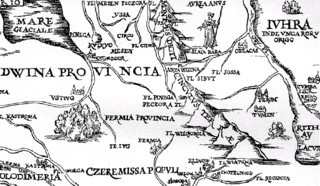
Hungary, the name in English for the European country, is an exonym derived from the Medieval Latin Hungaria. The Latin name itself derives from the ethnonyms (H)ungarī, Ungrī, and Ugrī for the steppe people that conquered the land today known as Hungary in the 9th and 10th centuries. Medieval authors denominated the Hungarians as Hungaria, but the Hungarians even contemporarily denominate themselves Magyars and their homeland Magyarország.

Michael Szilágyi de Horogszeg was a Hungarian general, Regent of Hungary, Count of Beszterce and Head of Szilágyi–Hunyadi Liga.

A conditional noble or predialist was a landowner in the Kingdom of Hungary who was obliged to render specific services to his lord in return for his landholding, in contrast with a "true nobleman of the realm" who held his estates free of such services. Most conditional nobles lived in the border territories of the kingdom, including Slavonia and Transylvania, but some of their groups possessed lands in estates of Roman Catholic prelates. Certain groups of conditional nobility, including the "ecclesiastic nobles" and the "nobles of Turopolje" preserved their specific status until the 19th century.
References
- ↑ "Transylvania - the Roots of Ethnic Conflict".
- ↑ John M. Merriman, J. M. Winter, Europe 1789 to 1914: encyclopedia of the age of industry and empire, Charles Scribner's Sons, 2006, p. 140, ISBN 978-0-684-31359-7
- ↑ Tadayuki Hayashi, Hiroshi Fukuda, Regions in Central and Eastern Europe: past and present, Slavic Research Center, Hokkaido University, 2007, p. 158, ISBN 978-4-938637-43-9
- ↑ Katerina Zacharia, Hellenisms: culture, identity, and ethnicity from antiquity to modernity, Ashgate Publishing, Ltd., 2008, p. 237 ISBN 978-0-7546-6525-0