National Economic Advisory Council

Last updated

The National Economic Advisory Council was set up by second Labour government of United Kingdom Prime Minister Ramsay MacDonald.

Second MacDonald ministry Government of the United Kingdom

The second MacDonald ministry was formed by Ramsay MacDonald on his reappointment as Prime Minister of the United Kingdom by King George V on 5 June 1929. It was only the second occasion on which the Labour Party had formed a government; the first MacDonald ministry held office in 1924.

Prime Minister of the United Kingdom Head of UK Government

The Prime Minister of the United Kingdom is the head of government of the United Kingdom. The Prime Minister directs both the executive and the legislature, and together with their Cabinet are collectively accountable for their policies and actions to the Monarch, to Parliament, to their political party and ultimately to the electorate. The office of Prime Minister is one of the Great Offices of State. The current holder of the office, Theresa May, leader of the Conservative Party, was appointed by the Queen on 13 July 2016.

Ramsay MacDonald British statesman; Prime Minister of the United Kingdom

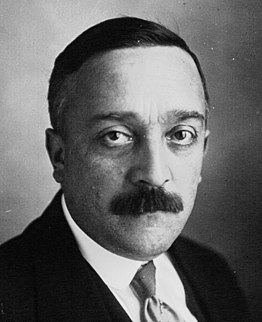
James Ramsay MacDonald was a British statesman who served twice as Prime Minister of the United Kingdom, firstly for nine months in 1924 and then again between 1929 and 1935. He was the first Labour Party politician to become Prime Minister, leading minority Labour governments in 1924 and in 1929–31. He headed a National Government from 1931 to 1935, dominated by the Conservative Party and supported by only a few Labour members. MacDonald was later vehemently denounced by and expelled from the party he had helped to found.

The Prime Minister chaired the Council which included several cabinet ministers, businessmen, the trade unionist Ernest Bevin, the economic historian R. H. Tawney and several economists G. D. H. Cole, Hugh Dalton, Maynard Keynes, A. C. Pigou, Colin Clark and Lionel Robbins. [1]

A minister is a politician who heads a government department, making and implementing decisions on policies in conjunction with the other ministers. In some jurisdictions the head of government is also a minister and is designated the "prime minister", "premier", "chief minister", "Chancellor" or other title.

A trade union, also called a labour union or labor union (US), is an association of workers in a particular trade, industry, or company created for the purpose of securing improvement in pay, benefits, working conditions or social and political status through collective bargaining and working conditions through the increased bargaining power wielded by creation of a monopoly of the workers. The trade union, through its leadership, bargains with the employer on behalf of union members and negotiates labour contracts with employers. The most common purpose of these associations or unions is "maintaining or improving the conditions of their employment". This may include the negotiation of wages, work rules, complaint procedures, rules governing hiring, firing and promotion of workers, benefits, workplace safety and policies.

Ernest Bevin British labour leader, politician, and statesman

Ernest Bevin was a British statesman, trade union leader, and Labour politician. He co-founded and served as general secretary of the powerful Transport and General Workers' Union in the years 1922–40, and as Minister of Labour in the war-time coalition government. He succeeded in maximizing the British labour supply, for both the armed services and domestic industrial production, with a minimum of strikes and disruption. His most important role came as Foreign Secretary in the post-war Labour government, 1945–51. He gained American financial support, strongly opposed Communism, and aided in the creation of NATO. Bevin's tenure also saw the end of the Mandate of Palestine and the creation of the State of Israel. His biographer, Alan Bullock, said that Bevin "stands as the last of the line of foreign secretaries in the tradition created by Castlereagh, Canning and Palmerston in the first half of the 19th century", and that due to the reduction in British power he has no successors.

Related Research Articles

Prime Minister of India Leader of the executive of the Government of India

The Prime Minister of India is the leader of the executive of the Government of India. The prime minister is also the chief adviser to the President of India and head of the Council of Ministers. They can be a member of any of the two houses of the Parliament of India—the Lok Sabha and the Rajya Sabha —but has to be a member of the political party or coalition, having a majority in the Lok Sabha.

Brian Mulroney 18th Prime Minister of Canada

Martin Brian Mulroney is a Canadian politician who served as the 18th prime minister of Canada from September 17, 1984, to June 25, 1993. His tenure as prime minister was marked by the introduction of major economic reforms, such as the Canada-U.S. Free Trade Agreement and the Goods and Services Tax, and the rejection of constitutional reforms such as the Meech Lake Accord and the Charlottetown Accord. Prior to his political career, he was a prominent lawyer and businessman in Montreal.

Joe Clark 16th Prime Minister of Canada

Charles Joseph "Joe" Clark, is a Canadian elder statesman, businessman, writer, and politician who served as the 16th prime minister of Canada, from June 4, 1979, to March 3, 1980.

The Right Honourable is an honorific style traditionally applied to certain persons and collective bodies in the United Kingdom, Canada, Australia, New Zealand, Fiji, some other Commonwealth realms, the English-speaking Caribbean, Mauritius, Zimbabwe, and occasionally elsewhere. The term is predominantly used today as a style associated with the holding of certain senior public offices in the United Kingdom, Canada, and New Zealand.

Prime Minister of Italy head of government of the Italian Republic

The President of the Council of Ministers of the Italian Republic, commonly referred to in Italy as Presidente del Consiglio, or informally as Premier and known in English as the Prime Minister of Italy, is the head of government of the Italian Republic. The office of Prime Minister is established by Articles 92 through to 96 of the Constitution of Italy. The Prime Minister is appointed by the President of the Republic after each general election and must have the confidence of the Italian Parliament to stay in office.

New Zealand Order of Merit order

The New Zealand Order of Merit is an order of merit in New Zealand's honours system. It was established by royal warrant on 30 May 1996 by Elizabeth II, Queen of New Zealand, "for those persons who in any field of endeavour, have rendered meritorious service to the Crown and nation or who have become distinguished by their eminence, talents, contributions or other merits", to recognise outstanding service to the Crown and people of New Zealand in a civil or military capacity.

Pierre Pflimlin French politician

Pierre Eugène Jean Pflimlin was a French Christian democratic politician who served as the Prime Minister of the Fourth Republic for a few weeks in 1958, before being replaced by Charles de Gaulle during the crisis of that year.

Henri Queuille French Prime Minister

Henri Queuille was a French Radical politician prominent in the Third and Fourth Republics. After World War II, he served three times as Prime Minister.

Prime Minister of Afghanistan former governmental position in Afghanistan (1927–1997)

The Prime Minister of Afghanistan was a post in the Afghan government. The position was created in 1927 as an official appointed by the King of Afghanistan. The holder served mostly as an advisor, until the end of the Kingdom of Afghanistan in 1973. During the 1980s, the position was the head of government.

Privy Council Office (Canada) secretariat of the federal cabinet in Canada

The Privy Council Office is the secretariat of the federal cabinet of Canada, which is a committee of the Queen's Privy Council for Canada, and provides non-partisan advice and support to the Canadian ministry, as well as leadership, coordination, and support to the departments and agencies of government. It is located in the Office of the Prime Minister and Privy Council building on Parliament Hill. The Federal Government helps the Privy Council by constituting the premier levels of government in Canada.

Colin Clark (economist) British economist

Colin Grant Clark was a British and Australian economist and statistician who worked in both the United Kingdom and Australia. He pioneered the use of gross national product (GNP) as the basis for studying national economies.

Economic Coordination Committee (Pakistan)

The Economic Coordination Committee, is a principle federal institution and a consultative forum used by the people-elected Prime Minister of Pakistan as its chairman, for concerning matters of state's economic security, geoeconomic, political economic and financial endowment issues. Although it is often chaired by the Finance Minister and the senior economic officials as its members on multiple occasions, the key executive authorization on key economic policies are made by the Prime Minister of Pakistan who reserves the right call upon and serves as the chairman of the ECC.

Helen Clark 37th Prime Minister of New Zealand

Helen Elizabeth Clark is a New Zealand politician who served as the 37th Prime Minister of New Zealand from 1999 to 2008, and was the Administrator of the United Nations Development Programme from 2009 to 2017. She was New Zealand's fifth-longest-serving prime minister, and the second woman to hold that office.

C. Rangarajan Indian politician

C. Rangarajan or Chakravarthi Rangarajan is an Indian economist, a former Member of Parliament and 19th Governor of the Reserve Bank of India. He is the former Chairman of the Prime Minister's Economic Advisory Council, he resigned the day the UPA lost power. He is also the Chairman of the Madras School of Economics; President of the Indian Statistical Institute; the Founding Chairman of the CR Rao Advanced Institute of Mathematics, Statistics and Computer Science; and Chancellor of the University of Hyderabad.

Economic Advisory Council to the Prime Minister (PMEAC) is a non-constitutional, non-permanent and independent body constituted to give economic advice to the Government of India, specifically the Prime Minister. The council serves to highlight key economic issues facing the country to the government of India from a neutral viewpoint. It advises the Prime Minister on economic issues like inflation, microfinance, and industrial output.

Bangladesh Planning Commission is the economic public policy institution of the Government of Bangladesh. The Planning Commission undertakes research studies and policy development initiatives for the growth of national economy and the expansion of the public infrastructure of the country, in tandem under the Ministry of Planning and alongside the Ministry of Finance.

Downing Street Press Secretary

The Downing Street Press Secretary is an advisor to the Prime Minister of the United Kingdom on news media and how to manage the image of the British government to the press. The position is part of the Prime Minister's Office and involves using information on what is happening in the UK and around the world, to decide on how the Prime Minister should present his or her reaction to the media. The incumbent also advises on how to handle news stories and other information which could affect the current Prime Minister or the Ministry.

Second Cameron ministry Government of the United Kingdom

David Cameron formed the second Cameron ministry, the first Conservative Party majority government since 1992, following the 2015 general election after being invited by Queen Elizabeth II to form a government. Prior to the election, Cameron led the Cameron–Clegg coalition, a coalition government that consisted of members of the Conservatives and the Liberal Democrats, with Liberal Democrat leader Nick Clegg as Deputy Prime Minister.

References

  1. Maddison, Angus. "Macromeasurement Before and After Colin Clark" (PDF). www.ggdc.net. University of Groeningen. Retrieved 29 September 2017.