Nutrigenetics

Last updated

Nutrigenetics aims to identify how genetic variation affects response to nutrients. This information can be applied to optimize health and prevent or treat diseases. [1] The ultimate aim of nutrigenetics is to offer people personalized nutrition based on their genetic makeup. [2]

Contents

Scientific basis

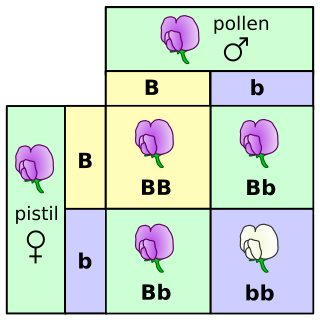
Due to naturally occurring mutations humans differ in their DNA, which is called variation or polymorphism of DNA. The most common type of DNA polymorphism are SNPs (short for "single nucleotide polymorphism"). SNPs may influence the way individuals absorb, transport, store or metabolize nutrients. [3] This may determine requirements for different nutrients and this assumption forms the basis for nutrigenetic sciences. [1] Moreover, different metabolic potential of the human body can imply an advantage in terms of natural selection. For that reason, for example, the ability to digest lactose, the principal sugar of milk, also in adulthood spread in cattle-rising populations. [4]

DNA Molecule that encodes the genetic instructions used in the development and functioning of all known organisms and many viruses

Deoxyribonucleic acid is a molecule composed of two chains that coil around each other to form a double helix carrying the genetic instructions used in the growth, development, functioning, and reproduction of all known organisms and many viruses. DNA and ribonucleic acid (RNA) are nucleic acids; alongside proteins, lipids and complex carbohydrates (polysaccharides), nucleic acids are one of the four major types of macromolecules that are essential for all known forms of life.

Natural selection Mechanism of evolution by differential survival and reproduction of individuals

Natural selection is the differential survival and reproduction of individuals due to differences in phenotype. It is a key mechanism of evolution, the change in the heritable traits characteristic of a population over generations. Charles Darwin popularised the term "natural selection", contrasting it with artificial selection, which in his view is intentional, whereas natural selection is not.

Lactose chemical compound

Lactose is a disaccharide. It is a sugar composed of galactose and glucose subunits and has the molecular formula C12H22O11. Lactose makes up around 2–8% of milk (by weight). The name comes from lac (gen. lactis), the Latin word for milk, plus the suffix -ose used to name sugars. The compound is a white, water-soluble, non-hygroscopic solid with a mildly sweet taste. It is used in the food industry.

Nutrigenetic analysis methods

The identification of the necessary genotype is carried out by means of a blood analysis or a cheek swab. Subsequently, the DNA is analyzed in different ways. A common way to study the genetic data is the so-called "candidate gene approach" when one possible risk gene is identified. After experiments on cell cultures, animals or humans scientists can establish a positive or negative correlation between the expression of this candidate gene and nutritional aspects. [5]

Genotype classification system used to categorize organisms based on their genetic characteristics; organisms full hereditary information, part (DNA sequence) of the genetic makeup of a cell, one of three factors that determine phenotype

The genotype is the part of the genetic makeup of a cell, and therefore of any individual, which determines one of its characteristics (phenotype). The term was coined by the Danish botanist, plant physiologist and geneticist Wilhelm Johannsen in 1903.

The candidate gene approach to conducting genetic association studies focuses on associations between genetic variation within pre-specified genes of interest and phenotypes or disease states. This is in contrast to genome-wide association studies (GWAS), which scan the entire genome for common genetic variation. Candidate genes are most often selected for study based on a priori knowledge of the gene's biological functional impact on the trait or disease in question. The rationale behind focusing on allelic variation in specific, biologically relevant regions of the genome is that certain mutations will directly impact the function of the gene in question, and lead to the phenotype or disease state being investigated. This approach usually uses the case-control study design to try to answer the question, "Is one allele of a candidate gene more frequently seen in subjects with the disease than in subjects without the disease?" Candidate genes hypothesized to be associated with complex traits have generally not been replicated by subsequent GWASs. The failure of candidate gene studies to shed light on the specific genes underlying such traits has been ascribed to insufficient statistical power.

Another popular scientific method is a genome-wide association study which also leads to the identification of relevant gene variants. [3] In particular, nutrigenetic analyses are based on the effect of nutritional components on the genome, proteome, metabolome and transcriptome. [1]

Genome-wide association study An examination of many genetic variants in different individuals to see if any variant is associated with a trait.  Often used to identify gene disease relationships.

In genetics, a genome-wide association study, also known as whole genome association study, is an observational study of a genome-wide set of genetic variants in different individuals to see if any variant is associated with a trait. GWASs typically focus on associations between single-nucleotide polymorphisms (SNPs) and traits like major human diseases, but can equally be applied to any other genetic variants and any other organisms.

Proteome set of proteins that can be expressed by a genome, cell, tissue, or organism

The proteome is the entire set of proteins that is, or can be, expressed by a genome, cell, tissue, or organism at a certain time. It is the set of expressed proteins in a given type of cell or organism, at a given time, under defined conditions. Proteomics is the study of the proteome.

Metabolome complete set of small-molecule chemicals found within a biological sample

The metabolome refers to the complete set of small-molecule chemicals found within a biological sample. The biological sample can be a cell, a cellular organelle, an organ, a tissue, a tissue extract, a biofluid or an entire organism. The small molecule chemicals found in a given metabolome may include both endogenous metabolites that are naturally produced by an organism as well as exogenous chemicals that are not naturally produced by an organism.

Obesity

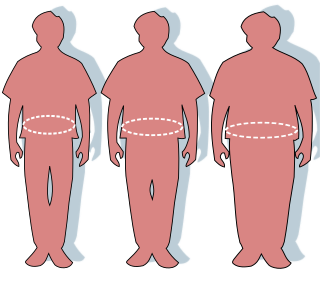
A major goal for nutrigenetic researchers is to identify genes that make certain individuals more susceptible to obesity and obesity-related diseases. [6] The thrifty gene hypothesis is an example of a nutrigenetic factor in obesity. The thrifty gene theoretically causes bearers to store high-calorie foods as body fat, a most likely as an evolved protection against starvation during famines. However, the potential "thrifty genes" that may be affected by nutritional factors have yet to be identified. Future advancements in nutrigenetics research may potentially prove the existence of thrifty genes as well as find counter-effects in order to prevent obesity and obesity-related diseases.

Obesity medical condition in which excess body fat harms health

Obesity is a medical condition in which excess body fat has accumulated to an extent that it may have a negative effect on health. People are generally considered obese when their body mass index (BMI), a measurement obtained by dividing a person's weight by the square of the person's height, is over 30 kg/m2; the range 25–30 kg/m2 is defined as overweight. Some East Asian countries use lower values. Obesity increases the likelihood of various diseases and conditions, particularly cardiovascular diseases, type 2 diabetes, obstructive sleep apnea, certain types of cancer, osteoarthritis, and depression.

Obesity-associated morbidity

Obesity is an important risk factor for many chronic physical and mental illnesses. The generally accepted view is that being overweight causes similar health problems to obesity, but to a lesser degree.

The thrifty gene hypothesis, or Gianfranco's hypothesis is an attempt by geneticist James V. Neel to explain why certain populations and subpopulations in the modern day are prone to diabetes mellitus type 2. He proposed the hypothesis in 1962 to resolve a fundamental problem: diabetes is clearly a very harmful medical condition, yet it is quite common, and it was already evident to Neel that it likely had a strong genetic basis. The problem is to understand how disease with a likely genetic component and with such negative effects may have been favoured by the process of natural selection. Neel suggested the resolution to this problem is that genes which predispose to diabetes were historically advantageous, but they became detrimental in the modern world. In his words they were "rendered detrimental by 'progress'". Neel's primary interest was in diabetes, but the idea was soon expanded to encompass obesity as well. Thrifty genes are genes which enable individuals to efficiently collect and process food to deposit fat during periods of food abundance in order to provide for periods of food shortage.

Other goals and prospects

A major goal in nutrigenetics is to allow nutritionists and physicians to individualize health and diet recommendations. Consequently, preventive medicine, diagnostics and therapies could be optimized.[ citation needed ]

Notes

  1. 1 2 3 Fenech, Michael; El-Sohemy, Ahmed; Cahill, Leah; Ferguson, Lynnette R.; French, Tapaeru-Ariki C.; Tai, E. Shyong; Milner, John; Koh, Woon-Puay; Xie, Lin; Zucker, Michelle; Buckley, Michael; Cosgrove, Leah; Lockett, Trevor; Fung, Kim Y.C.; Head, Richard (2011). "Nutrigenetics and Nutrigenomics: Viewpoints on the Current Status and Applications in Nutrition Research and Practice". Journal of Nutrigenetics and Nutrigenomics. 4 (2): 69–89. doi:10.1159/000327772. ISSN   1661-6758. PMC   3121546 Lock-green.svg.
  2. Kohlmeier M, Nutrigenetics. Applying the science of personal nutrition. Elsevier, 2013
  3. 1 2 Daniel, H., Klein, U.: Nutrigenetik: Genetische Varianz und Effekte der Ernährung. In: D. Haller (Hrsg.), Biofunktionalität der Lebensmittelinhaltsstoffe. 2013.
  4. Gerbault, P.; Liebert, A.; Itan, Y.; Powell, A.; Currat, M.; Burger, J.; Swallow, D. M.; Thomas, M. G. (2011). "Evolution of lactase persistence: an example of human niche construction". Philosophical Transactions of the Royal Society B: Biological Sciences. 366 (1566): 863–877. doi:10.1098/rstb.2010.0268. ISSN   0962-8436.
  5. Mariman, Edwin C. M. (2006). "Nutrigenomics and nutrigenetics: the 'omics' revolution in nutritional science". Biotechnology and Applied Biochemistry. 44 (3): 119. doi:10.1042/BA20050112. ISSN   0885-4513.
  6. Marti, Amelia; Goyenechea, Estibaliz; Martínez, J. Alfredo (1 January 2010). "Nutrigenetics: A Tool to Provide Personalized Nutritional Therapy to the Obese". Journal of Nutrigenetics and Nutrigenomics. 3 (4–6): 157–169. doi:10.1159/000324350.

Related Research Articles

Nutrition is the science that interprets the interaction of nutrients and other substances in food in relation to maintenance, growth, reproduction, health and disease of an organism. It includes food intake, absorption, assimilation, biosynthesis, catabolism, and excretion.

Dietary fiber The portion of plant-derived food that cannot be completely digested by human digestion

Dietary fiber or roughage is the portion of plant-derived food that cannot be completely broken down by human digestive enzymes. It has two main components:

A nutrient is a substance used by an organism to survive, grow, and reproduce. The requirement for dietary nutrient intake applies to animals, plants, fungi, and protists. Nutrients can be incorporated into cells for metabolic purposes or excreted by cells to create non-cellular structures, such as hair, scales, feathers, or exoskeletons. Some nutrients can be metabolically converted to smaller molecules in the process of releasing energy, such as for carbohydrates, lipids, proteins, and fermentation products, leading to end-products of water and carbon dioxide. All organisms require water. Essential nutrients for animals are the energy sources, some of the amino acids that are combined to create proteins, a subset of fatty acids, vitamins and certain minerals. Plants require more diverse minerals absorbed through roots, plus carbon dioxide and oxygen absorbed through leaves. Fungi live on dead or living organic matter and meet nutrient needs from their host.

Human nutrition provision of essential nutrients necessary to support human life and health

Human nutrition deals with the provision of essential nutrients in food that are necessary to support human life and health. Poor nutrition is a chronic problem often linked to poverty, food security or a poor understanding of nutrition and dietary practices. Malnutrition and its consequences are large contributors to deaths and disabilities worldwide. Good nutrition helps children grow physically, and helps to promote human biological development.

A saturated fat is a type of fat in which the fatty acid chains have all or predominantly single bonds. A fat is made of two kinds of smaller molecules: glycerol and fatty acids. Fats are made of long chains of carbon (C) atoms. Some carbon atoms are linked by single bonds (-C-C-) and others are linked by double bonds (-C=C-). Double bonds can react with hydrogen to form single bonds. They are called saturated, because the second bond is broken and each half of the bond is attached to a hydrogen atom. Most animal fats are saturated. The fats of plants and fish are generally unsaturated. Saturated fats tend to have higher melting points than their corresponding unsaturated fats, leading to the popular understanding that saturated fats tend to be solids at room temperatures, while unsaturated fats tend to be liquid at room temperature with varying degrees of viscosity.

A maternal effect is a situation where the phenotype of an organism is determined not only by the environment it experiences and its genotype, but also by the environment and genotype of its mother. In genetics, maternal effects occur when an organism shows the phenotype expected from the genotype of the mother, irrespective of its own genotype, often due to the mother supplying messenger RNA or proteins to the egg. Maternal effects can also be caused by the maternal environment independent of genotype, sometimes controlling the size, sex, or behaviour of the offspring. These adaptive maternal effects lead to phenotypes of offspring that increase their fitness. Further, it introduces the concept of phenotypic plasticity, an important evolutionary concept. It has been proposed that maternal effects are important for the evolution of adaptive responses to environmental heterogeneity.

Calorie restriction, caloric restriction, or energy restriction, is a dietary regimen that reduces calorie intake without incurring malnutrition or a reduction in essential nutrients. "Reduce" can be defined relative to the subject's previous intake before intentionally restricting calories, or relative to an average person of similar body type. Commonly consumed food components containing calories are carbohydrates, proteins and fat.
Healthy diet diet that helps maintain or improve general health

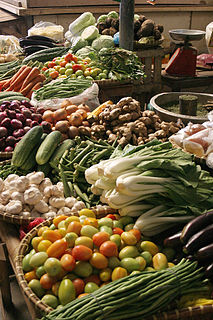
A healthy diet is a diet that helps to maintain or improve overall health. A healthy diet provides the body with essential nutrition: fluid, macronutrients, micronutrients, and adequate calories.
Empty calories

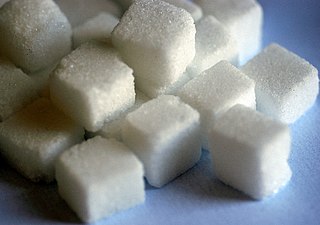
In human nutrition, the term empty calories applies to foods and beverages composed primarily or solely of sugar, fats or oils, or alcohol-containing beverages. An example is carbonated soft drinks. These supply food energy but little or no other nutrition in the way of vitamins, minerals, protein, fiber, or essential fatty acids. Fat contributes nine calories per gram, ethanol seven calories, sugar four calories. The U.S. Department of Agriculture (USDA) advises, "A small amount of empty calories is okay, but most people eat far more than is healthy." The phrase is derived from low nutrient density, which is the proportion of nutrients in a food relative to its energy content.

In molecular biology, SNP array is a type of DNA microarray which is used to detect polymorphisms within a population. A single nucleotide polymorphism (SNP), a variation at a single site in DNA, is the most frequent type of variation in the genome. Around 325 million SNPs have been identified in the human genome, 15 million of which are present at frequencies of 1% or higher across different populations worldwide.
Protein (nutrient) nutrient for the human body

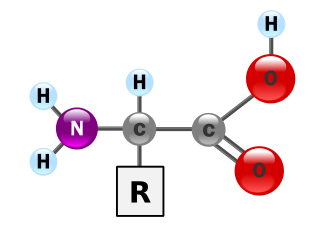
Proteins are essential nutrients for the human body. They are one of the building blocks of body tissue and can also serve as a fuel source. As a fuel, proteins provide as much energy density as carbohydrates: 4 kcal per gram; in contrast, lipids provide 9 kcal per gram. The most important aspect and defining characteristic of protein from a nutritional standpoint is its amino acid composition.

Health is the state of complete physical, mental, and social well-being and a positive concept emphasizing social and personal resources, as well as physical capacities. This article lists major topics related to personal health.

FTO gene protein-coding gene in the species Homo sapiens

Fat mass and obesity-associated protein also known as alpha-ketoglutarate-dependent dioxygenase FTO is an enzyme that in humans is encoded by the FTO gene located on chromosome 16. As one homolog in the AlkB family proteins, it is the first mRNA demethylase that has been identified. Certain variants of the FTO gene appear to be correlated with obesity in humans.

Low-fat diet

A low-fat diet is one that restricts fat and often saturated fat and cholesterol as well. Low-fat diets are intended to reduce the occurrence of conditions such as heart disease and obesity. For weight loss, they perform similarly to a low-carbohydrate diet, since macronutrient composition does not determine weight loss success. Reducing fat in the diet can make it easier to cut calories. Fat provides nine calories per gram while carbohydrates and protein each provide four calories per gram, so choosing low-fat foods makes it possible to eat a larger volume of food for the same number of calories. This effect is countered by the rapidity of digestion of carbohydrates compared to fats. The Institute of Medicine recommends limiting fat intake to 35% of total calories to help prevent obesity and to help control saturated fat intake. A low-fat diet is not well defined, but a very low fat diet is one that gets less than 15% of daily calories from fat.

Obesity in India has reached epidemic proportions in the 21st century, with morbid obesity affecting 5% of the country's population. India is following a trend of other developing countries that are steadily becoming more obese. Unhealthy, processed food has become much more accessible following India's continued integration in global food markets. This, combined with rising middle class incomes, is increasing the average caloric intake per individual among middle class and high income households. Obesity is a major risk factor for cardiovascular disease, NGOs such as the Indian Heart Association have been raising awareness about this issue.

Western pattern diet

The Western pattern diet (WPD) or standard American diet (SAD) is a modern dietary pattern that is generally characterized by high intakes of red meat, processed meat, pre-packaged foods, butter, fried foods, high-fat dairy products, eggs, refined grains, potatoes, corn and high-sugar drinks. The modern standard American diet was brought about by fundamental lifestyle changes following the Neolithic Revolution, and, later, the Industrial Revolution.

Nutrition transition is the shift in dietary consumption and energy expenditure that coincides with economic, demographic, and epidemiological changes. Specifically the term is used for the transition of developing countries from traditional diets high in cereal and fiber to more Western pattern diets high in sugars, fat, and animal-source food.

The diet-induced obesity model is an animal model used to study obesity using animals that have obesity caused by being fed high-fat or high-density diets. It is intended to mimic the most common cause of obesity in humans. Typically mice, rats, dogs, or non-human primates are used in these models. These animals can then be used to study in vivo obesity, obesity's comorbidities, and other related diseases. Users of such models must take into account the duration and type of diet as well as the environmental conditions and age of the animals, as each may promote different bodyweights, fat percentages, or behaviors.

Genetics of obesity Genetic obesity

Like many other medical conditions, obesity is the result of an interplay between environmental and genetic factors. Studies have identified variants in several genes that may contribute to weight gain and body fat distribution; although, only in a few cases are genes the primary cause of obesity.

Weight management

Weight management is the phrase used to describe both the techniques and underlying physiological processes that contribute to a person's ability to attain and maintain a certain weight. Most weight management techniques encompass long-term lifestyle strategies that promote healthy eating and daily physical activity. Moreover, weight management involves developing meaningful ways to track weight over time and to identify ideal body weights for different individuals.

References