Nutrigenomics

Last updated

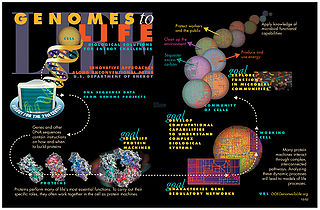
Nutrigenomics is a branch of nutritional genomics and is the study of the effects of foods and food constituents on gene expression. [1] It is a field of research focusing on identifying and understanding molecular-level interaction between nutrients and other dietary bioactives with the genome. [2] Nutrigenomics studies the influence of genetic variation on nutrition by correlating gene expression or SNPs with a nutrient's absorption, metabolism, elimination or biological effects. The field aims to enhance rational means to optimize nutrition with respect to an individual's genotype.

Nutritional genomics, also known as nutrigenomics, is a science studying the relationship between human genome, nutrition and health. People in the field work toward developing an understanding of how the whole body responds to a food via systems biology, as well as single gene/single food compound relationships.

Food Substances consumed as nutrition

Food is any substance consumed to provide nutritional support for an organism. It is usually of plant or animal origin, and contains essential nutrients, such as carbohydrates, fats, proteins, vitamins, or minerals. The substance is ingested by an organism and assimilated by the organism's cells to provide energy, maintain life, or stimulate growth.

Gene expression The process in which a genes sequence is converted into a mature gene product or products (proteins or RNA). This includes the production of an RNA transcript as well as any processing to produce a mature RNA product or an mRNA or circRNA (for prote

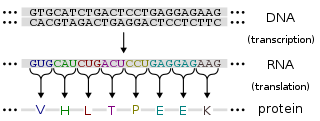
Gene expression is the process by which information from a gene is used in the synthesis of a functional gene product. These products are often proteins, but in non-protein coding genes such as transfer RNA (tRNA) or small nuclear RNA (snRNA) genes, the product is a functional RNA.

Contents

By determining the mechanism of the effects of nutrients or the effects of a nutritional regime, nutrigenomics tries to define the causality or relationship between these specific nutrients and specific nutrient regimes (diets) on human health. Nutrigenomics has been associated with the idea of personalized nutrition based on genotype. While there is hope that nutrigenomics will ultimately enable such personalised dietary advice, it is a science still in its infancy and its contribution to public health over the next decade is thought to be major.[ citation needed ] Whilst nutrigenomics is aimed at developing an understanding of how the whole body responds to a food via systems biology, research into the effect of a single gene/single food compound relationships is known as nutrigenetics. [3]

Public health preventing disease, prolonging life and promoting health through organized efforts and informed choices of society and individuals

Public health has been defined as "the science and art of preventing disease, prolonging life and promoting human health through organized efforts and informed choices of society, organizations, public and private, communities and individuals". Analyzing the health of a population and the threats it faces is the basis for public health. The public can be as small as a handful of people or as large as a village or an entire city; in the case of a pandemic it may encompass several continents. The concept of health takes into account physical, psychological and social well-being. As such, according to the World Health Organization, it is not merely the absence of disease or infirmity.

Systems biology computational and mathematical modeling of complex biological systems

Systems biology is the computational and mathematical modeling of complex biological systems. It is a biology-based interdisciplinary field of study that focuses on complex interactions within biological systems, using a holistic approach to biological research.

Definitions

Nutrigenomics is an emerging field of research that expands upon the existing field of nutritional science using genomic data.[ citation needed ] Certain advances in the field such as  microarrays, and  high throughput sequencing  allow for expansive analysis of the genome and in-vivo experiments in  knockout mice  are major sources of genomic based data.[ citation needed ] This type of genomic data collection can be applied to view the effects that certain nutrients or foods may have on large portions or different locales of the genome rather than one specific location. [4]

Microarray analysis techniques

Microarray analysis techniques are used in interpreting the data generated from experiments on DNA, RNA, and protein microarrays, which allow researchers to investigate the expression state of a large number of genes - in many cases, an organism's entire genome - in a single experiment. Such experiments can generate very large amounts of data, allowing researchers to assess the overall state of a cell or organism. Data in such large quantities is difficult - if not impossible - to analyze without the help of computer programs.

A knockout mouse or knock-out mouse is a genetically modified mouse in which researchers have inactivated, or "knocked out", an existing gene by replacing it or disrupting it with an artificial piece of DNA. They are important animal models for studying the role of genes which have been sequenced but whose functions have not been determined. By causing a specific gene to be inactive in the mouse, and observing any differences from normal behaviour or physiology, researchers can infer its probable function.

Nutrigenomics is also defined as a field that examines "effect of nutrients on genome, proteome, metabolome and explains the relationship between these specific nutrients and nutrient-regimes on human health". [5] In other words, a nutrigenomics approach is a holistic one that examines the effect of nutrients at all levels, from gene expression to metabolic pathways. [5]

Genome entirety of an organisms hereditary information; genome of organism (encoded by the genomic DNA) is the (biological) information of heredity which is passed from one generation of organism to the next; is transcribed to produce various RNAs

In the fields of molecular biology and genetics, a genome is the genetic material of an organism. It consists of DNA. The genome includes both the genes and the noncoding DNA, as well as mitochondrial DNA and chloroplast DNA. The study of the genome is called genomics.

Proteome set of proteins that can be expressed by a genome, cell, tissue, or organism

The proteome is the entire set of proteins that is, or can be, expressed by a genome, cell, tissue, or organism at a certain time. It is the set of expressed proteins in a given type of cell or organism, at a given time, under defined conditions. Proteomics is the study of the proteome.

Metabolome complete set of small-molecule chemicals found within a biological sample

The metabolome refers to the complete set of small-molecule chemicals found within a biological sample. The biological sample can be a cell, a cellular organelle, an organ, a tissue, a tissue extract, a biofluid or an entire organism. The small molecule chemicals found in a given metabolome may include both endogenous metabolites that are naturally produced by an organism as well as exogenous chemicals that are not naturally produced by an organism.

Background and preventive health

Nutritional science originally emerged as a field that studied individuals lacking certain nutrients and the subsequent effects, [5] such as the disease  scurvy  which results from a lack of vitamin C. As other diseases closely related to diet (but not deficiency), such as obesity, became more prevalent, nutritional science expanded to cover these topics as well. [5]   Nutritional research typically focuses on preventative measure, trying to identify what nutrients or foods will raise or lower risks of diseases and damage to the human body.

Scurvy human disease

Scurvy is a disease resulting from a lack of vitamin C. Early symptoms include weakness, feeling tired, and sore arms and legs. Without treatment, decreased red blood cells, gum disease, changes to hair, and bleeding from the skin may occur. As scurvy worsens there can be poor wound healing, personality changes, and finally death from infection or bleeding.

Nutrigenomics emerged as a possible way to fix gaps in the current field of nutritional science. The development of technology to analyze the genome such as different types of sequencing and different microarrays suggest a new way to reinforce current theories or hypotheses. Existing information from genetic research directs emerging research in nutrigenomics. Individuals within the same population or even the same family have  genetic variability. [4]  There is a lack of consistent relationships between certain foods and nutrients and increased disease risk, most likely due to this type of variation. [6]   Nutrigenomics is highly personalized because it looks at biomarkers within each individual. [6]  One group of researchers suggest that current technology can be used to build an ideal diet/intake of certain nutrients, or a 'nutriome.' [7]  A 'nutriome' would ensure proper function of all pathways involved in genome maintenance. [7]

Genetic variability is either the presence of, or the generation of, genetic differences.

Research has already provided evidence identifying potential genetic origins of metabolic disorders or compromised phenotypes. [4]  Disorders that scientists previously thought to be heritable, can be identified as genetic disorders with set pathological effects. [4]  For example, Prader-Willi syndrome, a disease whose most distinguishing factor is insatiable appetite, has been specifically linked to an epigenetic pattern in which the paternal copy in the chromosomal region is erroneously deleted, and the maternal loci is inactivated by over methylation. [8]  Yet, although certain disorders may be linked to certain  single nucleotide polymorphisms (SNPs)  or other localized patterns, variation within a population may yield many more polymorphisms. [9]  Each may have a negligible effect by itself, yet the cumulative effects may be significant.Now, with advances that have been made, these small changes and additive effects are possible to study. [9]   Small epigenetic changes such as methylation patterns or phosphorylation can be determined.

Rationale and aims

Cell signaling is an important component of regulation of gene expression and metabolism, relying on both internal and external signals to ensure the body is maintaining homeostasis. Individual nutrients can each be considered signals, with the summation of their effects being the diet. [4]  The effort of nutrigenomics is to identify this "dietary signature", or pattern of effects ranging from effects at the cellular level to entire body systems. [4]  However it is often hard to monitor the diet of an individual, and current protocols should be improved. [10] The desired outcome from this type of research is to identify genetic factors for chronic diseases and conditions, whether it be a certain gene itself or an epigenetic marker, and how foods influence it. Nutrigenomics looks mainly to be a way of identifying individuals predisposed for conditions and preventing onset. [4]   First, genes with regulation influenced must be identified, and then more focused studies may emerge. [4]

In addition, nutrigenomics also looks to identify certain compounds that are  bioactive, and other foods that are of particular benefit to health. [4]  This knowledge can be personalized to produce specific diet plans and functional foods to both prevent predisposed conditions and maximize health. [4]

Application

Anti-aging

Aging of cells occur because of the accumulation of excess free radicals formed due to the lack of proper nutrition to the cells and external factors like UV rays, pollution, stress, food, etc. DNA analysis is instrumental in identifying the right concoction of nutrients needed to eliminate the excess free radicals present in the cell.

The science of nutrigenomics studies the interaction between dietary components of food and genes. [11] Scientific advances have now made it possible to apply nutrigenomics in the field of anti ageing and customize nutritional solutions in the form of supplements to meet the optimal nutrition required by the body to prevent aging of cells by the formation of excess free radicals. [12] [13]

Obesity

Obesity is one of the most widely studied topics in nutrigenomics. Due to genetic variations among individuals, each person could respond to diet differently. By exploring the interaction between dietary pattern and genetic factors, nutrigenomics aim to suggest prevention measures and/ or treatment to obesity via personal nutrition. [14]

There are studies suggesting genetic factors account for a fair proportion of inter-individual BMI (body mass index). [14] Among different types of genetic variation between humans, SNPs are suggested to be the most important marker for the study of nutrigenomics. [14]

Multiple studies have found association between SNPs and obesity. One of the most well known obesity associating gene is the FTO gene. Among studied individuals, it was found that those with AA genotype showed a higher BMI compared those with TT genotype when having high fat or low carbohydrate dietary intake. [14] [15]

The APO B SNP rs512535 is another obesity related variation. It was found that the A/G heterozygous genotype was found to have association with obesity (in terms of BMI and waist circumference). The same study also found that for individuals with habitual high fat diet (>35% of energy intaken), individuals with GG homozygotes genotype showed higher BMI compared to AA allele carriers. However, this difference is not found in low fat consuming group (<35% of energy intaken). [14] [16]

Besides the FTO genes and APO B, SNPs in various genes such as MC4R, SH2B1, MTCH2, SEC16B etc. have been found to be associated with obesity. [14] Although many of these genetic variations are found in populations all over the world, there are also variations unique to certain races or populations. [14]

Cancer

Nutrigenomics may be able to supplement current  oncology. There is a wealth of information about processes that occur within genome maintenance that prevent cell abnormalities linked to cancer and certain nutrients that play a role as cofactors. [7]  Genome damage caused by micronutrient deficiency may be just as severe as damage owed to exposure to certain environmental  carcinogens. [7]  If these micronutrients can be identified, with concrete evidence, the risk for cancer in some individuals could be significantly reduced. One such micronutrient may be folate. In one experiment,  folate  was given to cells in different concentrations and those with less folate exhibited as much damage to their chromosomes as they would have exhibited with a heavy amount of radiation. [7]   Likewise, dietary supplementation using the cinnamon-derived food factor cinnamaldehyde prevented colon cancer in a chemical exposure-induced mouse model of the human disease, an effect dependent on expression of the cytoprotective transcription factor Nrf2. [17] Nutrigenomics can be used to develop new, alternative treatments that target the altered cancer cell metabolism. [10]  The alternative way of energy production in cancer cell metabolism, the Warburg effect, in which glycolysis and lactic acid fermentation are the main means of energy production opposed to oxidative reduction. Certain nutrients may provide ways to starve or inhibit this type of metabolism.  Polyunsaturated fatty acids  (PUFA) which affect gene expression related to inflammation and other nutrients that have displayed potential in repressing cancer cell metabolism. [10]  Another practical application of nutrigenomics to cancer may be identifying nutrient that is a cofactor of a compromised pathway where consuming a surplus of could potentially reduce the compromised pathway's negative consequences. [7]  A nutrigenomics approach could provide a safe, holistic model to mitigate tumor growth in place of existing cancer treatments that often have harsh side effects and are not always effective. [10]

Companies involved

Across the globe, there are companies who are not only working towards personalized nutrition but also personalized medicine. Few companies like GeneSupport [18] in India, GeneticHealing [19] in India, DNAfit [20] in London, 23andMe [21] in the United States, Genecorp [22] in India and HiMyDna [23] in HongKong.

Ethics

To put nutrigenomics into practice, genetic testing is required as the test results act as the reference for diagnosis. Genetic testing has been met with many concerns surrounding ethics and regulations. These concerns inherently become a part of, if not augmented by Nutrigenomics, a field that looks to provide highly personalized information.

One of the major concerns regarding genetic tests would be privacy issue. To perform any type of genetic testing, consent is need directly by the individual who provides the sample. However, if an individual has results that indirectly tie family members to it, by identifying information about a genetic predisposition or condition, information about that family member has been inadvertently revealed. [24]  Thus, this type of genetic testing would require consent from a network of individuals. For some sets of the population such as mentally impaired adult or children, it is not possible to obtain direct consent. [24] 'The best interest' of the patient must be determined by close family members, care takers and professionals, leaving room for discrepancy. [24]  Tissue samples obtained from patients, particularly those who are deceased are also a source of controversy. [24]  There is no established ethical code to suggest if data from these patients should be allowed to be published, or if they should remain only as sources of validation for lab techniques. There also exists no regulation for releasing information about heritable condition to family members. The stances on how to approach these situations are arbitrary and regulation provides few guidelines to direct them.

Distribution of tests

As the subject is recently commercialized by companies which sell direct to customer (DTC) genetic tests, as well as being applied by related professionals (such as dietetic practitioners), there has been increased awareness in the use of this information.

Validity

Nutrigenomics is still a new field. There are no set guidelines on how to interpret data from genetic testing. Without a validated way to produce accurate results, there exist concern about how valid results produced are. In 2005-6, the US Government Accountability Office  (GAO) attempted to check the validity of numerous DTC tests by sending out information and samples of sham identities. [25]  The information they received was varied and not medically verified, and two companies tried to market general supplements as 'individualized'. [25]  The GAO study was also rudimentary, without taking into concern that differing environmental factors may affect results. [25]

At that time, DTC genetics was a relatively new business model and was lightly regulated in the US. [26] The first warnings to nutrigenomics companies came in June 2008 when the California Department of Public Health issued cease-and-desist notices to 13 DTC genetics companies, including nutrigenomics startup Salugen. [27] [28]

Quackwatch has cautioned that DTC genetic tests marketed by companies marketing dietary supplements have no credible evidence of validity and should be avoided. [29]

One suggestion to try and minimize fraud is to channel distribution of genetic testing to healthcare professionals. [25]   American College of Medical Genetics(ACMG) has taken a stance that healthcare professionals should be involved for proper implementation of information from genetic testing. [24]   Healthcare professionals are not necessarily qualified to properly interpret and distribute this information as it is not currently required that they have an in-depth knowledge of genetics. [30]  There are a sheer 45 genetic residencies in the US, with a low number of individuals who have completed training per year. [30]   Practitioners often focus on acute medical conditions and do not spend much of their time making health recommendations to each patient. [30]  It is suggested that  nutritionist s and  genetic counselor s may be the best choice to ensure proper distribution of genetic tests' results. [30]

Privacy

One of the major concerns regarding genetic tests would be privacy issue. There are concerns on who has the right to have access to test results. Abuse of these tests could result in discrimination. For example, genetic information might be used by insurance companies to risk rate their clients or assess how likely their clients are to be costly. [25]  Other examples of privacy concerns include disclosure to the workplace that may led to discrimination in employment. [24]  Social concerns exist as certain conditions may be stigmatized by the general population.

See also

Related Research Articles

Dietary fiber The portion of plant-derived food that cannot be completely digested by human digestion

Dietary fiber or roughage is the portion of plant-derived food that cannot be completely broken down by human digestive enzymes. It has two main components:

A nutrient is a substance used by an organism to survive, grow, and reproduce. The requirement for dietary nutrient intake applies to animals, plants, fungi, and protists. Nutrients can be incorporated into cells for metabolic purposes or excreted by cells to create non-cellular structures, such as hair, scales, feathers, or exoskeletons. Some nutrients can be metabolically converted to smaller molecules in the process of releasing energy, such as for carbohydrates, lipids, proteins, and fermentation products, leading to end-products of water and carbon dioxide. All organisms require water. Essential nutrients for animals are the energy sources, some of the amino acids that are combined to create proteins, a subset of fatty acids, vitamins and certain minerals. Plants require more diverse minerals absorbed through roots, plus carbon dioxide and oxygen absorbed through leaves. Fungi live on dead or living organic matter and meet nutrient needs from their host.

Human nutrition provision of essential nutrients necessary to support human life and health

Human nutrition deals with the provision of essential nutrients in food that are necessary to support human life and health. Poor nutrition is a chronic problem often linked to poverty, food security or a poor understanding of nutrition and dietary practices. Malnutrition and its consequences are large contributors to deaths and disabilities worldwide. Good nutrition helps children grow physically, and helps to promote human biological development.

A saturated fat is a type of fat in which the fatty acid chains have all or predominantly single bonds. A fat is made of two kinds of smaller molecules: glycerol and fatty acids. Fats are made of long chains of carbon (C) atoms. Some carbon atoms are linked by single bonds (-C-C-) and others are linked by double bonds (-C=C-). Double bonds can react with hydrogen to form single bonds. They are called saturated, because the second bond is broken and each half of the bond is attached to a hydrogen atom. Most animal fats are saturated. The fats of plants and fish are generally unsaturated. Saturated fats tend to have higher melting points than their corresponding unsaturated fats, leading to the popular understanding that saturated fats tend to be solids at room temperatures, while unsaturated fats tend to be liquid at room temperature with varying degrees of viscosity.

A maternal effect is a situation where the phenotype of an organism is determined not only by the environment it experiences and its genotype, but also by the environment and genotype of its mother. In genetics, maternal effects occur when an organism shows the phenotype expected from the genotype of the mother, irrespective of its own genotype, often due to the mother supplying messenger RNA or proteins to the egg. Maternal effects can also be caused by the maternal environment independent of genotype, sometimes controlling the size, sex, or behaviour of the offspring. These adaptive maternal effects lead to phenotypes of offspring that increase their fitness. Further, it introduces the concept of phenotypic plasticity, an important evolutionary concept. It has been proposed that maternal effects are important for the evolution of adaptive responses to environmental heterogeneity.

Calorie restriction, caloric restriction, or energy restriction, is a dietary regimen that reduces calorie intake without incurring malnutrition or a reduction in essential nutrients. "Reduce" can be defined relative to the subject's previous intake before intentionally restricting calories, or relative to an average person of similar body type. Commonly consumed food components containing calories are carbohydrates, proteins and fat.
Healthy diet diet that helps maintain or improve general health

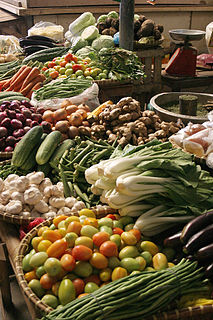
A healthy diet is a diet that helps to maintain or improve overall health. A healthy diet provides the body with essential nutrition: fluid, macronutrients, micronutrients, and adequate calories.
Empty calories

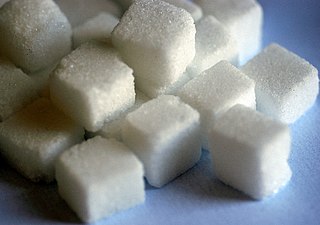
In human nutrition, the term empty calories applies to foods and beverages composed primarily or solely of sugar, fats or oils, or alcohol-containing beverages. An example is carbonated soft drinks. These supply food energy but little or no other nutrition in the way of vitamins, minerals, protein, fiber, or essential fatty acids. Fat contributes nine calories per gram, ethanol seven calories, sugar four calories. The U.S. Department of Agriculture (USDA) advises, "A small amount of empty calories is okay, but most people eat far more than is healthy." The phrase is derived from low nutrient density, which is the proportion of nutrients in a food relative to its energy content.

In molecular biology, SNP array is a type of DNA microarray which is used to detect polymorphisms within a population. A single nucleotide polymorphism (SNP), a variation at a single site in DNA, is the most frequent type of variation in the genome. Around 325 million SNPs have been identified in the human genome, 15 million of which are present at frequencies of 1% or higher across different populations worldwide.
Protein (nutrient) nutrient for the human body

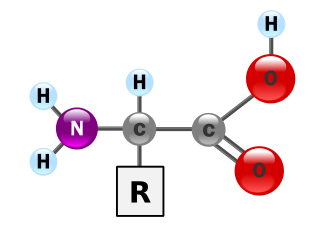
Proteins are essential nutrients for the human body. They are one of the building blocks of body tissue and can also serve as a fuel source. As a fuel, proteins provide as much energy density as carbohydrates: 4 kcal per gram; in contrast, lipids provide 9 kcal per gram. The most important aspect and defining characteristic of protein from a nutritional standpoint is its amino acid composition.

Health is the state of complete physical, mental, and social well-being and a positive concept emphasizing social and personal resources, as well as physical capacities. This article lists major topics related to personal health.

FTO gene protein-coding gene in the species Homo sapiens

Fat mass and obesity-associated protein also known as alpha-ketoglutarate-dependent dioxygenase FTO is an enzyme that in humans is encoded by the FTO gene located on chromosome 16. As one homolog in the AlkB family proteins, it is the first mRNA demethylase that has been identified. Certain variants of the FTO gene appear to be correlated with obesity in humans.

Low-fat diet

A low-fat diet is one that restricts fat and often saturated fat and cholesterol as well. Low-fat diets are intended to reduce the occurrence of conditions such as heart disease and obesity. For weight loss, they perform similarly to a low-carbohydrate diet, since macronutrient composition does not determine weight loss success. Reducing fat in the diet can make it easier to cut calories. Fat provides nine calories per gram while carbohydrates and protein each provide four calories per gram, so choosing low-fat foods makes it possible to eat a larger volume of food for the same number of calories. This effect is countered by the rapidity of digestion of carbohydrates compared to fats. The Institute of Medicine recommends limiting fat intake to 35% of total calories to help prevent obesity and to help control saturated fat intake. A low-fat diet is not well defined, but a very low fat diet is one that gets less than 15% of daily calories from fat.

Obesity in India has reached epidemic proportions in the 21st century, with morbid obesity affecting 5% of the country's population. India is following a trend of other developing countries that are steadily becoming more obese. Unhealthy, processed food has become much more accessible following India's continued integration in global food markets. This, combined with rising middle class incomes, is increasing the average caloric intake per individual among middle class and high income households. Obesity is a major risk factor for cardiovascular disease, NGOs such as the Indian Heart Association have been raising awareness about this issue.

Western pattern diet

The Western pattern diet (WPD) or standard American diet (SAD) is a modern dietary pattern that is generally characterized by high intakes of red meat, processed meat, pre-packaged foods, butter, fried foods, high-fat dairy products, eggs, refined grains, potatoes, corn and high-sugar drinks. The modern standard American diet was brought about by fundamental lifestyle changes following the Neolithic Revolution, and, later, the Industrial Revolution.

Nutrition transition is the shift in dietary consumption and energy expenditure that coincides with economic, demographic, and epidemiological changes. Specifically the term is used for the transition of developing countries from traditional diets high in cereal and fiber to more Western pattern diets high in sugars, fat, and animal-source food.

The diet-induced obesity model is an animal model used to study obesity using animals that have obesity caused by being fed high-fat or high-density diets. It is intended to mimic the most common cause of obesity in humans. Typically mice, rats, dogs, or non-human primates are used in these models. These animals can then be used to study in vivo obesity, obesity's comorbidities, and other related diseases. Users of such models must take into account the duration and type of diet as well as the environmental conditions and age of the animals, as each may promote different bodyweights, fat percentages, or behaviors.

Genetics of obesity Genetic obesity

Like many other medical conditions, obesity is the result of an interplay between environmental and genetic factors. Studies have identified variants in several genes that may contribute to weight gain and body fat distribution; although, only in a few cases are genes the primary cause of obesity.

Weight management

Weight management is the phrase used to describe both the techniques and underlying physiological processes that contribute to a person's ability to attain and maintain a certain weight. Most weight management techniques encompass long-term lifestyle strategies that promote healthy eating and daily physical activity. Moreover, weight management involves developing meaningful ways to track weight over time and to identify ideal body weights for different individuals.

References

  1. Rawson, N. (October 24, 2008). "Nutrigenomics Boot Camp: Improving Human Performance through Nutrigenomic Discovery. A Supply Side West VendorWorks Presentation". Las Vegas, Nevada.
  2. Braicu C, Mehterov N, Vladimirov B, Sarafian V, Nabavi SM, Atanasov AG, Berindan-Neagoe I. Nutrigenomics in cancer: Revisiting the effects of natural compounds. Semin Cancer Biol. 2017 Jul 1. doi : 10.1016/j.semcancer.2017.06.011. Review. PMID   28676460.
  3. Astley, Sian B. (Oct 2007). "An introduction to nutrigenomics developments and trends". Genes Nutr. 2 (1): 11–13. doi:10.1007/s12263-007-0011-z. PMC   2474912 Lock-green.svg. PMID   18850130.
  4. 1 2 3 4 5 6 7 8 9 10 Aglave, B.A.; Mahajan, V.A.; Lokhande, M.O. (April–September 2009). "Nutritional Genomics" (PDF). International Journal of Medical Sciences. 2.1: 90–92.
  5. 1 2 3 4 Neeha, V. S.; Kinth, P. (2013). "Nutrigenomics research: a review". Journal of Food Science and Technology. 50 (3): 415–428. doi:10.1007/s13197-012-0775-z. PMC   3602567 Lock-green.svg.
  6. 1 2 Ardekani, A.M., & Jabbari, S. (2009). Nutrigenomics and Cancer. Avicenna Journal of Med Biotechnology, 1(1), 9-17. 
  7. 1 2 3 4 5 6 Bull, C., & Fenech, M. (2008) Genome-health nutrigenomics and nutrigenetics: nutritional requirements or ‘nutriomes’ for chromosomal stability and telomere maintenance at the individual level. Proceedings of the Nutrition Society, 67, 146-156. doi:10.1017/S0029665108006988
  8. Xia, Q; Grant, SF (2013). "The genetics of human obesity". Ann N Y Acad Sci. 1281: 178–90. doi:10.1111/nyas.12020. PMC   3717174 Lock-green.svg. PMID   23360386.
  9. 1 2 Bisen, Prakash A.; Debnath, Mousumi; Prasad, Godavarthi B.K.S. (2010). Molecular Dianostics: Promises and Possibilities. Springer Science & Business Media. p. 26.  ISBN   9048132614.
  10. 1 2 3 4 Kang, J.X. (2013). Nutrigenomics and Cancer Therapy. Journal of Nutrigenetics and Nutrigenomics, 6, I-II. doi:10.1159/000355340
  11. Simopoulos, A. P., & Ordovás, J. M. (Eds.). (2004). Nutrigenetics and nutrigenomics (Vol. 93). Karger Medical and Scientific Publishers.
  12. Van Ommen, B.; Stierum, R. (2002). "Nutrigenomics: exploiting systems biology in the nutrition and health arena". Current Opinion in Biotechnology. 13 (5): 517–521. doi:10.1016/s0958-1669(02)00349-x.
  13. Müller, M.; Kersten, S. (2003). "Nutrigenomics: goals and strategies". Nature Reviews Genetics. 4 (4): 315–322. doi:10.1038/nrg1047.
  14. 1 2 3 4 5 6 7 Doo, Miae; Kim, Yangha (2015-03-01). "Obesity: interactions of genome and nutrients intake". Preventive Nutrition and Food Science. 20 (1): 1–7. doi:10.3746/pnf.2015.20.1.1. ISSN   2287-1098. PMC   4391534 Lock-green.svg. PMID   25866743.
  15. Sonestedt, Emily; Roos, Charlotta; Gullberg, Bo; Ericson, Ulrika; Wirfält, Elisabet; Orho-Melander, Marju (2009-11-01). "Fat and carbohydrate intake modify the association between genetic variation in the FTO genotype and obesity". The American Journal of Clinical Nutrition. 90 (5): 1418–1425. doi:10.3945/ajcn.2009.27958. ISSN   1938-3207. PMID   19726594.
  16. Phillips, Catherine M.; Goumidi, Louisa; Bertrais, Sandrine; Field, Martyn R.; McManus, Ross; Hercberg, Serge; Lairon, Denis; Planells, Richard; Roche, Helen M. (2011-02-01). "Gene-nutrient interactions and gender may modulate the association between ApoA1 and ApoB gene polymorphisms and metabolic syndrome risk". Atherosclerosis. 214 (2): 408–414. doi:10.1016/j.atherosclerosis.2010.10.029. ISSN   1879-1484. PMID   21122859.
  17. Long M, Tao S, Rojo de la Vega M, Jiang T, Wen Q, Park SL, Zhang DD, Wondrak GT (May 2015). "Nrf2-dependent suppression of azoxymethane/dextran sulfate sodium-induced colon carcinogenesis by the cinnamon-derived dietary factor cinnamaldehyde". Cancer Prevention Research. 8 (5): 444–54. doi:10.1158/1940-6207.CAPR-14-0359. PMC   4417412 Lock-green.svg. PMID   25712056.
  18. "GeneSupport". www.genesupport.in/.
  19. "GeneticHealing". www.genetichealing.in/.
  20. "DNAFit - Genetic Information for Fitness & Nutrition". www.dnafit.com.
  21. 23andMe. "DNA Genetic Testing & Analysis - 23andMe". www.23andme.com.
  22. "Homepage - Genecorp". Genecorp.
  23. "myDNA - the Industry's 1st Nutrigenomics-based Mobile Health Coach". himyDNA.
  24. 1 2 3 4 5 6 Williams, J.; Skirton, H.; Masny, A. (2006). "Ethics, Policy and Educational Issues in Genetic Testing". Journal of Nursing Scholarship. 38(2): 119–125 – via Wiley Online Library.
  25. 1 2 3 4 5 Castle, David; Ries, Nola M. (2007-09-01). "Ethical, legal and social issues in nutrigenomics: The challenges of regulating service delivery and building health professional capacity". Mutation Research/Fundamental and Molecular Mechanisms of Mutagenesis. Nutrigenomics. 622 (1–2): 138–143. doi:10.1016/j.mrfmmm.2007.03.017.
  26. Kaye, Jane (2008). "The Regulation of Direct-to-Consumer Genetic Tests". Hum Mol Genet. 17 (R2): R180–R183. doi:10.1093/hmg/ddn253.
  27. "Genetic Test Cease-And-Desist Notices". California Department of Public Health. 24 June 2008. Archived from the original on 2 July 2008. Retrieved 27 June 2018.
  28. Johnson, Steve (24 June 2008). "Five California gene testing firms among 13 suspended". Mercury News. Retrieved 27 June 2018.
  29. Barrett, Stephen; Hall, Harriet (24 November 2008). "Dubious Genetic Testing". Quackwatch. Retrieved 24 June 2018.
  30. 1 2 3 4 Ries, Nola M. (2008). "Nutrigenomics and Ethics Interface: Direct-to-Consumer Services and Commercial Aspects". OMICS: A Journal of Integrative Biology. 12: 245–250. doi:10.1089/omi.2008.0049.

Further reading