
Jonathan Paul Clegg, was a South African musician, singer-songwriter, dancer, anthropologist and anti-apartheid activist.

"Knives Out" is a song by the English rock band Radiohead, released as the second single from their fifth album, Amnesiac (2001). It features lyrics about cannibalism and guitars influenced by the Smiths.

Southernplayalisticadillacmuzik is the debut studio album by the American hip hop duo Outkast, released on April 26, 1994, by LaFace Records and Arista Records. Having befriended each other two years prior, rappers André 3000 and Big Boi pursued recording music as a duo and worked with production team Organized Noize, leading to a record contract with LaFace. With the team producing, Outkast recorded the album at the Dungeon, D.A.R.P. Studios, Purple Dragon, Bosstown, and Doppler Studios, all in their hometown of Atlanta, Georgia.

"Forever" is a rock and roll and pop song recorded by American singer Mariah Carey for her fifth studio album, Daydream (1995). Columbia Records released it to American radio stations for airplay on June 18, 1996, as the album's fifth single. The lyrics, written by Carey, are about one's continued affection despite the end of a romantic relationship. She composed the music and produced the song with Walter Afanasieff. Described by critics as referencing American music of the 1950s and 1960s, "Forever" is a doo-wop-influenced sentimental ballad in the form of a waltz. Its composition includes keyboards, guitars, and programming.
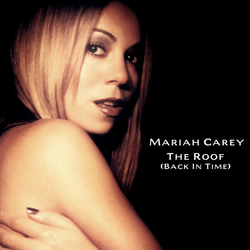
"The Roof (Back in Time)" is a song by American singer-songwriter Mariah Carey, taken from her sixth studio album, Butterfly (1997). It was released as the third single from the album in Europe, on March 20, 1998, by Columbia Records. Similar to the treatments of "Butterfly" and "Breakdown", "The Roof" received a limited worldwide release due to Carey's conflict at the time with Sony. The song was written and produced by Carey and Trackmasters, and is built around a sample from "Shook Ones (Part II)" (1995) by American hip hop duo Mobb Deep. The song's lyrics recount an intimate roof-top encounter between lovers, and how the memory affects the protagonist. The extended remix features a rap verse by Mobb Deep; both versions were praised by contemporary music critics.

My Life in the Bush of Ghosts is the first collaborative studio album by Brian Eno and David Byrne, released in February 1981. It was Byrne's first album without his band Talking Heads. The album integrates sampled vocals and found sounds, African and Middle Eastern rhythms, and electronic music techniques. It was recorded before Eno and Byrne's work on Talking Heads' 1980 album Remain in Light, but problems clearing samples delayed its release by several months.
Juluka was a South African band formed by Johnny Clegg and Sipho Mchunu. Juluka means "sweat" in Zulu, and was the name of a bull owned by Mchunu. The band was closely associated with the mass movement against apartheid.

Savuka, occasionally referred to as Johnny Clegg & Savuka, was a multi-racial South African band formed in 1986 by Johnny Clegg after the disbanding of Juluka. Savuka's music blended traditional Zulu musical influences with Celtic music and rock music that had a cross-racial appeal in South Africa. Their lyrics were often bilingual in English and Zulu and they wrote several politically charged songs, particularly related to apartheid. Some better-known Savuka songs include "Asimbonanga", and "Third World Child", from their 1987 album Third World Child. Band percussionist Dudu Zulu was killed in 1992; their song "The Crossing" was a tribute to him.

Putain de camion is a studio album from French artist Renaud, released in 1988 by Virgin France.

"The Way We Were" is a song by American singer Barbra Streisand from her fifteenth studio album of the same name. It was released as the album's lead single on September 27, 1973, through Columbia Records. The 7" single was distributed in two different formats, with the standard edition featuring B-side track "What Are You Doing the Rest of Your Life?"; the Mexico release instead included an instrumental B-side. The song was written by Alan Bergman, Marilyn Bergman, and Marvin Hamlisch, while production was solely handled by Marty Paich. "The Way We Were" was specifically produced for the record, in addition to three other tracks, including her then-upcoming single "All in Love Is Fair" (1974).

Swingin' with Raymond is the seventh studio album by anarchist punk band Chumbawamba. The album cover features a photograph of Raymond Mills.

Sense of Occasion is a 2007 album by British folk rock veterans Fairport Convention, recorded in November 2006 in the band's own Woodworm studio in Oxfordshire, and released in February on the band's own Matty Grooves Records label. The band have released over 30 albums since their debut, Fairport Convention, in 1968.

Arc Light is the second studio album by contemporary folk three-piece Lau, released on March 30, 2009 on Navigator Records.

Raoui is the first album of Souad Massi, the Algerian-born, Paris-based singer-songwriter, released by Wrasse Records in 2001. It was given a three-star rating by AllMusic reviewer Chris Nickson, who concluded: "there's plenty of promise for the future, as long as she really remembers her roots and doesn't wander the empty halls of rock." The Arabic lyrics and translations are published.

Jonathan Maman, better known by his stage name John Mamann, is a French singer, songwriter and composer who is signed to AZ, part of Universal Music. He has released three albums, Mister Joe in 2010, self-titled Joe Mamann in 2012 and Love Life in 2013. The title track from the last album "Love \ Life", a duo with Portuguese singer Kika, has charted on French Singles Chart.

Héloïse Adélaïde Letissier, known professionally as Christine and the Queens and Rahim C Redcar, is a French singer and songwriter. Born and raised in Nantes, he started learning piano at the age of four and found inspiration in one of London's clubs while studying. Letissier released a series of extended plays (EPs) throughout 2011–2013.

"Guava Jelly" is a song recorded by the Jamaican group Bob Marley and the Wailers. It was released as a 7" vinyl single through Tuff Gong and Green Door Records. It was issued commercially with B-side track "Redder Then Red", which was misspelled on its initial printing, in 1971. It was written and produced by Marley and features uncredited lyrical contributions from Bunny Livingston. A reggae composition like the majority of Marley's works, "Guava Jelly" contains a rocksteady and island-like production with lyrics loosely based around sexual intercourse. His use of the term "guava jelly" was likely referring to a specific type of sexual lubricant. It was favorably viewed by several reviewers, with many of them finding the composition to be sexual and about love. The group placed "Guava Jelly" on several compilation albums, including Africa Unite: The Singles Collection in 2005, and Owen Gray and Herbie Mann created their own versions in 1974 and 1975, respectively.

"All in Love Is Fair" is a song by American singer-songwriter Stevie Wonder recorded for his sixteenth studio album, Innervisions (1973). Written and produced by Wonder, it was released as a 7" single in Brazil in 1974. The song is a pop ballad with lyrics that describe the end of a relationship through the use of clichés. Critical reaction to the song has been varied: Matthew Greenwald of AllMusic wrote that it was among Wonder's "finest ballad statements", but Robert Christgau felt that the singer's performance was "immature". Wonder has included it on several of his greatest hits albums, including the most recent, 2005's The Complete Stevie Wonder.

"Asimbonanga", also known as "Asimbonanga (Mandela)", is an anti-apartheid song by the South African racially integrated band Savuka. It was first released as a 12" single in 1986, and then included in their 1987 album Third World Child. It alluded to Nelson Mandela, imprisoned on Robben Island at the time of song's release, and other anti-apartheid activists. "Asimbonanga" is a Zulu phrase that may be translated as "We have not seen him". It was well received, becoming popular within the movement against apartheid, and was covered by several artists including Joan Baez and the Soweto Gospel Choir.


